“Meeting as the tall ships do, passing in the channel…”

As 2013 limps to its grave, I’m tempted to regret how rarely I update this blog—but then I look back and find myself pleased with what I eked out time to post. Thanks for visiting! Here’s the “Quid Plura?” year that was: a modest medley of medievalism, books, poetry, and (of course) gargoyles.

Medievalism flourishes! A new book explored the link between Renaissance fairs and the American counterculture, while tapestry-born unicorns popped up in a 1959 brassiere advertisement. This blog also posed a question fit for Grant Wood: What’s so “Gothic” about American Gothic?

Medievalism wanders! In my home state of New Jersey, a glorious house begat a weird fantasy world and post-Sandy medievalism settled over the Jersey Shore. We discovered a towering reminder of medieval Italy in downtown Baltimore and heard medieval echoes at a cemetery in Staunton, Virginia, and I concluded that I live in Washington’s most medieval-ish neighborhood.

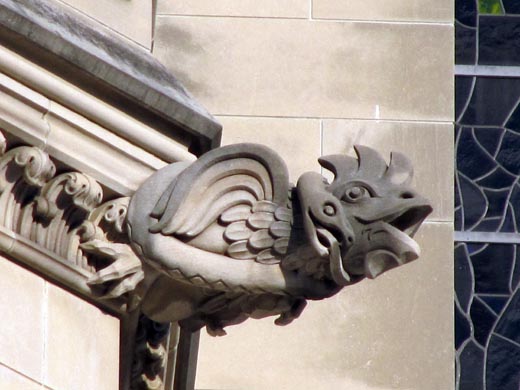
Behold the gargoyles! I looked up to find gargoyles in rural Maryland. A famous Notre Dame grotesque showed up at baggage claim in a Colorado airport, while one of his cousins loomed from the facade of a Delaware pharmacy.

It was also an atypically Tolkien-heavy year. We looked into the newly published poem The Fall of Arthur, asked “What hath Gandalf to do with Methodism?,” and appreciated George Stephens, a “pioneering, erratic, and irascible” minor scholar in Tolkien’s shadow.

Translations abound! I dug up medieval radishes in Latin verse, tried in vain to translate untranslatable Latin, and worked to discern the tone in a short poem praising Charlemagne’s son.

P-p-p-poetry! This blog paid tribute to the late John Hollander and defended the much-maligned poetry expert “Dr. J. Evans Pritchard, Ph.D.” My favorite book of the year was Thaliad by Marly Youmans, a remarkable post-apocalyptic epic poem, and I kicked off what I hope will be a new tradition: writing an annual Christmas poem.

No matter whyever or whence-ever you visit this site, whether you leave comments or simply browse in bemused silence, I’m grateful for your inquisitive eyeballs! Please stick around for a (hopefully) more prolific new year; there’s always something left to say.
“It’s all a patchwork from above…”

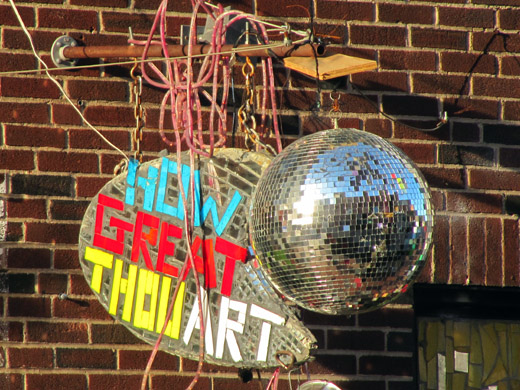
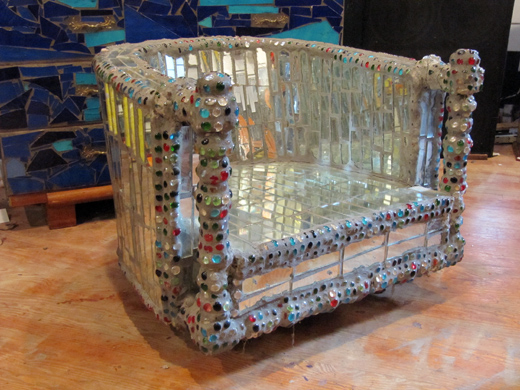
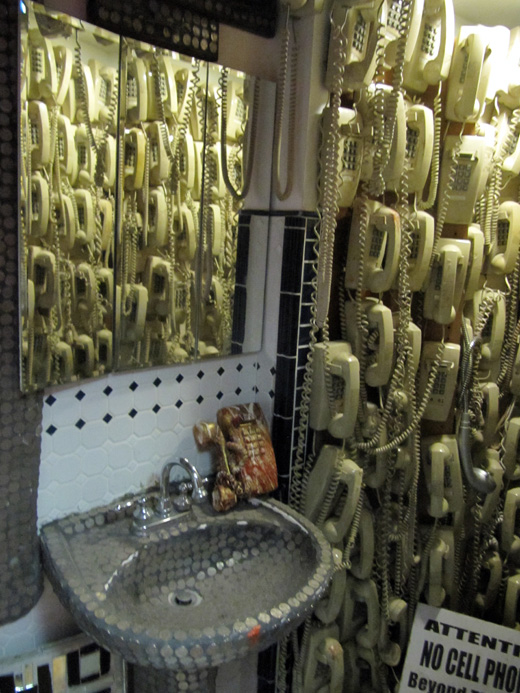
CHRISTMAS SHOPPING, FELLS POINT
(1622 THAMES STREET)

The year is low; the yesterdays you spent
Fall numbly, like the numbers on your list.
The least is hope, the promise you invent
In fear.
                     Not here. Let everything exist:
In shoes and lanterns, crosses, grout, and brass,
A coin-encrusted sink, a biding throne
Of sundered mirrors, bling, and spackled glass,
Your beaming brings a whirl of scrap and stone
To life in light: the weary walls rejoice.
A greater gift can scarcely be conceived
But one that mends our shards and gives them voice:
Be merry, yes, but better, be relieved,
And rise, and laugh, and listen, lest you miss
Tomorrows no unlikelier than this.

“…and eyes full of tinsel and fire.”

[When I wrote and posted drafts of more than 50 gargoyle-inspired poems between 2009 and 2012, this was one of the most popular. I offer it again in the spirit of the season. You can get a copy of Looking Up: Poems from the National Cathedral Gargoyles from Amazon, at the National Cathedral gift shop, or by emailing me. To read drafts of 51 of the 53 poems, click here. For more background on this project, go here.]

SOLSTICE SONG

Come and grace our gleeful number,
Come and shake off snows unknown.
Bells will ring while wood-woes slumber,
Bells will ring for you alone.

Rave with uncles reeked in holly,
Reel with aunts who saw you born.
Whirl away your grear-tide folly,
Hearth-life dwindles ere the morn.

Haul the ash-bin ’round the byre,
Feel the pinelight breathe your name.
From the tongue of colder fire
Cracks and calls a hotter flame.

Run and chase your sweet-lipped singer,
Run and race your hope anon.
Bells will ring where’er ye linger,
Bells will ring when you are gone.

“…and I’ll climb the hill in my own way…”

“If art teaches anything (to the artist, in the first place), it is the privateness of the human condition. Being the most ancient as well as the most literal form of private enterprise, it fosters in a man, knowingly or unwittingly, a sense of his uniqueness, of individuality, of separateness—thus turning him from a social animal into an autonomous ‘I.’ Lots of things can be shared: a bed, a piece of bread, convictions, a mistress, but not a poem by, say, Rainer Maria Rilke. A work of art, of literature especially, and a poem in particular, addresses a man tete-a-tete, entering with him into direct—free of any go-betweens—relations.

“It is for this reason that art in general, literature especially, and poetry in particular, is not exactly favored by the champions of the common good, masters of the masses, heralds of historical necessity. For there, where art has stepped, where a poem has been read, they discover, in place of the anticipated consent and unanimity, indifference and polyphony; in place of the resolve to act, inattention and fastidiousness. In other words, into the little zeros with which the champions of the common good and the rulers of the masses tend to operate, art introduces a ‘period, period, comma, and a minus,’ transforming each zero into a tiny human, albeit not always pretty, face.”

—Joseph Brodsky, Nobel lecture, December 8, 1987

“Silken mist outside the window, frogs and newts slip in the dark…”

Traffic! Leftovers! Organized sports! Whether you’re traveling, relaxing, or getting a jump on Christmastime fretting, enjoy this cornucopia of savory links, all of them worth your time on a chilly autumn weekend.

Steve Muhlberger reads Worlds of Arthur, and likes its author’s skepticism and clarity.

Scouting New York spots the thousand gargoyles and grotesques of City College.

Gargoyle Girl discovers a French gargoyle pop-up book.

My friend Nancy Marie Brown tours saga sites on her 18th visit to Iceland.

A 9th-grade teacher is using hip-hop to teach Latin hexameter.

After a hiatus, Light: A Journal of Light Verse is back online.

First Known When Lost finds poems in praise of idleness.

Levi urges you: read that Mark Twain autobiography!

Bill Peschel wonders whether bad writers can make books that are good for you.

The Book Haven highlights Joseph Brodsky’s Nobel lecture.

Heather Domin is almost pleased that readers are pirating her books.

Pete ponders what Lou Reed meant to his writing.

Chris at Hats & Rabbits is finishing his father’s song.

“You can look at the menu, but you just can’t eat…”

As we Americans prepare to dispatch legions of unsuspecting victims to Turkey Valhalla, I’m thankful that people still read this blog—even though work and other writing projects keep me from updating it as often as I’d like.

Since the beginning, I’ve tagged posts with an “applied paleobromatology” label, because I’m wont to wonder: What did the Middle Ages taste like? Although I lack time for another dubious kitchen catastrophe, I’m delighted to share, for your browsing pleasure, this picture-menu of links to food-related “Quid Plura?” leftovers. Just heat ‘n’ serve!

People say you can’t replace a goose with a duck, but that’s just a canard. In days of yore, I botched a “goose-to-duck hoggepotte” recipe from medieval England.

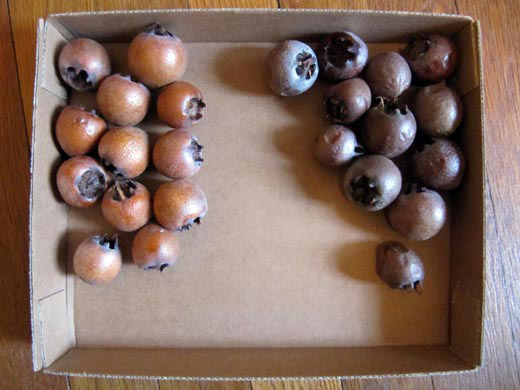
In 2011, I picked and bletted medlars, the “Happy Fun Ball” of obsolete produce.


Long ago, I used the Alison Moyet of rhizomes to invent a new soft drink: galangal ale. Wouldn’t you buy soda with this subdued, dignified label?

The rulers of medieval Baghdad loved sweet food—so in 2010, I made jawārish, the carrot jam of the Abbasid caliphate…

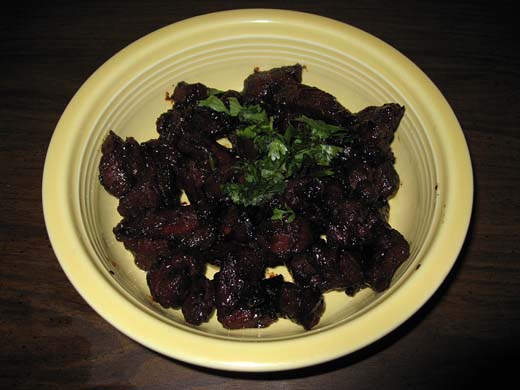
…and tabaahaja, the wince-inducing candied lamb of the Abbasid viziers.

Thanks, as always, for stopping by! Enjoy the holiday, and light a candle for Meleagris of Tryptophan, the patron saint of poultry, digestion, and much-needed rest.

“Sitting in the valley, as I watch the sun go down…”

As Charlemagne’s successor, Louis the Pious was the ninth century’s Julian Lennon. He may have done interesting work, but who remembers? Historians do, of course, but the emperor who supposedly never cracked a smile doesn’t rule the layman’s imagination the way his father always has.

Even so, the reign of Louis was a great one for poetry. Walafrid Strabo—the abbot, scholar, and gardener who often pops up on this blog—wrote a short poem that strikes me as appropriate for the end of a week that began with Election Day hubbub:


DE OSSE DAMMULAE,

PER QUOD ARBUSCULA CREVIT AD
IMPERATOREM HLUDOWICUM

Arboris et altrix quondam vagina medullae,
Tibia germen habet—nempe bonum omen erit.
Quod cortex humore caret, quod durior ipso est
Robore miramur: talis in osse vigor.
Nil, Caesar, tibi, magne, vacat: venabere dammas,
Ossibus ex quarum silva orietur, ave.

Latin poets, whether ancient or medieval, used long and short vowels where we use stressed and unstressed syllables, so their work is tricky to translate into English—but I like to acknowledge the nature of the original by rendering it into some sort of recognizable form. Walahfrid was a Germanic kid from Alemannia who jokingly called himself a “barbarian,” so let’s assume that Anglo-Saxon metrical, alliterative half-lines, like the verses of Beowulf but with more liberal use of anacrusis, resemble something the poet himself might have heard:
 

ON THE BONES OF A LITTLE DEER,
THROUGH WHICH GREW A SMALL TREE
FOR THE EMPEROR LOUIS

Now a marrow-sheath nurses a tree:
From shin-bone to sapling—surely well omened.
That its bark is dry and bound tougher
Than hard wood, we marvel: such might in the bone.
Great emperor, nothing is ever beyond you:
You merely have to go hunting for deer
And from their relics, forests grow. Hail!

Does my translation capture the sense of the original? One major scholar of Carolingian poetry isn’t even certain what Walafrid’s tone was:

Does the black humour of the hyperbole applied to this faintly ludicrous subject reflect back on Walahfrid himself, in an elegant mockery of the excesses of his own panegyrical style? Or does genuine virtuosity combine here with ambiguous flattery in a measure intended to create a residual doubt as to the sincerity of the compliment? Walahfrid, deliberately, never reveals whether the humour of his epigram is merely self-reflexive or really risqué. Irony, in the hands of an imperial panegyrist, is a two-edged weapon.

Charlemagne’s poets praised him to a ludicrous extent, and I’ve often wondered how seriously he and his heirs took the verses that served as politically useful flattery. It’s all too likely that they loved what they heard.

The subjects of Frankish kings weren’t free to write what they felt, but by studying them, we can ensure the promise of the liber in the liberal arts they bequeathed us. Behold the benefits of the thousand-year perspective: being unsurprised when leaders, by nature, believe their own hype, and being less inclined, sometimes, to fall for it yourself.

“And it’s true, if all this around us is paradise…”

I don’t actively look for these things. No, sometimes I just happen to be visiting family in New Jersey when I pull off the highway to skirt some traffic, drive through an unfamiliar downtown, and HOLY CROW—

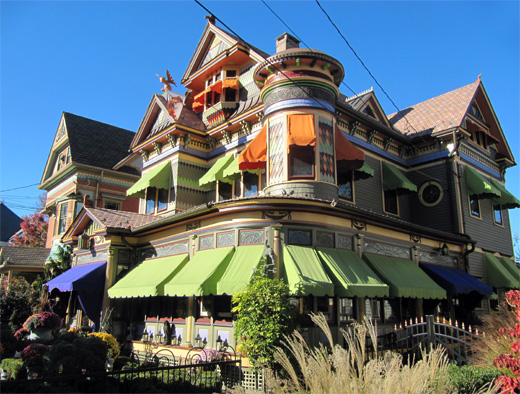
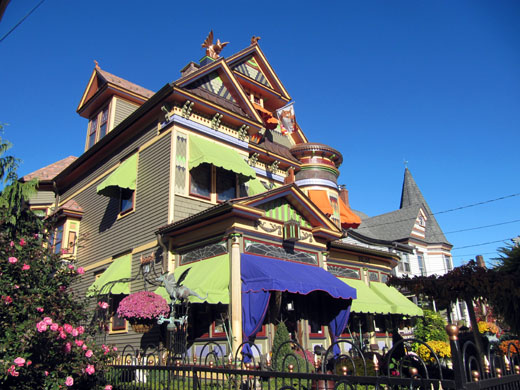
This glorious seventeen-minute Thompson Twins dance remix of a house was built in 1892 by the local mortician as a wedding gift for his bride. All of the other mansions on Stockton Street in Hightstown gaze on it in wonderment and envy, because even though the asymmetrical Elmer Rogers House isn’t really Gothic in design (it’s more of a Queen-Anne’s-flashy-American-cousin), check out what it does have.

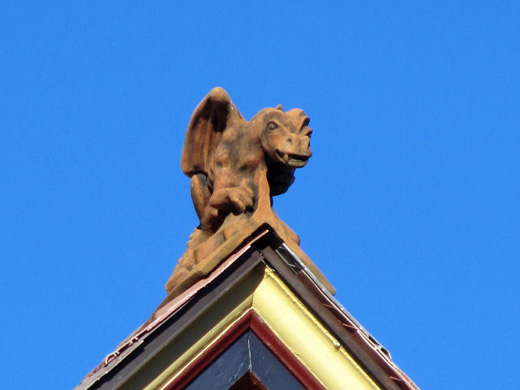
Monsters on the roof!

Leering beasties on the highest peaks!

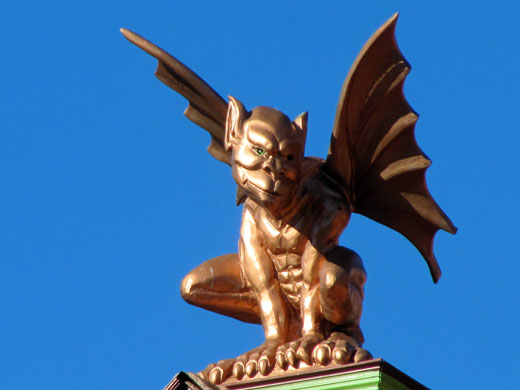
A wingèd sentinel eyeing intruders with eerie patience.

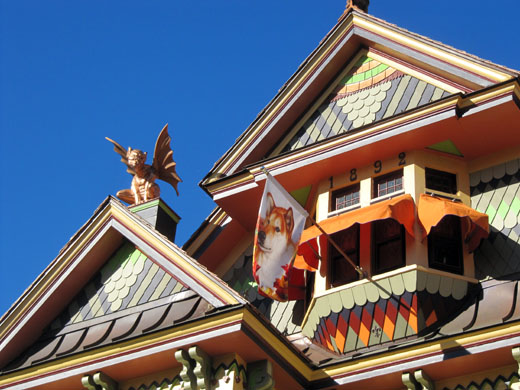
Every shingle, every tile, every baluster and brace sports a carefully chosen color, and other photos show that the flags and awnings change with the seasons. (The house is also festooned with little fleurs-de-lys.)

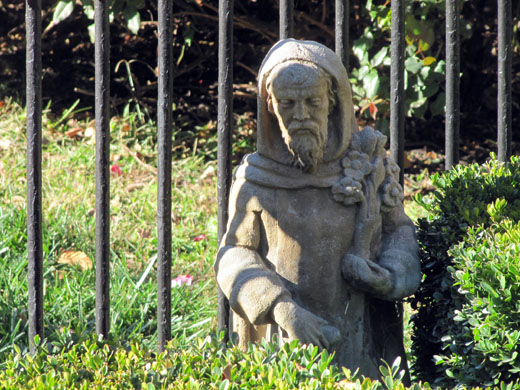
The front yard is a choreographed riot of medievalism: an angel, a saint…

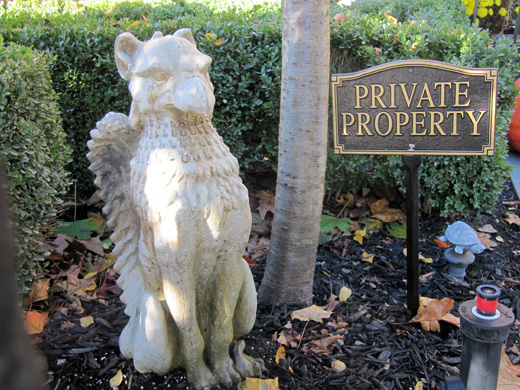
…a gryphon…

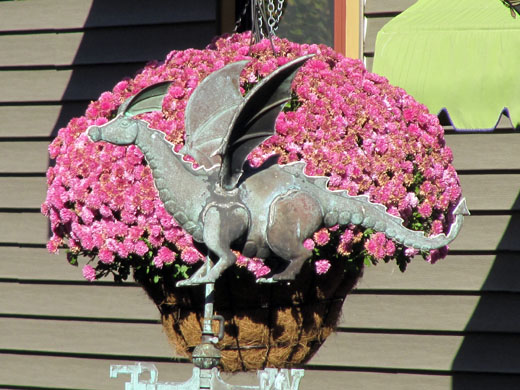
…and dragons.

So why has the Rogers House spawned a quasi-medieval fantasy world? Maybe that round turret screams “castle” to the current owners, or perhaps the meticulous, old-fashioned care necessary to restore and curate such a monumental home feels “medieval” to Americans who are inclined to collapse the past into a blur of “olden times,” when skilled craftsmen begat gargoyles, dragons, angels, and saints.

Or maybe their motive is more timeless. People variously perceive the medieval world as teetering between austerity and chaos, ignorance and enlightenment, but the owners of the Rogers House endorse a different predilection, one that’s never as common as it ought to be but which does have its place in the Middle Ages, as long as you know where to look: a pure, prismatic delight.

“…and in a yellow taxi turn to me and smile…”

As the Dennis DeYoung of medievalism-themed blogs, “Quid Plura?” loses its voice from time to time, only to come screaming back amid synthesizer-fueled fanfare. These days, I’m working on two books, one of them a translation of a medieval poem, but blogworthy medievalism is never far from my mind—because I live in what is arguably the most medieval neighborhood in Washington.

I’ll show you what I mean. First, hike uphill through my substitute for a back yard, a nature conservancy named for a 13th-century Welsh market town…

…to emerge beneath the watchful eyes of these elementary school elves…

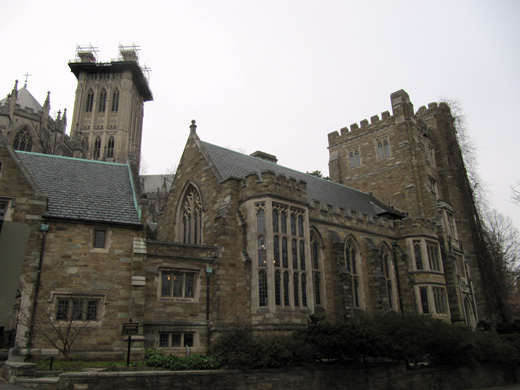
…before we hurry past the castellated, gargoyle-festooned (and recently shuttered) preachers’ college…

…to explore the grounds of our neighborhood English Gothic cathedral (shown here pre-earthquake)…

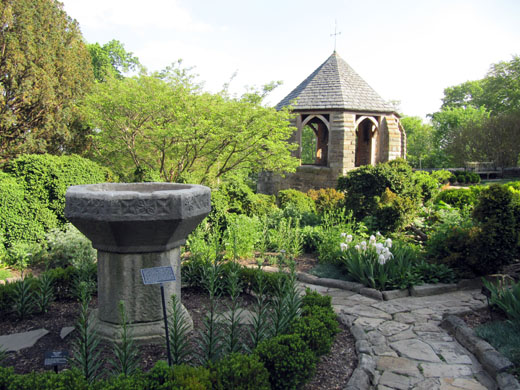
…with its thriving garden devoted in part to Walafrid Strabo, tutor to Charlemagne’s grandson…

…and decorated with a medlar tree right out of Chaucer and a worn capital from the monastery of Cluny, all of it just footsteps from a tree grown from the Glastonbury Thorn…

…and across from an apartment house with a Gothic, grotesque-festooned facade.

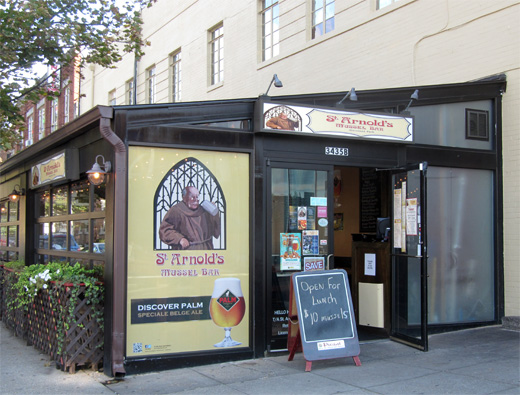
Touring romanticized reminders of medieval culture can be tiring, so trudge downhill and relax with a pot of mussels and Belgian beer at a joint named for a mash-up of the Merovingian Saint Arnulf of Metz and an 11th-century saint from Soissons.

Last week, I stopped to gawk at a troupe of Morris dancers outside a nearby pub, and sometimes there’s a bust of Dante in a shop window down the block—but why chase them down? I won’t soon run out of material, and this unlikely pageant of saints, gargoyles, and European ghosts only makes it easier to work on medieval-themed books. Even in a neighborhood where few others hear them, the echoes of the Middle Ages never end.

“The forming of a new connection, to study or to play…”

As rainy gloom descends on D.C., we call the kobolds to come in from the fields. Enjoy what they bring: books, medievalism, and a bit of poetry.

Medievally Speaking reviews Tolkien’s The Fall of Arthur. (Kathy Cawsey recently read it, too.)

Box Elder explores an old church in the French town of Morlaix, both inside and out.

Nancy Marie Brown, author of the recent Song of the Vikings, fondly remembers a teacher, mentor, and friend.

Congrats to Michael Livingston, who’s published a casebook on Owen Glendower.

Steve Muhlberger spots a modern-day stylite living on a (large) pillar in Georgia.

Bibliographing likes and doesn’t like George R.R. Martin.

The Gargoyle Girl unveils a new alchemist-and-gargoyle mystery series.

Open Letters Monthly highlights The Black Spider, a Swiss horror novel from 1842.

Michael Drout announces his audiobook about the liberal arts.

Cynthia Haven hardly minds when American novelists don’t win the Nobel Prize.

With Halloween in mind, I’ve Been Reading Lately seeks out ghost stories in Boswell’s Life of Samuel Johnson.

Laudator Temporis Acti finds books in art.

Chris at Hats & Rabbits defies “the gods of creativity.”

First Known When Lost offers poems of arrival and departure.