
As the Dennis DeYoung of medievalism-themed blogs, “Quid Plura?” loses its voice from time to time, only to come screaming back amid synthesizer-fueled fanfare. These days, I’m working on two books, one of them a translation of a medieval poem, but blogworthy medievalism is never far from my mind—because I live in what is arguably the most medieval neighborhood in Washington.
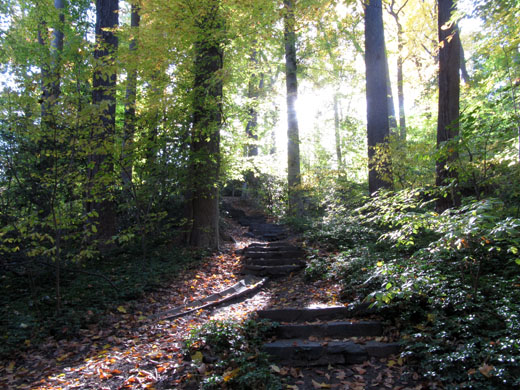
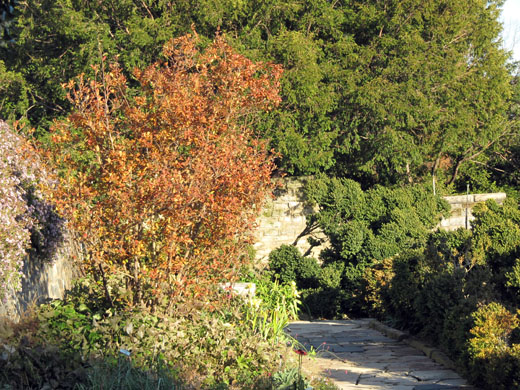
I’ll show you what I mean. First, hike uphill through my substitute for a back yard, a nature conservancy named for a 13th-century Welsh market town…
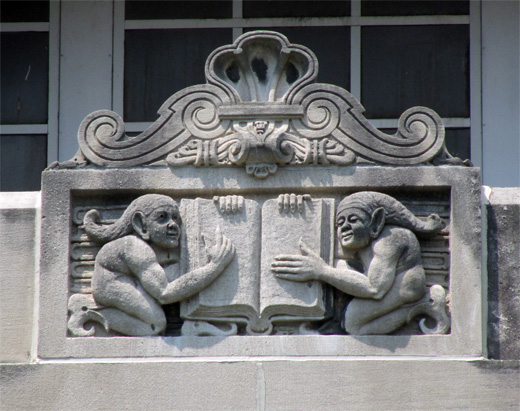
…to emerge beneath the watchful eyes of these elementary school elves…
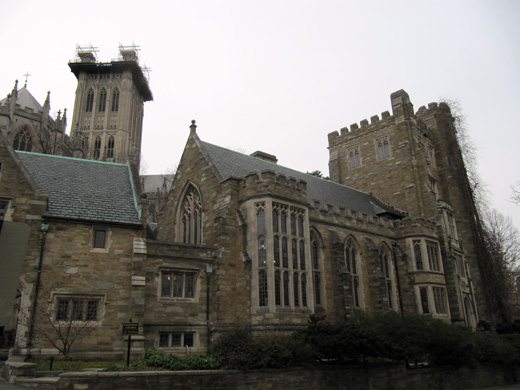
…before we hurry past the castellated, gargoyle-festooned (and recently shuttered) preachers’ college…
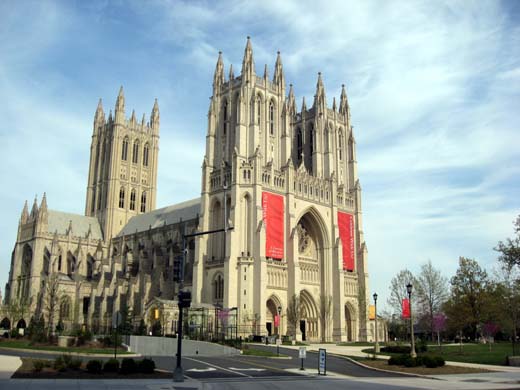
…to explore the grounds of our neighborhood English Gothic cathedral (shown here pre-earthquake)…
…with its thriving garden devoted in part to Walafrid Strabo, tutor to Charlemagne’s grandson…
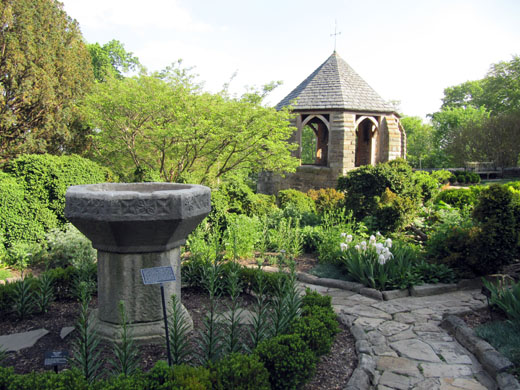
…and decorated with a medlar tree right out of Chaucer and a worn capital from the monastery of Cluny, all of it just footsteps from a tree grown from the Glastonbury Thorn…
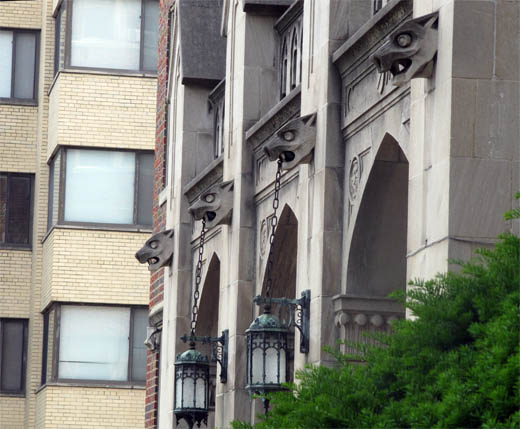
…and across from an apartment house with a Gothic, grotesque-festooned facade.
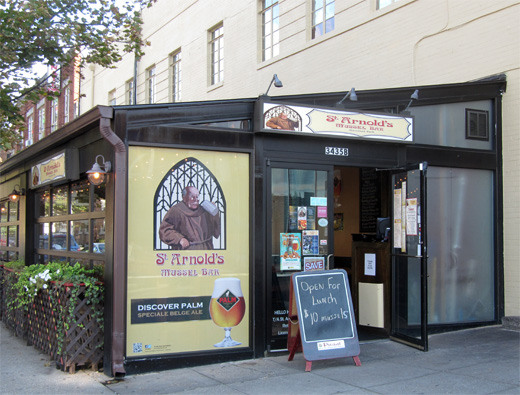
Touring romanticized reminders of medieval culture can be tiring, so trudge downhill and relax with a pot of mussels and Belgian beer at a joint named for a mash-up of the Merovingian Saint Arnulf of Metz and an 11th-century saint from Soissons.
Last week, I stopped to gawk at a troupe of Morris dancers outside a nearby pub, and sometimes there’s a bust of Dante in a shop window down the block—but why chase them down? I won’t soon run out of material, and this unlikely pageant of saints, gargoyles, and European ghosts only makes it easier to work on medieval-themed books. Even in a neighborhood where few others hear them, the echoes of the Middle Ages never end.
 When Becoming Charlemagne came out in 2006, I saw it as (among other things) a story about how swiftly time overtakes us. Little did I know that its elegiac mood would soon apply to the many defunct bookstores where it made its debut.
 In the 15th century, an anonymous poet composed “The Tale of Ralph the Collier,” a 972-line Middle Scots romance about the kerfuffle that ensues when Charlemagne, separated from his entourage by a snowstorm at Christmastime, seeks refuge in the home of a proud and irascible collier. Combining folklore motifs with burlesque humor and elements of chansons and chivalric romances, “Rauf Coilyear” is a lively but rarely-read tale of courtesy, hospitality, and knighthood. To my knowledge, it’s also the only medieval romance in which Charlemagne totally gets slapped in the face.
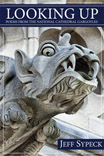 From 2009 to 2012, I posted the first drafts of 51 poems on this blog, each one inspired by a gargoyle or grotesque at Washington National Cathedral. What started as a lark turned serious when the cathedral granted me permission to show their typically camera-shy gargoyles in a compilation of the poems. In return, I’m donating 75 percent of the net profits to them to help repair damage from the 2011 earthquake.
 Quid Plura?