“Midnight, headlight, find you on a rainy night…”

When Chaucer praised his Clerk by writing that “gladly wolde he lerne and gladly teche,” he probably never pictured the poor dude trying to do both of those things while also holding down a full-time job. Such is the state of things here at “Quid Plura?” headquarters. Those of you who have pre-ordered Becoming Charlemagne II: The Curse of Lothar’s Gold will have to wait longer than I’d hoped. Fortunately, you won’t have to wait long at all to hear the pitter-patter of sundry links.

At The Economist, “Charlemagne” ponders the global ascendancy of English and the counterintuitive downsides for native speakers.

Commenters at the New York Times travel blog hate this guy who begs his way across Europe.

Lingwë mulls over the plurals “oxen” and “foxes.”

The world’s hardest-working royalty-blogger is now on Twitter.

K.A. Laity is writing a novel 500 words at a time.

Steve Donoghue reviews a new translation of Boethius. (One hopes it abounds in theology and geometry.)

Ephemeral in New York recalls the tuberculosis of yesteryear.

“Quid Plura?” readers fall into two camps: people who want to know how Icelandic sheep’s head jelly is made, and terrorists.

My Life in Books finds an odd little book: a short story in twelve languages.

L.C. McCabe finds a fantasy adaptation of Orlando Furioso with a really awful cover.

On Valentine’s Day, Alpheus remembered how the Brownings fell in love.

Speak Swedish? Know your runes? The Riksantikvarieämbetet is looking for runologists.

Did you know the Beach Boys recorded in German? I sure didn’t.

Call your cable provider if you think you need the Clive Clemmons Inappropriate Heavy Metal Response Channel.
“When I am king, dilly-dilly, you will be queen…”

“You ask if I love you,” Charlemagne famously wrote to Queen Fastrada from the Avar front. “What can I say? You know that I do, and that this is just one of those games that we play.” The occasion for that letter was Valentimes, a little-known Frankish observance held on February 13 to honor a Roman citizen whose martyrdom in the jaws of a vicious bear was, historians now believe, a case of mistaken identity. Although little is known about Valentime, the Vatican recently named him the patron saint of supermodels and the illiterate, and the memory of his martyrdom lingers in a centuries-old custom by which undemonstrative men send costumed toy bears to their lovers as tokens of affection.

Those of us who harbor a passion for historical accuracy will observe Valentimes Day with ursine solemnity. However, because the spirit of Valentime demands that we tolerate misguided readers who venerate saints of far more dubious provenance, we offer this bouquet of music videos about love and romance to get you through a highly emotional weekend.

The great Louis Jordan loved Caldonia in spite of himself.

Neil Finn could have told him: she will have her way.

Boleslaus II may fought for his people’s independence, but in the 1970s we recognized only one macaronic Polish prince: Moja droga, jacie kocham…

Roger Miller at his best: “Leavin’s Not the Only Way to Go.”

The year was 1985, and Kid Creole couldn’t answer a simple question: “Why can’t you be like Endicott?”

To my knowledge, there’s only country song about the effect of faster-than-light space travel on a long-distance relationship: “Benson, Arizona.”

What do you get when you filter an English nursery rhyme, the inexpressibility topos, and mid-1980s progressive rock through the liver of a disheveled Scotsman? “Lavender.”

Jersey guy Pat DiNizio puts a sober Smithereens spin on “Well All Right” by Buddy Holly.

Got halitosis before that big Valentimes date? Take a handful of Mighty Lemon Drops.

Guys, today isn’t the day to drunk-dial the girl you lost to cocaine.

John Waite, of all people, gives us a heartfelt cover of “Girl From the North Country.”

I didn’t think much of the Sting song “Fields of Gold.” Then I heard the late Eva Cassidy perform it.

“He sits in the canyon with his back to the sea…”

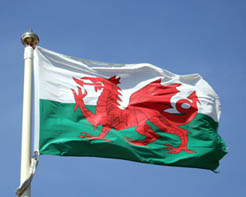
Every few years, I’m asked to teach Arthurian literature, a gig that’s led to a curious custom here at “Quid Plura?” headquarters: In the week before we talk about The Mabinogion, I fly the Welsh flag above my television. When the week is over, the flag gets folded and stowed, but not before I’ve caught up on several years of Welsh news, reread the relevant scholarship, and startled myself daily with the sight of a huge red dragon by the bathroom door.

What more can I say? Y Ddraig Goch ddyry gychwyn! Let the red dragon show the way to this dubious assortment of Welsh-themed links.

Amazon user G.R. Grove has kindly compiled a list of novels set in medieval Wales.

Watch the first part of an eight-part BBC documentary about Owain Glendywr.

Need a fix of Welsh? Listen to BBC Cymru, partake of their “Learn Welsh” Web site, or dabble in the language with the Cardiff School of Computer Science.

The Digital Medievalist has a FAQ on learning Middle Welsh.

Last year, locals officials made a wonderful mistake on a Welsh-language road sign.

What’s more Welsh than a male voice choir singing the national anthem? Possibly a male voice choir singing “Myfanwy.” (You’ll find the lyrics here.)

If you ever need accommodations in Snowdonia, pop over to the Plas Gwyn Guest House. The proprietor cooks a fine breakfast and stocks a nice library of maps for the overzealous hiker.

While you’re there, gawk from the highway at Dinas Emrys, where Vortigern supposedly tried to build his tower on the shakiest of foundations.

If you want to follow in Patrick McGoohan’s footsteps and be chased by a giant inflatable white ball creature thingie, Plas Gwyn isn’t far from Portmeirion.

Here’s something you don’t see every day: a “Welsh language hip hop 80s style badminton video.”

To my knowledge, there’s only one song about a wheelchair-bound savant who takes a break from starting World War III on his cell phone to wax nostalgic about his Welsh upbringing. Here it is.

“…I can live off the chickens in my neighbor’s yard.”

In the past two years, I’ve enjoyed the work of the writers and scholars whose sites comprise my blogroll. This weekend, as the kolbolds and bugbears on Capitol Hill flay all meaning out of the word “stimulus,” there is something you can do to support hard-working writers: you can buy their books.

So everyone is blathering on about “infrastructure,” but what really happens when shady politicians bicker over pet projects? Let Steven Hart enlighten you. Read his timely and terrific book The Last Three Miles: Politics, Murder, and the Construction of America’s First Superhighway.

In September, when Germans marks the 2,000th anniversary of the battle of Teutoberg Forest, you’ll want to have read Adrian Murdoch’s book about it, Rome’s Greatest Defeat. If you’re looking for highly readable introductions to Late Antiquity, check out Murdoch’s other books, The Last Pagan and The Last Roman.

Olen Steinhauer is a novelist to watch. His police procedurals set in Communist Eastern Europe beautifully evoke a sad, broken world, and his forthcoming spy thriller, The Tourist, has garnered lots of advanced praise.

Last year, Leslie Pietrzyk won over my mom, who called Leslie’s novels “much better than that stuff Oprah is always trying to get us to read.” Pears on a Willow Tree focuses on women in a Polish-American family; A Year and a Day tells the story of a girl dealing with a family suicide.

C.M. Mayo’s historical novel, The Last Prince of the Mexican Empire, is due out in May, but if you plan to head south of the border before then, you’ll want her much-praised Mexico: A Traveler’s Literary Companion.

K.A. Laity is just too prolific. Check out her books about folklore, fiction, film, and religion.

Cartoonist Alexis Fajardo loves a good epic. His all-ages graphic novel Kid Beowulf and the Blood-Bound Oath is now available, and you can already pre-order its sequel, Kid Beowulf and the Song of Roland.

Let’s not overlook the scholars. The inimitable Scott Nokes is the co-editor of Global Perspectives on Medieval English Literature, Language, and Culture, a quirky collection of articles about Chaucer, Boethius, C.S. Lewis, and the Popol Vuh.

Do your plans include a pilgrimage to 14th-century Canterbury? If so, then get to know Will McLean, who regularly blogs about historical recreation. He co-authored the recently reissued Daily Life in Chaucer’s England.

If you’re eager to dig more deeply into the question of how Karl became Charlemagne, look to Matthew Gabriele. He’s the co-editor of the excellent The Legend of Charlemagne in the Middle Ages: Power, Faith, and Crusade.

Charlemagne understood that resourceful people could prosper despite difficult times. “There’s a lot of opportunities,” he famously opined, “if you know when to take them, you know?” Why not put a few bucks in the pockets of these authors and prove the old king right?

“Plastic tubes and pots and pans, bits and pieces…”

Distinctively husky yet tinged with notes of genuine sweetness, galangal is the Alison Moyet of rhizomes. Once upon a time, galangal—which looks like ginger but has its own pungent flavor—was a princely part of the medieval European spice rack. Chaucer mentioned it, Hildegard of Bingen praised it, and 14th-century kings kept it on their shopping lists. Today, galangal rarely turns up in Western recipes, a state of affairs I find deplorable—which is why I’ve established, and urge all of you to support, the “Quid Plura?” Crusade for the Restoration of Galangal in the West.

Shortly before Christmas, I found myself pondering a question for the ages: Since ginger has long done yeoman’s work as the primary flavoring element in its own eponymous carbonated soft drink, is there a good reason why galangal, its mustardy cousin, has never been conscripted into the elite corps of beverage-infusing rhizomes?


A thorough Google search turned up nothing for “galangal ale” except for a few references to a hot, soupy, tea-like drink from Thailand. And so, armed with a ginger ale recipe that worked out well for me in the past, I gathered the necessary ingredients and set out to create a simple, closed fermentation system that would make my inspiration potable.

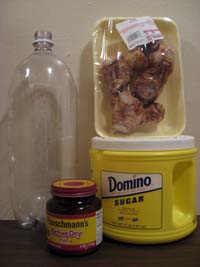
The recipe was simple: two liters of water, one cup of sugar, a quarter teaspoon of yeast, and—in place of the customary ginger—three tablespoons of fresh, shredded galangal.

I put the whole concoction in a plastic bottle, wrapped the bottle in a plastic bag, and let it ferment inside my unlit oven for a day and a half. When carbonation made the bottle sufficiently dent-proof, I carefully transported it to the nearby home of some friends who had agreed to serve as taste-testers. Nervous, but interpreting the failure of the bottle to explode as a positive sign, we poured a few glasses of chilled, fizzy galangal ale, and we sipped.

You know what? Galangal ale is good.

Galangal ale tastes nothing like ginger ale, nor does it taste like any other soft drink I’ve ever had, but it is delicious. The galangal root gives the soda a strong, strange flavor, like mustard and perfume intermingled, but the sugar complements the galangal perfectly, so what normally might be a bit nasty is instead only a lingering pungency. It’s an acquired taste, but it’s hardly unpleasant. One of my brave taste-testers guzzled it down; another remarked that it would make a very refreshing summer drink.

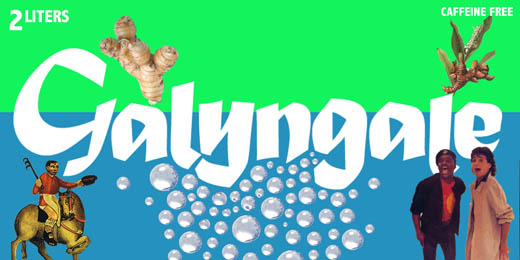
And so, dear readers, in these trying times of crisis and universal brouhaha, I’ve made a decision: I’m abandoning this whole writing-and-teaching racket to pursue a far more effervescent future. Having taken out three mortgages on my home, I’ve rented an abandoned firehouse and commissioned a graphic designer to create a subtle yet persuasive label that highlights our Middle English brand name.

This spring, when you see my carbonated labor of love in the soft-drink aisle of your local Safeway (or Tesco), don’t keep walking. Drop a bottle in your basket and know that you’re subsidizing the great Galangal Crusade. The West’s most neglected rhizome needs your help—and those high-priced celebrity endorsements aren’t gonna pay for themselves.

“…hiding out in tree-tops, shouting out rude names.”

Medieval Icelanders may not have been able to charge $100,000 per second for advertising, but they too had their spectator sports, including the ball games that accompanied the two-day bout of feasting and drinking at the start of every winter.

In Gisli’s Saga, crowds gather to cheer on their favorite players of knattleikr, a sport sometimes described as a combination of rugby, hockey, cricket, and lacrosse. Gisli—widely acclaimed as the second-cleverest outlaw in the sagas—hits the ice against a background of family drama: Gisli’s wife’s brother, Vestein, has just been murdered, because Gisli’s sister-in-law, Asgerd, was making eyes at him, which made Asgerd’s husband, Gisli’s brother Thorkel, jealous. Thorgrim, who’s married to the sister of Thorkel and Gisli, is the likely suspect.

Get all that? Doesn’t matter. Here (from Martin Regal’s translation) are Gisli and Thorgrim working out their rivalry on the frozen gridiron, with Thogrim sort of confessing to the murder in skaldic verse:

The games now started up as if nothing had happened. Gisli and his brother-in-law, Thorgrim, usually played against each other. There was some disagreement as to who was the stronger, but most people thought it was Gisli. They played ball games at Seftjorn pond and there was always a large crowd.

One day, when the gathering was even larger than usual, Gisli suggested that the game be evenly matched.

“That’s exactly what we want,” said Thorkel. “What’s more, we don’t want you to hold back against Thorgrim. Word is going around that you are not giving your all. I’d be pleased to see you honoured if you are the stronger.”

“We have not been fully proven against each other yet,” said Gisli, “but perhaps it’s leading up to that.”

They started the game and Thorgrim was outmatched. Gisli brought him down and the ball went out of play. Then Gisli went for the ball, but Thorgrim held him back and stopped him from getting it. Then Gisli tackled Thorgrim so hard that he could do nothing to stop falling. His knuckles were grazed, blood rushed from his nose and the flesh was scraped from his knees. Thorgrim rose very slowly, looked towards Vestein’s burial mound, and said:

Spear screeched in his wound
sorely — I cannot be sorry.

Running, Gisli took the ball and pitched it between Thorgrim’s shoulder-blades. The blow thrust him flat on his face. Then Gisli said

Ball smashed his shoulders
broadly — I cannot be sorry.

Thorkel sprang to his feet and said, “It’s clear who is the strongest and most highly accomplished. Now, let’s put an end to this.” And so they did.

A modern reader can greet Gisli’s Saga with a sigh of relief, happy not to be living in those awful Middle Ages. After all, the days when star athletes might work out their personal issues on the field or throw tantrums, let alone murder someone, are clearly long behind us.

“Next time, la luna…”

On Monday, in the wake of its national banking meltdown, the Icelandic government collapsed, its demise hastened by a saga-era tradition: the angry mob. The Economist can do a better job of explaining the political implications than I ever could; I’ll only note that most photos of the protests in front of the Althing, the Icelandic parliament, show crowds congregated in Austurvöllur, one of Reykjavik’s most picturesque public squares and—come on, surely you saw this coming—a place of symbolic interest to medievalists.

According to Landnámabók, the Icelandic “Book of Settlements,” the first permanent Nordic settler in Iceland was Ingólfr Arnarson, who put down roots in A.D. 874. Written centuries after the fact, Landnámabók may not be a perfectly reliable source, but Ingólfr’s legend is kind of fun:

That summer when Ingolf set out with his companions to settle Iceland, Harald Fairhair had had been for twelve years King over Norway. There had elapsed from the creation of the world six thousand and seventy three winters, and from the Incarnation of our Lord eight hundred and seventy four years. They held together until they sighted Iceland, then they separated. When Ingolf sighted Iceland he cast overboard his high seat pillars for an omen, and he made the vow that he would settle there wherever his high seat pillar came ashore.

Ingólfr’s foster brother, Hjorleif, settled west of where Ingólfr camped out, but he was killed by his Irish slaves. Ingólfr took revenge and killed them—supposedly naming the Westman Islands after the Irishmen in the process—while his own slaves, Karli and Vifill, searched the coast for his cast-off pillars. Karli, who came across the pillars three winters later, found the ritual anticlimactic. “To an evil end did we pass through goodly country-sides,” he griped, “that we should take up abode on this outlying ness.” Karli ran away—but when Ingólfr, his slaves, and the entourage he filched from his dead foster brother raised the recovered pillars, they were witnessing, of course, the founding of Reykjavik.

Austurvöllur is said to have been one of Ingólfr’s hayfields; today a statue of 19th-century independence campaigner Jon Sigurdsson stands in its center, with the Icelandic parliament and the country’s most venerable church in sight. I like the symbolism of Icelandic democracy playing out on Ingólfr Arnarson’s old property. Maybe there’s a certain pagan allure to the legend of the pillars, a plain case of casting your fate to the cold northern tides, as the British and the Dutch did with their Icelandic bank accounts, but the determination of the modern protesters also recalls lines from the Poetic Edda that Ingólfr Arnarson probably knew:

Erat maðr alls vesall,
þótt hann sé illa heill;
sumr er af sonum sæll,
sumr af frændum,
sumr af fé ærnu,
sumr af verkum vel.

Betra er lifðum
en sé ólifðum,
ey getr kvikr kú;
eld sá ek upp brenna
auðgum manni fyrir,
en úti var dauðr fyr durum.

“No man is wholly wretched, though he have ill luck,” these verses read in English. “One is blessed with sons, another with kinsmen, another has sufficient money, another has done decent deeds. Better to live than not to live; the living man gets the cow. I saw a fire blaze up for the wealthy man, but he was dead outside his door.” The wisp of smoke that passes for Nordic optimism infuses those lines, asserting that problems can always get worse. Ingólfr’s heirs, angrily milling about Austurvöllur with placards and flags, are raising their pillar on a much less medieval foundation: the notion that Iceland can also be better.

“He’s got this dream about buying some land…”

As regular readers know, Charlemagne was not, by nature, an urbanite. “This city desert makes you feel so cold,” he wrote to Alcuin from Rome in the year 800. “It’s got so many people, but it’s got no soul.” (Tot cives, sed animam non habet.) Frankly, I think the old emperor was onto something. After all, what’s the real value of having mass transit and a post office within walking distance when instead, with sound financial planning, you can spend your golden years pacing the ramparts of a mountaintop fortress while scanning the horizon for orcs?

Apparently, one European real-estate firm believes Charlemagne’s name can help sell such a castle:

A castle which straddles the border between Tuscany and Umbria and whose first known owner was Charlemagne, the King of the Franks, has been launched on the market.

The location is on the old road between Rome to Florence passed here and famous travellers, among them Goethe, Byron and Hawthorne, visited the castle.

Many of the castle’s original features such as gunports, battlements, moat, dungeon are still intact or carefully restored to the highest standards. The circular courtyard encloses five buildings: the main palace, the guest house, the church, the old dungeon and the garage.The grounds extend to 32 acres of olive groves and woods.

The castle is a short drive from central Italy’s main historical cities, 45 minutes from Siena, 1 hour from Florence and Orvieto, 1hr 45 from Rome, 10 mn from Cortona and 30 mn from Perugia and Montepulciano. There is also a helipad on site.

According to the International Herald Tribune, the castle dates from 802, so even if Charlemagne did own the property, he didn’t spend a single night there, because he never returned to Italy after his imperial coronation. For €13 million, I’d want proof that the emperor once admired those olive groves—or at least evidence that he used the helipad.

“Little lines, in the ice, splitting, splitting sound…”

So yesterday, Washington got snowed on; tonight, freezing rain has encrusted the city in ice, which, while all sparkly and picturesque, is sufficiently treacherous to prevent a muddle-headed, flu-fighting medievalist from hitting the streets at 2 a.m. in search of his remedy of choice: an assortment of donuts from 7-Eleven.

And so, donut-deprived, frosting-forlorn, bereft of blueberry filling, I can only squint pensively at the snow from my window and be glad I’m not Charlemagne, who likewise tries to settle his brain with a bit of twilight snow-gazing in Longfellow’s “Eginhard and Emma”:

That night the Emperor, sleepless with the cares
And troubles that attend on state affairs,
Had risen before the dawn, and musing gazed
Into the silent night, as one amazed
To see the calm that reigned o’er all supreme,
When his own reign was but a troubled dream.
The moon lit up the gables capped with snow,
And the white roofs, and half the court below,
And he beheld a form, that seemed to cower
Beneath a burden, come from Emma’s tower…

You’ll have to read the whole thing to find out what Charlemagne spied with his imperial eye. (Hint: it wasn’t a donut.)

The story of Eginhard and Emma was popular during the 19th century: It was retold in corny books about Rhineland legends, Strindberg turned it into a short story, and Schubert made it part of his opera Fierrabras. How the actual fling between Charlemagne’s daughter Berta and his adviser Angilbert got transformed into a romance between Charlemagne’s biographer and a wholly fictional daughter is a mystery to me, but it’s a ready-made thesis for a dissertation, or at least the starting point for an ambitious novelist with a penchant for romantic fantasy.

To his credit, Longfellow kept his version both eloquent and concise, giving us lots of memorable couplets and a lovely description of Alcuin. It’s no donut—but really, what is?

“Hast du etwas Zeit für mich..?”

New posts are coming, but not yet. Work, writing, and teaching are getting in the way, plus I’m scrambling to get my German up to speed. So what better for a Friday than a miscellany of recent German links?

Does the daily grind make you wish you were a chicken, dämmlich aber froh? In 1936, these Germans pretending to be New Yorkers agreed with you.

If you want to see the passion play at Oberammergau in 2010, AAA suggests you start your planning now.

Lingwë weighs Germanic and Romance roots as he knocks around the etymology of “gavel.”

Long known for his Hollywood soundtracks, Austrian-born composer Erich Wolfgang Korngold is being rediscovered by conductors.

Gypsy Scholar notes the mystery of German artist Stefan Mart.

Lost Fort has photos of Roman weapons from Saalburg fortress.

As the 2,000th anniversary of the Battle of Teutoberg Forest approaches, Adrian Murdoch has been following the early press coverage, including articles about the use of history by modern politicians.

Teutoberg shmeutoberg! Early September will also mark the 50th anniversary of the patent on my favorite train-station delicacy, currywurst.

Speaking of fast food, Cranky Professor reports sad news: the inventor of the döner kebab has died.

Finally, here’s David Bowie singing—what else?—“Helden.”