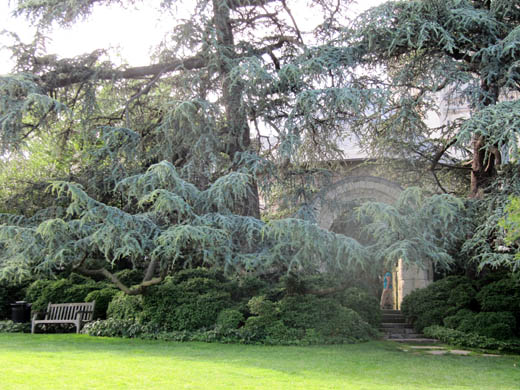
“Spending warm summer days indoors…”

Longtime readers know this blog took an odd turn in late 2009 when poems about the National Cathedral gargoyles started popping up. To my surprise, a whim—a sonnet about a boar and a dashed-off song about a monster—turned into both a long-term project and a refreshing creative challenge.

Readers tell me they like the gargoyles, but I’ve also fielded enough questions that it’s probably time for a FAQ.

So why did you decide to follow up a moderately successful nonfiction book with a batch of gargoyle poems?
My agent and editor tell me that light, formal verse is the next big trend in publishing. A team of highly paid consultants is working day and night to ensure that I’m branded in the public mind as “the Dan Brown of medievalist gargoyle ekphrasis.”

No, really, what’s the deal?
From 2006 through 2008, I promoted Becoming Charlemagne, an adventure that was wonderful in hindsight but very tiring. Then I spent most of 2009 on long writing projects for other people, to the point of word-weariness and exhaustion. These poems, like most posts on this blog, let me re-associate writing with pleasure without worrying about marketability, editors’ impressions, or other people’s needs.

Are you going to write poems for all of the cathedral’s gargoyles?
Heck no. The cathedral sports 112 gargoyles and more than 1,100 grotesques. I’ll focus only on my favorites, around 50 in all.

Does this project have a name?
I’ve been calling it “Looking Up.”

How can I read all of the gargoyle poems to date?
Easy: just hit the “looking up” link at the bottom of each gargoyle post or under “Categories” in the right-hand column of the page.

If you’re a new reader looking for a sampling, check out the cicada ghazal, the song of a lovelorn monster, the alliterative advice of a bitter mother, the fretful musings of an artsy fawn, the domestic drama of an octopus reappraising her lobster, and the most popular poem so far, a yarn about where dragons come from.

Will you turn these poems into a book when you’re done?
Several readers have told me they want one, so yes.

How long will that take?
I don’t know. I have a full-time job, I teach part-time, and occasionally I do engage in pastimes unrelated to gargoyles. Probably mid-2012.

Do you take requests?
Several of these poems have been inspired by anecdotes from readers, students, and friends. So yes, if you have a favorite vocation, cultural icon, wild animal, or mythical beast, send me a note and tell me a story and I’ll see what I can do.

Do you take the gargoyle photos on this site?
Yes. I’m a crummy photographer who happens to own a point-and-click camera with a decent zoom lens.

Are you affiliated with the National Cathedral?
No. The cathedral just happens to be an easy, one-mile stroll from “Quid Plura?” headquarters. Its grounds and gardens offer a welcome getaway from the rest of D.C. when the city’s at its ephemeral worst.

Are there any guidebooks to the National Cathedral gargoyles?
Wendy True Gasch’s Guide to Gargoyles and Other Grotesques is packed with info-nuggets and photos. It sells new at the gift shop for $12.95. The Stone Carvers: Master Craftsmen of Washington National Cathedral focuses on the lives and work of the Italian masons. The cathedral also offers gargoyle tours.

So have you stopped writing about books and medievalism and Charlemagne and galangal disasters and dumpsters full of hobbits?
Of course not! The gargoyles, for however long they linger, won’t supplant any of that.

You must like Shel Silverstein.
Not really. The only two works of his I know are his ancient Irish drinking song and that book about the codependent tree.

How can I support your gargoylish endeavors?
You can’t, really; it’s not a commercial project. But I won’t complain if you pick up a copy of Becoming Charlemagne (paperback or Kindle) or The Tale of Charlemagne and Ralph the Collier (paperback or Kindle).

Or, heck, just keep reading this blog or subscribing to its feed. I’ll keep writing as long as you keep bringing the eyeballs.

“Slipping the clippers through the telephone wires…”

Cathedral visitors are sometimes confused, even offended, by gargoyles that honor irreverence or depict blatant evil. The suicidal, Gollum-like “Stabber” on the west front isn’t surprised; he knows what he is.

ALL HALLOWS’ EVE

Long live the weeds and the wilderness—yet
What would be left of the wildness and wet
Were it not for the curdle, the canker, the theft
That threaten to render the blessèd bereft?

Our beady-boned eyebulge flits over the burn;
Wily we twitch through the sack-shriveled fern
As the groin-growls enrage us where daggers bite through,
Damning the bloodline that dapples the dew.

Yet rounded in couplets, despair-darksome sneering,
Frown pitchblack poets defy all our leering,
Twindled revisioners burbling like broth,
Donning their Jesuit wind-shriven cloth.

What pumpkin-maws mumble, we ache to express;
Ghouls plunder verses they dare not possess.
Take heed of the unhallowed eyeblight you mourn:
Then know why the saints of the morning were born.

(For all the entries in this series, hit the “looking up” tab.)

“Way up there in the poison glen…”

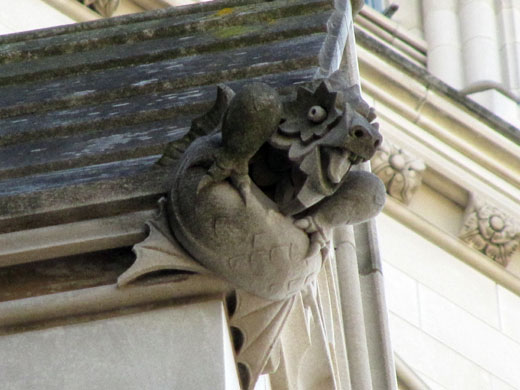
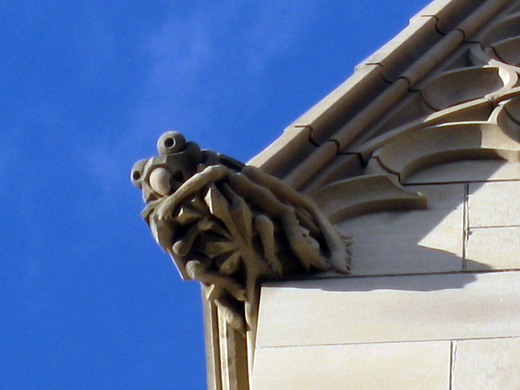
This creepy dragon on the north nave hides within his own fishy body. If you approach him, he’ll sing prophetic nonsense.

AUTUMN SONG

Clerks wrap swords in newsprint gray;
Voices of Avalon pine and pray.

Spine-cracked quartos brace the wall;
Voices of Avalon flake and fall.

Cursors burn a wanton field;
Voices of Avalon yawn and yield.

Spiders fast in pyx and grail;
Voices of Avalon fade and fail.

Glowing points rouse brush-bent hair;
Voices of Avalon strain and swear.

Roof-beams warp like corset bone;
Voices of Avalon mince and moan.

Unplucked medlar rots to wine;
Voices of Avalon pout and pine.

Marshes drown the back-toll’d bell;
Voices of Avalon swoon and swell.

Mice in moat-muck bloat face-down;
Voices of Avalon fuss and frown.

Grave-masks grin, but none deceive;
Voices of Avalon groan and grieve.

No knights rise, though one did try;
Voices of Avalon drift and die.

Furze-pigs rove in disarray;
Voices of Avalon seethe and say:

“Run, and raise the rust-white gate.”
Voices of Avalon wait.

(For all the entries in this series, hit the “looking up” tab.)

“When August and September just become memories of songs…”

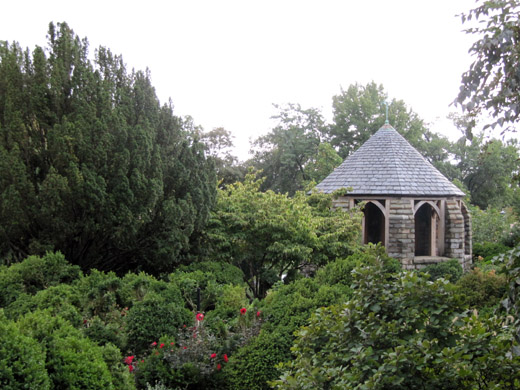
Sometimes October surprises us, coming over the Potomac like a shower of warmth. We stop in the colonnade and go on in sunlight, into the Bishop’s Garden, and drink Gatorade, and talk for an hour.

Sunday was one of those days. Push away from the desk, leave your thoughts unwritten, and remember the timeless words of Gerard Manley Hopkins: “Holy crap, it’s nice outside!”

Park your trike by the door into (Indian) summer.

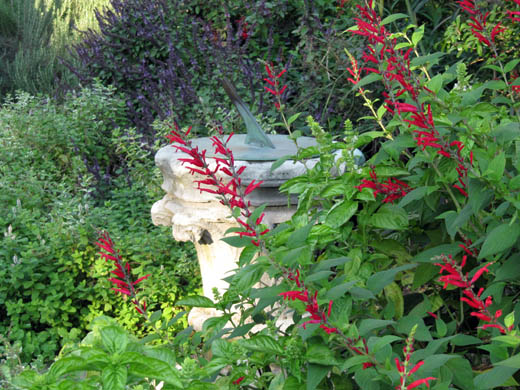
Among the flowers, find a bronze sundial on a 13th-century capital from a monastery near Rheims. Look: it’s medievalism o’clock.

Someone left a flower for our old friend, the satyr…

…and a bouquet of herbs, berries, and chilies at the fish pond.

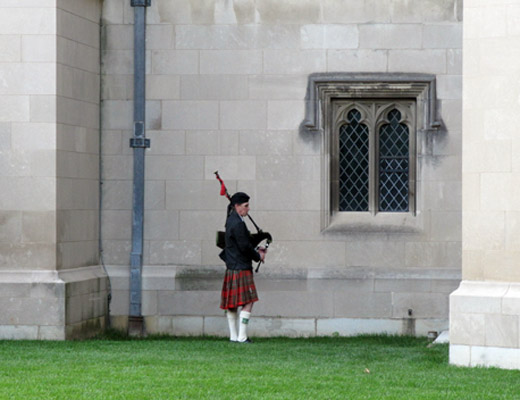
And then, homeward bound—but not before pausing to note a lone Scotsman mournfully piping at sunset.

“‘I might be old, but I’m someone new,’ she said…”

In May, a cicada on a buttress chirped a ghazal. Today, a cockroach replied. Who knew insects talked like this?

FROH

The background: you returned—a draught of wine
Fulfilling sweet the word the wind had thrown,
Returning scents and sight, restoring mine.

Despairingly, we wandered on our own
Beyond you evermore, or so we feared,
Eternal, guileless girl—then how we cheered…

The foreground: love, it glows with you alone.


(For all the entries in this series, hit the “looking up” tab.)

“Out in the garden, there’s half of a heaven…”

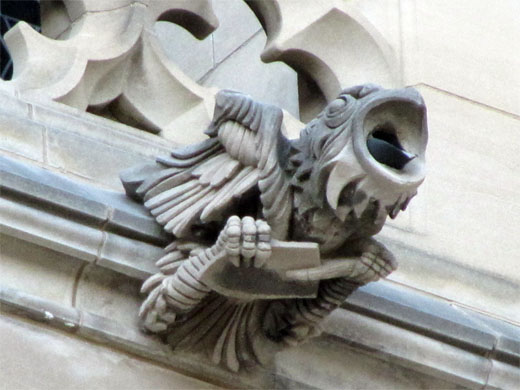
From his perch on the south nave, this avian gardener overlooks the Bishop’s Garden and the nearby woods, but clearly he takes a much longer view. He’ll tell you all about it if you ask him.

SUKKOT

I think that you shall never see
The garden fall when palmers flee.
The scales of summer groan and tilt;
The mite, the moth, the rain-dove wilt,
The hunchneck roses moan with thirst,
The medlar skullfruit split and burst,
But through the leafmeal, long asleep,
The eldritch from the wanwood creep,
Their twilight pastors freely led
By silkwaist suitors stirred from bed.
Their belts of straw and ivy buds
With coral clasps and amber studs
Give way to frond, and myrtle shoot,
And willow leaf, and brightripe fruit.
Through temples roiled by root and vine
They pass to pray, and so divine
Why revels must in autumn reign,
Why pilgrims pirouette in vain,
Why laggards must rehearse at last
The doom of some ecclesiast:
“The flowers do fade, and wanton fields
To wayward winter reckoning yields…”
So pinelights drift, like snows to come,
And mumbling lowly, shuffling numb,
They burrow into bowers veiled:
“Our fadelight feast again is failed.”
But seek no truth from sullen tree;
Recurrence clouds the memory.
We plait our laurels, fools by choice,
But only G-d can cry Rejoice.


(For all the entries in this series, hit the “looking up” tab.)

“Full moon, pass the window sideways…”

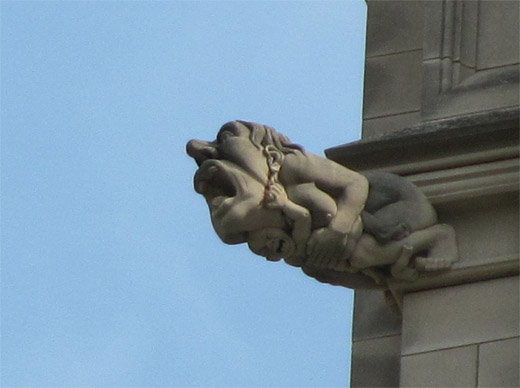
This cavewoman and her baby make for a vivid pair nearly 200 feet above the cathedral’s north lawn. She’s hard to see; the chip on her shoulder is hard to miss.

MEARCSTAPA

I’ve no gold cups       to catch your shrieks
And noises foul,       no nailing rock
Where cronish faces      fade, and matrons
Remoulded as maidens     mourn so gleefully
The babe whose face      they fouled with runes.
No—grear my mouth      and gray my eyes,
And shriv’ling hairs       in handfuls twine;
Time is a rot-wyrm       that riddles us through
And broods in its hole      upon our brighter days
But shares secrets       mere seeresses hide.
All this I owe you;      I own nothing more.
The work of the world      fathers wolfish brats,
But hold your ground.     Heroes will loathe you,
Knowing they need you,    lest no one forge
Prurient tales     from pride alone
Nor string a song    from strokeworn beards.
Behold how hall-thugs    hungry for butchery
Score rusty sword-tips     ’round scabs, hearing
Echoes of Caindom        in all but their own.
Rave when one belches      some rum-ram-ruf lay;
His bones will break.    Just bide your time.
Thole and thrive, son,    throughout dull days;
You’ve naught to fear.    Face them, beaming.
Swive or just sing with them.    Savor their smell.
Their bile, rising,     my boy, you’ll taste,
And soon you’ll crave     their crawling flesh,
And late you’ll drain     their draughts of blood,
And ere the dawn      their oaths they bleat,
Graying faces     greeting the morn
Will gape at your night-work,    noble heroes
Strangled, overthrown,     strawberry-flecked,
Sweet sentinels,     singers of tales,
Wyrd-graven warlords,    woebegone boys.
Peer from the tree line;    try not to gloat,
But make them hear you    howling your name.
All youth survives     in you alone,
So be for me     my bitter angel
Rightfully fated    to rage in the dark.
Motherly lore      will light the gloom:
Like candles touched      to torchwood pyre,
Mere men flicker;    monsters explode.


(For all the entries in this series, hit the “looking up” tab.)

“Couples loiter in the cloisters, social leeches…”

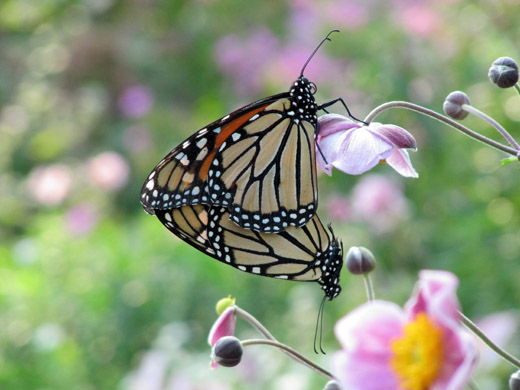
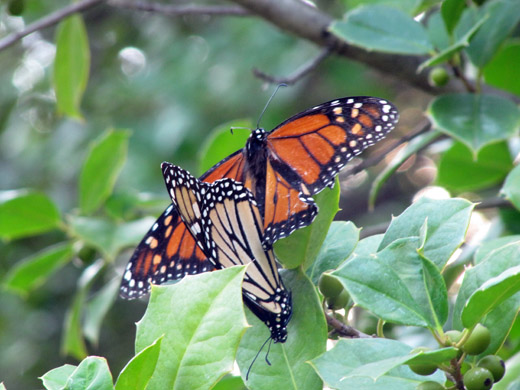
On an August afternoon when D.C. is balmy and the news is all nonsense, it’s a nice surprise to wander through the cathedral garden and find queen butterflies swyving.

“Sire Monk, namoore of this, so God yow blesse!
Youre tayle anoyeth al this compaignye.
Swich talkyng is nat worth a boterflye…”
Geoffrey Chaucer, Prologue to the Nun’s Priest’s Tale

“Boterflyes beþ smale fleynge bestes þat comeþ by night / in candeles and fondeþ to quenche þe light.”
— John Trevisa (c.1342-1402), trans., Bartholomaeus Anglicus’ De Proprietatibus Rerum (On the Properties of Things)

“And we’re glowing like the metal on the edge of a knife. Come on! Hold on tight!”
— Meat Loaf, c.1977

When queen butterflies mate, the male flies around with the female hanging beneath him. It’s quite a sight.

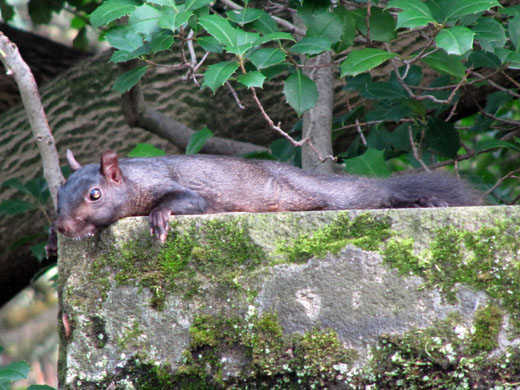
Even squirrels are impressed by that.

“Sing ‘hi, lo, lay,’ at the end of the day…”

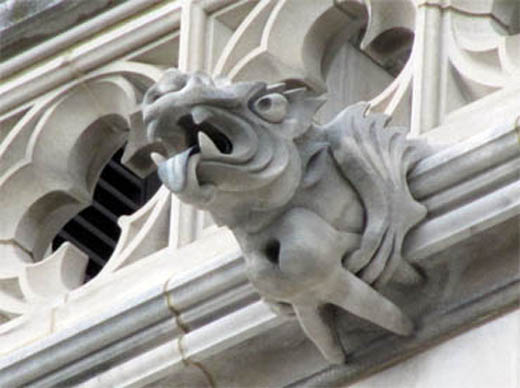
National Cathedral tour guides may try to tell you why this monster is clutching a giant molar 40 feet up on the south nave. I prefer his own explanation.

SONG

In my dream, a Pictish maiden
Paused and prayed here half a while,
Shade and snow a-swirl around her,
Something wanting in her smile.

From my scrafe, I spied in silence,
Watched her wend round weed and hill
And rose, and passed from forests dim,
Her foremost longing to fulfill.

Late I loped through Roman markets,
Hove the doors off Saxon halls,
Plumbed the moats of Norman mansions,
Flinched, then froze, when furtive calls

Enthralled me, lost, where mental mazes
Shrank, and starlight shone by day,
Until I found the hope I sought,
Extracted it, and stole away.

Sovereigns rise and storm-clouds scatter;
Chapels fall and winters turn.
Truth survives a thousand summers:
What is lost may yet return.

In my dream, a Pictish maiden
Marches past, her patient soul
Reflecting suns that swirl around her;
After all, her smile is whole.

(For all the entries in this series, hit the “looking up” tab.)