
Each April, references to two poems burst forth like emerald weeds. The month begins with allusions to the opening lines of The Canterbury Tales, and I never mind reminders of Chaucer; but by mid-month, by tax day, even half-literate news anchors will have made eye-rolling references to The Waste Land. Yes, April is “the cruelest month.” As April-themed allusions go, are these really the best we can do?
This April, consider Dame Edith Sitwell, the largely forgotten writer of the heaviest light verse in the world. You may have read (or heard) “Waltz,” her evocative ditty about fashion-fickle nymphs and other denizens of pseudo-pastorale:
The Amazons wear balzarine of jonquille
Beside the blond lace of a deep-falling rill;
Through glades like a nun
They run from and shun
The enormous and gold-rayed rustling sun;
And the nymphs of the fountains
Descend from the mountains
Like elegant willows
On their deep barouche pillows
In cashmere Alvandar, barège Isabelle,
Like bells of bright water from clearest wood-well.
You may be looking at those lines and thinking “What?”—but take a minute, read the poem aloud, or listen to it echo in your head, before you decide you don’t like it. Good poets are highly conscious of diction, but Sitwell was the rare poet who focused on sound, rhythm, and onomatopoeia almost entirely at the expense of concreteness and clarity. With the typical Sitwell poem, how it sounds is often what it’s about.
That’s why it’s a pleasure to discover, among Sitwell’s late works, a poem called “The April Rain,” in which she uses her distinctive style and abstruse allusions not simply to please the ear, but also to evoke springtime and the innocence of young love.
“Such is our world, my love,” declares a boy to a girl, “[a] bright swift raindrop falling”:
The sapphire dews sing like a star; bird-breasted dew
Lies like a bird and fliesIn the singing wood and is blown by the bright air
Upon your wood-wild April-soft long hair
That seems the rising of spring constellations—
Aldebaran, Procyon, Sirius,
And Cygnus who gave you all his bright swan-plumage…
As she develops the raindrops as symbols, Sitwell falls back on wistfulness:
Such are the wisdoms of the world—Heraclitus
Who fell a-weeping, and Democritus
Who fell a-laughing, Pyrrho, who arose
From Nothing and ended in believing Nothing—fools,
And falling soon:
Only the April rain, my dear,
Only the April rain!That fool-begotten wise despair
Dies like the raindrop on the leaf—
Fading like young joy, old grief,
And soon is gone—Forgot by the brightness of the air;
But still are your lips the warm heart of all springs,
And all the lost Aprils of the world shine in your hair.
I doubt Sitwell’s closing lines will join the ranks of quotable April verses, but “The April Rain” is a charming reminder that when we discuss the month in poems, it ought to be known as much for its sounds as for its more obvious scents.
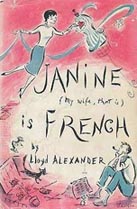 When you know an author only through his novels for children, reading his nonfiction for adults—his first published books—is as strange as it is illuminating. Lloyd Alexander was a bestselling author by the age of 40, but in the years leading up to his success he was a frustrated bank messenger, an occasional translator, husband to a woman he’d met in France after World War II, and a budding nonfiction author. His books from that period are entertaining, comic, and oddly personal—although they’re most revealing for the experiences they omit.
 Quid Plura?