“You see, it’s the hole I dug…”

The Pickwickians had no sooner dismounted than they were surrounded by a branch mob of the honest and independent, who forthwith set up three deafening cheers, which being responded to by the main body (for it’s not at all necessary for a crowd to know what they are cheering about), swelled into a tremendous roar of triumph, which stopped even the red-faced man in the balcony.

“Hurrah!” shouted the mob, in conclusion.

“One cheer more,” screamed the little fugleman in the balcony, and out shouted the mob again, as if lungs were cast-iron, with steel works.

“Slumkey for ever!” roared the honest and independent.

“Slumkey for ever!” echoed Mr. Pickwick, taking off his hat.

“No Fizkin!” roared the crowd.

“Certainly not!” shouted Mr. Pickwick. “Hurrah!” And then there was another roaring, like that of a whole menagerie when the elephant has rung the bell for the cold meat.

“Who is Slumkey?” whispered Mr. Tupman.

“I don’t know,” replied Mr. Pickwick, in the same tone. “Hush. Don’t ask any questions. It’s always best on these occasions to do what the mob do.”

“But suppose there are two mobs?” suggested Mr. Snodgrass.

“Shout with the largest,” replied Mr. Pickwick.

— Charles Dickens, The Pickwick Papers, Chapter 13

“And for the first time, in my small world…”

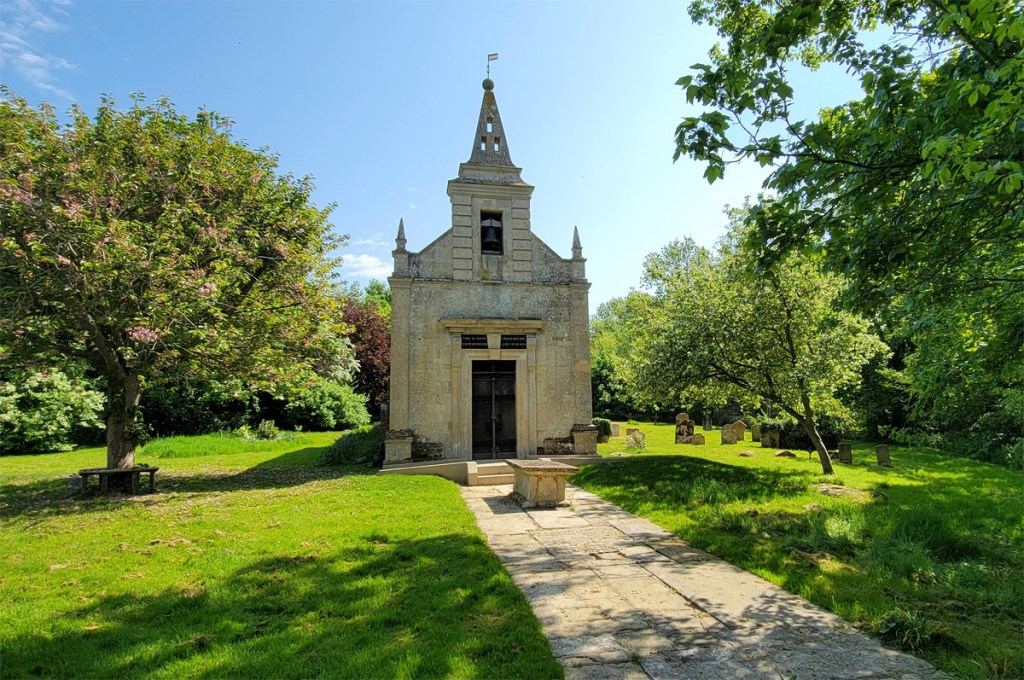
Some famous places are rightly hard to reach. In May, during a hastily planned jaunt to England, I had a free afternoon and thought to visit Little Gidding, which inspired the last of T.S. Eliot’s Four Quartets. Just 70 miles from London and 30 miles from Cambridge, Little Gidding makes you work for it: An hour train ride from King’s Cross to Huntingdon, a half-hour walk to a rental-car office in an industrial park, then a half-hour drive through flat Cambridgeshire farmland.

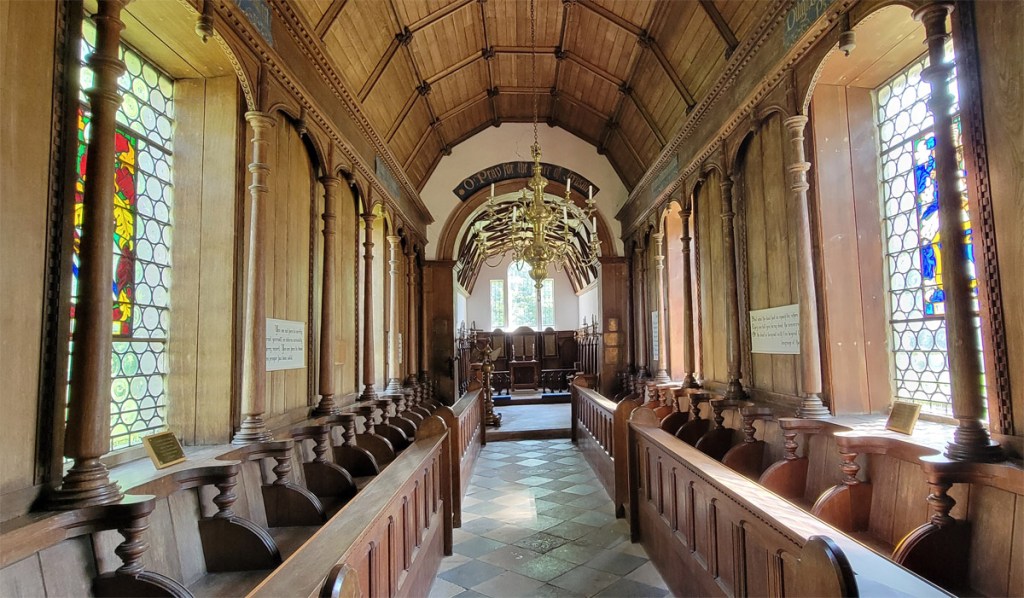
And there it is, the chapel, “the dull facade / And the tombstone” where the Ferrar family organized their short-lived religious community in the 17th century and where Eliot paused to reflect during World War II. Four Quartets asks difficult questions: What’s the meaning of this moment in time? What does it mean in relation to other moments in time? What is time anyway? As I fade into late middle age, what should hold meaning for me? Am I anything at all?

Eliot is unsentimental about the search, knowing these places, though touchstones, offer no answers in themselves:

And what you thought you came for
Is only a shell, a husk of meaning
From which the purpose breaks only when it is fulfilled
If at all. Either you had no purpose
Or the purpose is beyond the end you figured
And is altered in fulfilment.

It stings a bit to be rebuked by him, as if he anticipated the motives of the one or two visitors a day who sign the chapel guestbook:

You are not here to verify,
Instruct yourself, or inform curiosity
Or carry report. You are here to kneel
Where prayer has been valid.

I’m the same age Eliot was when he published “Little Gidding,” which I’ve seen described as his farewell to poetry. I think you need to be a certain age to get it, to make sense of his candid conversation with his past self, his resigned nod to the disillusionment of age, and his crisis of meaning in the midst of the war—all paired with his call to discern new beginnings and look to faith for more transcendent purpose, even though the answers defy human comprehension.

The young rental car guys at Huntingdon were amused at my same-day travel plans. They’d never been to Little Gidding, 12 miles from their workplace. They’d never heard of it, and they had no idea where or what it is. They’ll pass through their own Little Gidding eventually.

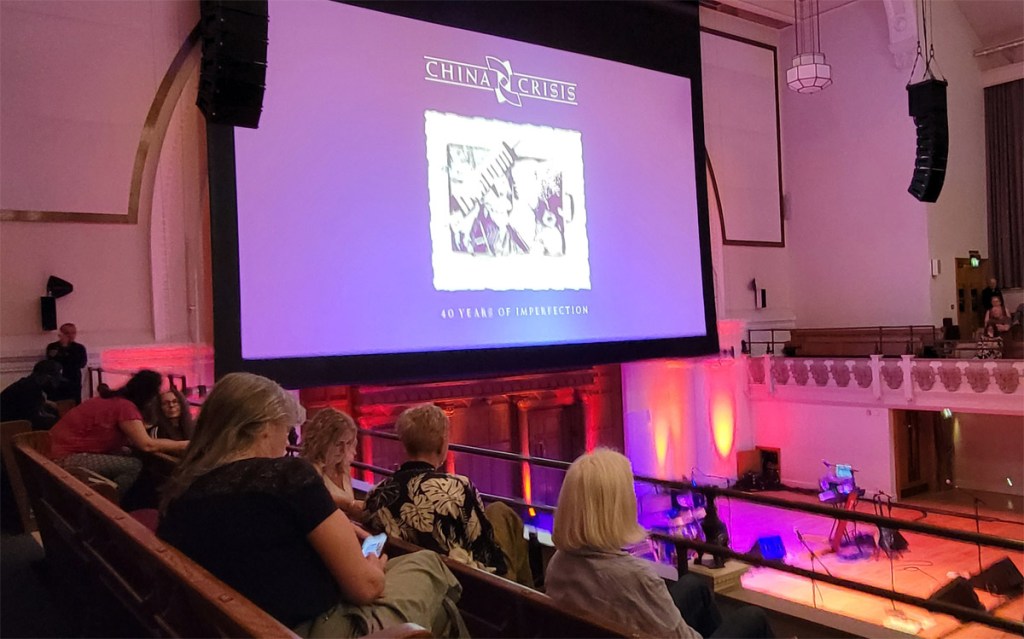
That night, back in London, I went to Cadogan Hall to see China Crisis celebrate the 40th anniversary of Flaunt the Imperfection, their jazzy 1985 stream-of-consciousness album that didn’t make much of a splash in America. The crowd was old and stiff, even during one of the band’s most danceable numbers. Showing slides of bandmates and friends who’ve passed away, singer Gary Daly told catty music-business stories, fondly memorializing a fading cultural era.

New Wave pop was a suitable coda to a day of poetry and prayer in a 17th-century countryside chapel. The China Crisis guys, now grandparents, poked fun at the elderly audience and themselves, knowing their day, and ours, is passed, but singing with heart nonetheless. I think Eliot might have appreciated them living fully amid the awareness of the paradox at the center of Four Quartets, their impermanence in human history but utter permanence in time:

See, now they vanish,
The faces and places, with the self which, as it could, loved them,
To become renewed, transfigured, in another pattern.
Sin is Behovely, but
All shall be well, and
All manner of thing shall be well.

“The walls between us all must fall…”

I set down this remembrance here, because it is an instance to myself of the manner in which I fitted my old books to my altered life, and made stories for myself, out of the streets, and out of men and women; and how some main points in the character I shall unconsciously develop, I suppose, in writing my life, were gradually forming all this while.

[. . .]

When my thoughts go back now, to that slow agony of my youth, I wonder how much of the histories I invented for such people hangs like a mist of fancy over well-remembered facts! When I tread the old ground, I do not wonder that I seem to see and pity, going on before me, an innocent romantic boy, making his imaginative world out of such strange experiences and sordid things.

David Copperfield, chapter 11

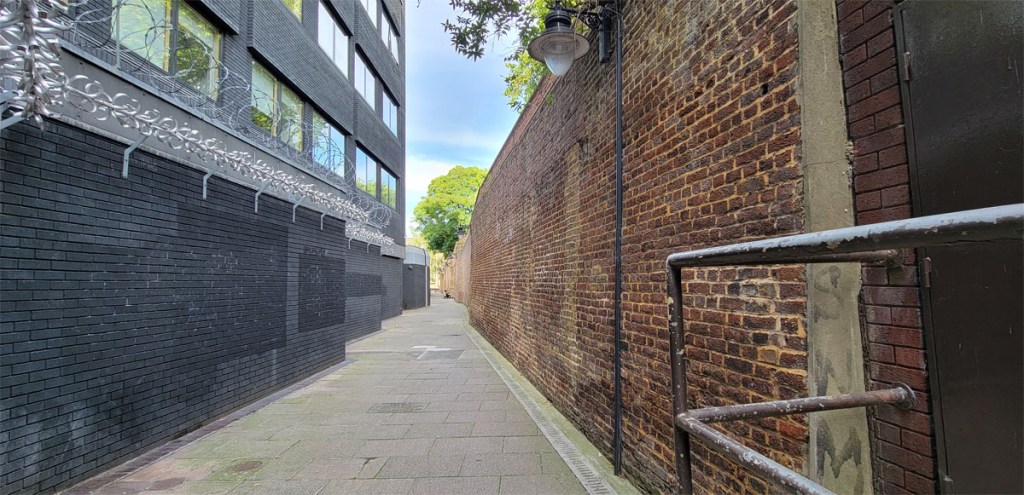
Photo: surviving wall of Marshalsea Prison (on right), London, 2024

“Last of the line at an honest day’s toil…”

“But today the endless patchwork of fields slumbered in the sun, and the air, even on the hill, was heavy with the scents of summer. There must be people working among the farms down there, I knew but I couldn’t see a living soul; and the peace which I always found in the silence and the emptiness of the moors filled me utterly.

“At these times I often seemed to stand outside myself, calmly assessing my progress. It was easy to flick back over the years—right back to the time I had decided to become a veterinary surgeon, I could remember the very moment. I was thirteen and I was reading an article about careers for boys in the Meccano Magazine and as I read, I felt a surging conviction that this was for me. And yet what was it based upon? Only that I liked dogs and cats and didn’t care much for the idea of an office life; it seemed a frail basis on which to build a career. I knew nothing about agriculture or about farm animals and though, during the years in college, I learned about these things I could see only one future for myself; I was going to be a small animal surgeon. This lasted right up to the time I qualified—a kind of vision of treating people’s pets in my own animal hospital where everything would be not just modern but revolutionary. The fully equipped operating theatre, laboratory and X-ray room; they had all stayed crystal clear in my mind until I had graduated MRCVS.

How on earth, then, did I come to be sitting on a high Yorkshire moor in shirt sleeves and Wellingtons, smelling vaguely of cows?

“The change in my outlook had come quite quickly—in fact almost immediately after my arrival at Darrowby. The job had been a godsend in those days of high unemployment, but only, I had thought, a stepping-stone to my real ambition. But everything had switched around, almost in a flash.

Maybe it was something to do with the incredible sweetness of the air which still took me by surprise when I stepped out into the old wild garden at Skeldale House every morning. Or perhaps the daily piquancy of life in the graceful old house with my gifted but mercurial boss, Siegfried, and his reluctant student brother, Tristan. Or it could be that it was just the realisation that treating cows and pigs and sheep and horses had a fascination I had never suspected; and this brought with it a new concept of myself as a tiny wheel in the great machine of British agriculture. There was a kind of solid satisfaction in that.

Probably it was because I hadn’t dreamed there was a place like the Dales. I hadn’t thought it possible that I could spend all my days in a high, clean-blown land where the scent of grass or trees was never far away; and where even in the driving rain of winter I could snuff the air and find the freshness of growing things hidden somewhere in the cold clasp of the wind.

“Anyway, it had all changed for me and my work consisted now of driving from farm to farm across the roof of England with a growing conviction that I was a privileged person.”

—James Herriot, All Creatures Great and Small

“…and if we live the lie, let’s lie in trust…”

“The Green Knight is everything you love about King Arthur, but with a twist.” That’s the tag line Comcast is using to advertise streaming rentals of writer-director David Lowery’s visually sumptuous new movie. The angle surprised me: I didn’t know Arthuriana still sells. My sense was that the Arthurian boom peaked in the late ’90s with scores of fantasy novels and a few Hollywood movies, and I don’t think the streaming-video and Marvel Cinematic Universe generation has any particular love for the Matter of Britain.

Yet Lowery is undeterred, cheekily billing The Green Knight in its opening credits as “a filmed adaptation of the chivalric romance by Anonymous.” Of course, it’s not really an adaptation of Sir Gawain and the Green Knight. The court is never identified as Arthur’s Camelot, Gawain has a girlfriend, and the young squire takes up the Green Knight’s challenge out of a mixture of gratitude to his royal uncle and a yearning to star in a tale of his own. “Do not waste this,” warns the king, who doesn’t see the need to decide if the Green Knight’s wager is a trivial Yuletide game or an opportunity for greatness. Scenes, characters, and motifs from the medieval poem make cameos, but once Gawain sets off on his quest, even a reader familiar with the source material is well off the edges of the map.

The film provides signposts to amuse and misdirect the medievalist. To my amazement, a battlefield scavenger refers to a line from the ninth-century Welsh chronicler Nennius. At one point, Gawain reads “When the nyhtegale singes” from the 14th-century Harley manuscript in the British Library. The artwork showing the changing seasons behind a children’s puppet show is, I think, from a late medieval Book of Hours. I’m sure a ton of other visual references flew right past me. The Green Knight is a determinedly unfunny movie, but the art and design team clearly reveled in creating a setting that feels like an afternoon at the Cloisters, where one medieval century blurs lazily into the next.

Even without these gratuitous flourishes, the world of Lowery’s medieval fantasy would feel convincing. The king, never explicitly acknowledged to be Arthur, looks plausibly weak, aged, a tad unhinged. The queen, gray and mirthless, wears a dress that appears to be decorated with hundreds of medieval pilgrimage badges. Women dye and sew, bishops pray, woodsmen fell forests, and shepherds tend their flocks, and there’s a magical British bleakness to the land itself that suggests the hardness of life. The opening scene, a stationary shot of animals milling about in front of a shed on Christmas morning while a house burns down in the background, nicely suggests the natural world’s indifference to man. When Gawain sets off on his quest, one somber, uncomfortably long shot follows him away from the castle and through a heath, perfectly capturing the quiet uncertainty of preparing to travel alone.

If only The Green Knight had eloquent, poetic dialogue to match these rich visuals. Here’s a speech from the king early in the film:

I look out upon my friends here today and I see songs no muse could ever sing, or dream of. But I turn to thee and I see what? I recognize but I do not know thee. I say this not in reproach but in regret that I have never asked you to sit at my side before this day, or upon my knee when thy [sic] was newborn. But now it is Christmas, and I wish to build bridges.

For a film obsessed with lovely visual and cultural touches, The Green Knight shows no awareness of how speech in a pseudo-medieval fantasy world ought to sound. The mixture of “thee” with “you,” the ignorance of the simple “thou,” and the misuse of “thy” are constant, baffling oversights across the whole movie. At one point, the king asks Gawain, “What have thee?” When a medieval British saint turns up, even she doesn’t understand medieval or early modern pronouns. Some fine actors in this movie end up sounding like eight-graders at their first Renaissance fair, as if they’ve never heard a word of Shakespeare. The 1984 Miles O’Keeffe-Sean Connery fantasy movie Sword of the Valiant, also based on Sir Gawain and the Green Knight, flies hilariously off the rails after its first fifteen minutes, but at least its script gives good actors lines like “a sword is three feet of tempered steel, with death dancing on every inch and hanging like a dark star on the very point,” or “the old year limps to its grave, ashamed.” There’s a weird lack of wit and precision to the dialogue in The Green Knight, so strange for a movie that’s based on a gorgeous poem, uses quirky on-screen titles, draws directly from medieval chronicles and saints’ lives, and shows characters reading and adoring books.

Although I don’t plan to check, I’m guessing the Internet saw some ugly arguments in recent weeks about the decision to cast an Anglo-Indian actor to play Gawain. Who cares? Dev Patel is a compelling actor with a strong aura of vulnerability, and he’s a great Gawain in a movie where everyone is equally well-cast. Besides, the poem that inspired this film isn’t a historical document; it’s a weird, brilliant, stylized fantasy. Filmmaker David Lowery gets that, which is maybe why The Green Knight felt to me like a sincere 1980s American fantasy flick mated with the cinematographic resources of a humorless European art-house film. That’s not necessarily a deadly combination. Gawain’s episodic quest is packed with eerie images, and as a viewer you can write them off as random or try to find symbolic coherence in them as you please. In that sense, The Green Knight captures some of the unsettling weirdness of reading a medieval romance.

No one would ever take The Green Knight as an attempt at a faithful adaptation, and a generation of graduate students will likely pad their CVs with tiresome conference presentations about its loose relation to its medieval source. The film itself winks a few times in recognition of its creative deviations, first in a quick montage of the title in various typefaces, reflecting different editions and translations, and then in a character who admits to seeing “room for improvement” in certain stories whenever she copies old manuscripts. For me the question is not whether this movie is good or bad based on its level of faithfulness to its medieval source, but whether the filmmaker used his sources as a productive jumping-off point to create a new and interesting work of art.

I don’t think he did. The film puts forward some thoughts about following a code of honor to its thankless end, but the alternative, living a lie, leads to no less unhappiness—a much bleaker conclusion than the original poem’s gracious assessment of flawed human nature, where a hard tale’s leavened by lightness of heart. And so help me, the last fifteen minutes of The Green Knight recall one of the more unsuccessful efforts of Martin Scorsese, and it’s not remade more coherently here. The way Lowery has rooted through history, artwork, and scholarly scraps is an impressive act of medievalism, but his pastiche doesn’t say anything clear about the present or the past.

But maybe it will. Many “medieval” movies—I’m thinking of John Boorman’s Excalibur or that odd 2007 motion-capture Beowulf—need time to age, to cure or curdle into artifacts of their time. The Green Knight might someday be better in hindsight, when it’s influenced a generation of artists, aspiring historians, and would-be scholars who will recall how it felt in their bones to live through a pandemic, social unrest, and a disastrous military withdrawal. By then, this medieval dream and our current age may feel equally distant to them, and the despair in this movie will echo an overcome past.

“Pharoah’s army, they got drowned in the sea one day…”

Sometimes he feels like a motherless child.I hopped the barbed hedge of graduate school more than 20 years ago, but the burrs and brambles of medieval thinking still cling to my life. I never know if they’re brittle twigs, best brushed off and swept away, or green sprigs that can be woven into some new, small, useful thing. Take “Deor,” an Old English poem that puts on thorns at the strangest of times—even when I’m reading about a different culture thousands of miles away and a millennium later.

I can’t post a decent translation of “Deor” without violating somebody’s copyright, so go peruse Maryann Corbett’s recent version, which skillfully gets the sense and some of the sound of the original. Deor, the speaker, alludes to a series of terrible, violent incidents from Germanic history and legend, all stories that would have been known to his listeners at the time. His cryptic refrain, Þaes ofereode, Þisses swa maeg—”that has passed, this shall too”—ends with a personal revelation: Deor is a scop, a poet, a singer of tales who has been ousted from his position by a newcomer who has won the favor of the king. He casts his own reversal of fortune in terms of the tyrants, heroes, and legendary figures whose tales, which now offer consolation, were the raw material for his poems and songs.

“Deor” can teach the newcomer to Old English poetry a good deal about its characteristics: that air of grimness; a worldview that floats somewhere between stoicism and fatalism; an elegiac tone; and above all, a lament for the misery of exile, of being sundered from a leader and a meaningful role in a community. So was it taught to me; so did I teach it to others.

Or so I imagined. A funny thing happened the first time I discussed “Deor” in the classroom. A quiet student in the back raised her hand and dared to asked, in defiance of all my just-out-of-grad-school certainty: “What if this poem was meant to be…funny?”

Thrown off, I asked her to elaborate. She argued that being alone, homeless, and unemployed, while all bad, were not as bad as being murdered, or hamstrung, or having your hands and feet cut off, or having your family murdered and being raped yourself—the fates of the men and women in “Deor.” I argued the scholarly case: that the lament of an exile was serious business in Old English poetry, that the humor in the Old English poetic corpus was wry and understated, and that the original audiences for this poetry would not have been looking for levity.

But then I read “Deor” aloud, going for snide, whiny, and melodramatic—and the class laughed—and I conceded that someone could easily perform the poem in ways that could make the speaker look preposterously self-pitying and wholly bereft of perspective.

I later made a habit of running the student’s theory past every medieval-lit scholar I ran into. All of them said the notion was flat-out wrong. At least one was offended. I still didn’t believe that the student’s interpretation would have been a common and even likely one in gear-dagum, but I was also troubled by the way a poem, a work of art, had been pressed and embedded into one lost time, one dead place, and buried under a century of scholarship that protected it from any new creative whim.

My student’s speculations about “Deor” sprang to mind, unexpectedly, as I read Hearth and Home: Preserving a People’s Culture, George McDaniel’s 1982 study of the houses of African-American tenant farmers in southern Maryland. McDaniel’s book is packed with thoughtful observations about the ways cultural knowledge endures in house design, building techniques, and the little details of craftsmanship, even when subsequent generations don’t know they’re remembering it.

McDaniel opens his book with the history of a tenant house in Mitchellville, Maryland, that was dismantled by the Smithsonian in 1969 and rebuilt 30 miles west at the National Museum of American History, where visitors to the (now also dismantled) “Hall of Everyday Life in the American Past” could go partway inside. “From the beginning, some members of the Smithsonian staff felt that something was missing,” McDaniel writes, explaining why they called him nearly a decade later to research the history of the house and its likely furnishings. Still respected in my area of Maryland for collecting irreplaceable African-American oral histories and documenting the homes of freed slaves in the late 1970s, McDaniel soon discovered that this plain four-room house, for which the Smithsonian had no documentation, did indeed have people to speak for it, men and women from twelve families who had lived there at various times from 1912 to 1967. He invited them to visit the Smithsonian, and their reactions were illuminating:

If one were to choose a side of the tenant house to be the front, the length with the door centrally located, flanked by two windows, is the more symmetrical, stylish, and formal. It “should” be the front…The other length has a door near one corner, a window near the other, and no opening in the center. It is off balance, unwieldy in appearance, and “should” be the back…Indeed, there are examples of houses in Prince George’s County and elsewhere in the mid-Atlantic region of this very design, with the symmetrical length as the front. That’s the way the house was reassembled in 1968. But when Elizabeth “Mamie” Johnson saw the house ten years later, she politely declared in a rather puzzled tone: “You’ve got it backwards.”

Every living former resident and neighbor and the son of the original landowner agreed: The house was, to use McDaniel’s words, “representative of this house type, but not true to the actual, historical orientation of this particular house.” There were other problems: Smithsonian curators assumed that a very small downstairs room was the kitchen and a bigger space was the sitting room and dining room, when it was really the other way round. Daily life centered around a larger kitchen, not a rarely used parlor.

McDaniel also learned that the wooden walls on display for Smithsonian visitors had been covered with newspapers and whitewashed to be more attractive. Many children had lived in the house, including one who recalled as an adult that he had greatly prized his .22 rifle. The Smithsonian setup showed no signs of gun ownership—or traces of a young boy.

Even though the house stood on the outskirts of a major metropolitan area, represented the experiences of a large and accessible class of people, had been occupied as recently as 1967, and was curated by professionals with the best of intentions, the Smithsonian got it wrong. Imagine how much more we’re doomed to misperceive across more than a thousand years. Those of us who study the literature and history of the distant past like to think we account for our assumptions, but what if our assumptions about our assumptions are off?

None of this hasn’t been pondered for ages by much smarter people, but in the years since my student asked her question blessedly unimpeded by assumptions, few new opinions have formed about “Deor.” The author of a book about humor in Anglo-Saxon poetry appreciates the irony and dark humor of certain turns of phrase, and another scholar has found it useful to look at “Deor” and other Old English laments through the lens of blues lyrics. Yet no one to my knowledge has seconded my student’s notion, that at the very least, someone might have performed the poem—or at least can perform the poem—in a way that uses allusions to legendary violence to make his own rootlessness seem funny and small. I don’t know that my student was right; she wasn’t wrong to wonder.
George McDaniel was adamant about what his own field work revealed: “The black families studied here did not live in ‘shacks.’ They are not stereotypes, mere ciphers.” Likewise, the standard interpretations of “Deor” are correct about the culture and times, but may be wrong about how the anonymous poet hoped he’d make people feel; how a specific someone once recited or performed the poem; how real readers or listeners have received it; or which features of the poem appealed to the individual monk who wrote it down.

If the lives of African-American tenant farmers in southern Maryland can so confound the assumptions of historians from a distance of only 30 miles and a single generation, then any given soul in medieval Wessex regarded the world with a distinctiveness that’s not ours to know. We can only allow that somebody like him existed, because somebody who had a similar notion does now, a suggestion that complements analysis with creativity. In the free, weedy fields outside the garden, we can hope for a laugh ringing over the hedge, unlikely and strange, but at least now imaginable across a thousand years.

“Now, the mist across the window hides the lines…”

Longtime readers might be surprised by how few medieval-ish doodads we have in our home. My office houses a framed copy of the opening of an Icelandic manuscript and a tiny set of Domesday Book postage stamps, and until recently that was about it. When we began renting a large house in the woods, the owners left us with a great deal to work with: not only sunny flower beds and several acres of bird-besieged trees but also walls with so many nails and hooks for hanging photos, artwork, and curios that we weren’t sure we could fill them all.

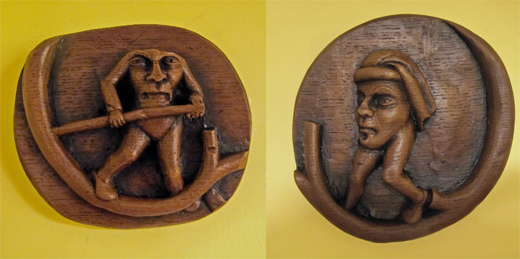
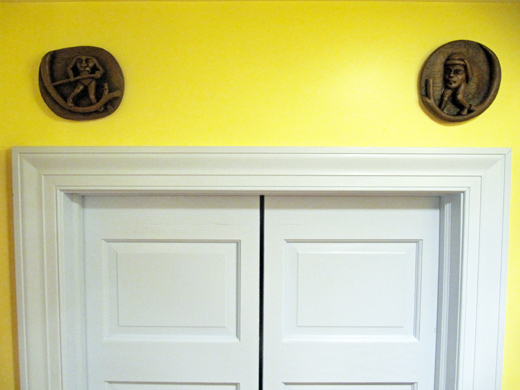
We did find art for most of them—but not all. And so a few weeks ago, when I noticed two bare nails over a doorway, I decided to put up some blemmyae.

The myth of the blemmyae goes back to the ancient world, when Herodotus described this race of creatures who resembled headless men but carried their faces in their chests. He placed them alongside other humanoids, such as dog-faced men, who were believed to abide along the coast of North Africa. During the Middle Ages, the blemmyae got dragged into texts about the wonders one might find in Africa and Asia. Alexander the Great captures several of them in one romance, and that wonderful liar Sir John Mandeville claimed to have seen some near India. Some medieval writers drew a comically fine distinction between headless men with faces in their chests and headless men with eyes in their shoulders. These beings went by various names, but their legend carried over to the Americas, where Sir Walter Raleigh chased rumors of their existence near what’s now Venezuela.

My blemmyae came from England. Oakapple Designs, a lovely company in South Yorkshire, has acquired the right to make casts of artwork at certain cathedrals and sell them to the public, and the cost is very reasonable. You can browse their assortment of people, animals, and mythical creatures, which runs rampant with angels, bats, dragons, green men, and monks.

According to Oakapple, the two blemmyae over my doorway were made in the 15th century for Ripon Cathedral, where they’re apparently carved onto misericords: folding wooden seats in the choir that can be leaned on in times of need.

I can only guess why people believed in these creatures for so long. Maybe they mistook certain stoop-necked primates as headless; perhaps real tribes of humans wore armor or helmets that gave Europeans peculiar ideas. I find these particular blemmyae rather ambiguous. I’m not even entirely sure what the one on the left is doing with that stick. What I do know is that the carver at Ripon Cathedral thought they were civilized: take note of the clothing and shoes. That’s good enough reason to welcome them into our home—and if they inspire a story or poem, so much the better. I doubt they’ll be the strangest things to emerge from our time in the woods.

“I must admit, just when I think I’m king…”

Last month, when suicide bombers attacked an Ariana Grande concert in Manchester, the world was aghast that ISIS specifically targeted girls and young women. Unfortunately, no one who understands the pseudo-medieval image ISIS has built around itself was all that surprised. In “Muscular Medievalism,” a prescient article in the 2016 issue of The Year’s Work in Medievalism, Amy S. Kaufman makes important points about the misogyny of ISIS and their obsession with a fantasy version of the medieval past:

[A] key component of muscular medievalism is its need for the suffering and exploitation of women in order to validate its vision of masculinity. In the autumn of 2014, the new caliphate declared that the enslavement and rape of women and girls is central to its ideology. ISIS’s glossy, almost corporate, monthly English language magazine, Dabiq, included an article called “The Revival of Slavery Before the Hour,” which explicitly argued, “One should remember that enslaving the families of the kuffar—the infidels—are taking their women as concubines is a firmly established aspect of the Shariah, or Islamic law.”

After giving several harrowing examples of ISIS’s brutality, Kaufman draws a bitter conclusion:

And yet, despite the explosion of reporting on the fate of ISIS’s conquered territories, the world’s reaction to this horrific violence against women and girls—apart from the usual Twitter outrage—is largely complacent. The enslavement, ritual rape, and murder of thousands of children and grown women—on a scale that would demand immediate action of the persecuted group were anything other than women—is lamented, but ultimately dismissed as part of the “medieval” nature of life under the Islamic State, thanks, in part, to our misguided fantasies about the past.

What does Kaufman mean by that, and why does she implicate all of us, including Westerners? Throughout her article, she draws a provocative connection between the way ISIS asserts its “authenticity” and what we as readers and viewers in the West seek in our entertainment. I hope she won’t mind if I quote her at length:

Take, for instance, HBO’s Game of Thrones, which holds such a revered place in contemporary American popular culture that it’s treated to weekly recaps in respected newspapers like the Washington Post. The author of the epic fantasy series the show is based on, George R. R. Martin, claims to be delivering an unapologetically “real” version of the Middle Ages in his Song of Ice and Fire series. Martin says he was inspired to pen his particularly brutal portrayal of medieval times because other writers “…were getting it all wrong. It was a sort of Disneyland Middle Ages, where they had castles and princesses and all that.” And if Martin’s novels are any indication, getting it right means saturating the faux-medieval world with rampant misogyny and rape . . . However, Martin explains away the sexual violence in his novels with his vision of history: “Well, I’m not writing about contemporary sex,” he clarified to one interview. “It’s medieval.”

For Martin—and his legions of fans—the abundance of sexual violence and the disturbing conflation of sex and rape in the books and on the show are, in fact, markers of medieval authenticity. Indeed, rape-as authenticity is a key component of the show: “It’s not our world,” argued executive producer D.B. Weiss in defense of the rape scenes on HBO’s show, “but it is a real world, and it’s a violent world, a more brutal world . . . It’s a world where these horrible things are definitely pervasive elements of their lives and cultures. We felt that shying away from these things would be doing a disservice to the reality and groundedness of George’s vision.” To be clear: violence against women isn’t just a byproduct of historical authenticity in the show and in the novels. It is, according to their creators, what makes these medieval-inspired works of entertainment authentic. The violence against and degradation of women in the world of Westeros is as important to the “medieval” setting as the armor, the castles, the weapons, and the charmingly fetishized details about food. But using violence against women as a shortcut to bolster authenticity is hardly limited to Martin’s creative endeavors: the casual rape of women and girls, often as a kind of “background noise” behind the “real” plot, pervades almost every work of medievalism that is proclaimed “gritty” or “authentic,” the often-anonymous victims themselves rendered disposable tropes in the service of historicity, from the Channel’s show Vikings to popular games like The Witcher and Dragon Age.

When someone questions the decency of our fondest shows and books, it’s tempting, and awfully easy, to recite a familiar refrain: “It’s just a show. I should really just relax.” But to answer too quickly is to evade self-examination. Even though I think there’s too much moralistic finger-wagging at artists and writers these days, there are ethical dimensions to reading and watching television, especially where the Middle Ages are concerned. Goodness knows I’ve heard plenty of parents complain about the overwhelming influence of the “Disney princess” franchises on their impressionable daughters. The novels of Sir Walter Scott, harmless in themselves, possessed antebellum Southern planters with such absurd visions of chivalric grandeur that Mark Twain blamed him, not facetiously, for the Civil War. Centuries earlier, the Spanish conquistadors who hacked and slashed their way through the Americas were obsessed with chilvaric romance, seeing the Aztec capital of Tenochtitlan not for what it was, but as a magical city out of the sprawling tale Amadis of Gaul—and seeing themselves as the latest wave of crusading heroes, called to convert, conquer, and rule.

Even though Kaufman isn’t blaming Game of Thrones viewers for ISIS, her article won’t sit easily with many fantasy fans. I appreciate that she isn’t just sniping on Twitter; she’s drawing a sober, thought-provoking analogy. I like her strident contrarianism, and I think she’s right to wonder what the pop-culture ubiquity of Game of Thrones actually means. Even if you’re certain the answer is “not much,” why not ponder it further anyway? As I write this, my TV is advertising “Game of Thrones Night” at Nationals Park in D.C., complete with t-shirts and a chance to “visit an authentic Iron Throne.” If someone mugs for a selfie with a TV-show prop on a fun night at the ballpark, what is it they’re trying to be a part of? Why do they need to believe so badly that fictional violence gets us closer to the “real” Middle Ages?

“The medieval era is the dumping ground of the contemporary imagination,” Kaufman writes, “rife with torture, refuse in the streets, rape, slavery, superstition, casual slaughter, and every other human vice we supposedly stopped indulging in once we became ‘enlightened.'” It’s worth asking what we miss seeing in the Middle Ages if we’re invested in only this view. Despite what George R. R. Martin believes, his dark, despairing fantasy isn’t any more “authentic” than the Disney-princess version, nor is it less harmful. Observations like Kaufman’s always bring me back around to a blunt conclusion by medievalist and Tolkien scholar Tom Shippey: “There are . . . many medievalisms in the world, and some of them are as safe as William Morris wallpaper: but not all of them.”

“No one could find me on their own, I’m off the beaten track…”

American Halloween may be the most medieval of holidays, even if the omnipresence of New World pumpkins obscures its already murky traditions. Most people carve jack-o’-lanterns, for example, without wondering why the heck they’re doing it. The curious can look to Irish folklore, to a tangle of tales about a scoundrel named Jack whose evil deeds keep him out of Heaven but whose tricks sufficiently infuriate the Devil to bar him forever from Hell. With nowhere to go after death, Jack roams the earth, his path lit only by the glow of an ember in a hollowed-out turnip.

Between the eighth-century inception of All Saints’ Day in Rome and the pre-Christian celebrations of Samhain, I see no harm in presuming that the jack-o’-lantern tradition is medieval too. And so last October I turned to my more sensible half and asked her: “Why doesn’t anyone carve turnips anymore?”

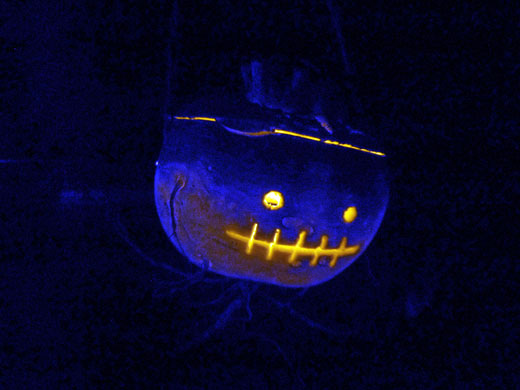
As it turns out, Old World jack-o’-lanterns are weirdly easy to make. Cut off the top, scoop out the brains with a melon baller, and use one of those cheap little mini-saws—they’re sold every autumn as pumpkin-carving tools, although they’re nigh-useless on the real thing—to turn a humble, bulbous root into an eerie little sentinel.

We found these—the largest turnips I’ve ever seen—at a roadside produce market out here in the Maryland boonies. The taproots add unexpected spookiness, and the skin is thick enough that you can hang them with a head full of tea-light without worrying that they’ll break and fall.

Should you suffer pumpkin withdrawal, you can easily give your lantern the traditional jagged leer.

So why did lantern-carving immigrants from the British Isles turn in their turnips for all things cucurbita? Some people have suggested that North American turnips tend to be smaller than their New World cousins, and thus harder to carve, but I don’t think that’s it; rather, pumpkins have one clear advantage over hollowed-out turnips. Carved pumpkins can survive with their dignity intact for days or weeks if the weather’s right and squirrels don’t get into them—but our Old World jack-o’-lanterns lasted only two or three days before their little faces wizened into unrecognizability. A damned soul wandering the night for all eternity needs better visibility than that. On the other hand, turnips are faster and safer to carve and much less messy, so we’re happy to light them along our porch as tokens of fleeting glory, retelling a legend the centuries never quite quenched.

“Driving ’round the city rings, staring at the shape of things…”

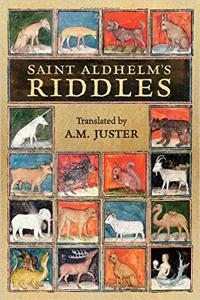
“While contemporary poets tend to sneer at the riddle as a genre, riddles continue to be a guilty pleasure for the public, particularly for millions of lovers of Tolkien and Rowlings,” writes poet A.M. Juster in Saint Aldhelm’s Riddles, a new translation of the work of a seventh-century abbot and monk who certainly knew better. Committed to shoring up Christianity in Anglo-Saxon realms, Aldhelm composed the Aenigmata, a collection of 100 Latin riddles. Layered in allegory, these deceptively simple poems provided pleasure in their own right but could also kindle profound conversations about the omnipresence of God. As Juster points out, Aldhelm “accomplished something that had not been done before: he lured readers closer to an unfamiliar God with literature infused with warmth, wit, and wonder.” Few non-scholars have read Aldhelm’s riddles, but Juster is eager to bring the Aenigmata to new audiences with what he hopes is a “fair yet fun” translation that “gives nonclassicists a faithful literary version of Aldhelm’s masterpiece that mimics the many joys of this text.”

Juster first tackles Aldhelm’s challenging preface, a preposterous 36-line double acrostic. In the original, the first letters of each line spell out, in Latin, “Aldhelm composed a thousand lines in verse,” while the last letters of each line spell the same message—in reverse. “I duplicated the acrostic,” Juster writes, “but freely admit that duplicating both the acrostic and the telestich [the end-of-line acrostic – J.S.] was too much for my poetic bag of tricks.” Only a jerk could hold this “failure” against him, especially since he offers intriguing theories about why (other than the thrill of the challenge) Aldhelm composed a double acrostic in the first place. Juster suggests that Aldhelm means to out-Irish the Irish, who loved these kinds of linguistic and textual games, while perhaps further tweaking them by satirizing ancient satires, something they lacked the primary sources to do.

These musings, apparently Juster’s own, may open interesting new doors for scholars of Anglo-Saxon verse—but this speculation shouldn’t scare off modern readers who don’t give a fig about academic debates. Juster has a light, lovely touch and a masterful command of tone—both honed, I suspect, by his classical know-how and his commitment to form and lucidity in English verse.

Although Latin hexameters possess a languid dignity that English pentameter can’t quite capture, Juster does a terrific job of paying tribute to Aldhelm’s style. When he can, he echoes the monk’s fondness for alliteration and internal rhyme, and he follows Aldhelm by usually avoiding enjambment—that is, Aldhelm tends to stop each line at its end to form a complete syntactic unit. In one of his few major concessions to the modern ear, Juster adds end-rhyme, a decision I heartily endorse.

Aided by a technically adept translator who cares about creating a good poem in the target language, Aldhelm can still amuse and intrigue readers more than thirteen centuries on. Here’s Riddle 2:

Cernere me nulli possunt prendere palmis;
Argutum vocis crepitum cito pando per orbem.
Viribus horrisonis valeo confringere quercus;
Nam, superos ego pulso polos et rura peragro.

No one can hold me in his palms or sight:
I scatter sudden clatter far and wide.
I want to hammer oaks with mournful might;
Yes, I strike sky and scour countryside.

Juster captures the sense of Aldhelm’s original, but look at what he’s done to polish this gem of his own. He interlaces three dense sets of assonance and rhyme: scatter, clatter, and hammer; no, hold, and oaks; and sight, wide, might, strike, sky, and side. Alliteration between these groups further knits together all four lines: sky, scatter, and scour; mournful and might; and sudden, sight, and side. To appreciate Juster’s artistry, you don’t need to be a poet. You don’t even need to be fluent in English. Recite it; feel how its complex structure rolls off the teeth and tongue with pleasing, elemental ease.

If I wanted a threatening letter from the University of Toronto Press legal team, I’d reprint the two dozen “Juster Aldhelms” I most enjoyed. Two will have to suffice. This one, which is easy to solve, shows off Aldhelm’s ability to combine astrology, etymology, natural history, and perhaps a Biblical allusion:

Dubbed “scorpion” by Romans of the past,
I walk wet beaches of the foaming ocean
And cross the seafloor with a backwards motion,
And yet high Heaven’s decked out when I rise,
Along with twelve red stars, into the skies,
Which makes the oysters, scared of stones, aghast.

Some of Aldhelm’s riddles will baffle modern readers, but those who know a little about ancient scribes may figure out this one:

I got my start from honey-laden bees,
And yet my outside part has grown from trees;
Tough leather made my shoes. An iron spike
Now cuts my gorgeous face and wanders like
A plow that’s carving furrows into rows,
But lays down fruitful seed from Heaven’s field
Where, from vast harvests, countless bounty grows.
Alas, cruel arms destroy the holy yield!

Page after page, lovely little poems enshrine silkworms, serpents, scales, leeches, spices, celestial bodies, bubbles, a pillow, the Minotaur—all of which embody, as Juster convincingly argues, Aldhelm’s “insistent vision that close attention to the mysteries of our pedestrian world can lead us closer to the mysteries of God’s world and God Himself.” Aldhelm’s riddles all have answers, but they stir greater, more challenging questions—especially Riddle 90, a tiny, four-line heartbreaker about a woman giving birth to twins for which there’s no easy answer in any age.

Of course, Juster’s book isn’t just a translation; with its 3:4 ratio of text to endnotes, it’s also one-stop shopping for anyone who wants a fresh introduction to the scholarship on these riddles. Juster is famously fond of light verse, so his endnotes, while perfectly professional, are far from a snooze. In the notes for Riddle 8, he points out that “[t]he word dominam (‘mistress’) suggests here a slaveowner, not a participant in amorous adventures.” When explaining the history of Biblical mistranslation that inspired the legend of the ant-lion, the hybrid spawn of an ant and a lion, Juster fans himself in mock relief that “the mechanics of such unions are, thankfully, unclear.” He calls out one scholar who “savages” these riddles through politicized, hyper-sexualized “forced overreading”; Aldhelm, he insists, composed his unicorn and lighthouse riddles “blissfully unaware of Freudian psychology.” And when Juster suggests that Aldhelm may see the peppercorn as a metaphor for the relationship between the body and the soul, he is content to allow that “[p]erhaps sometimes pepper is just pepper.”

The notes to Saint Aldhelm’s Riddles are rich in obscure lore. Juster brings to light the wonderful belief that goat blood could dull a diamond, and he identifies “what may be the first example in British literature of a joke at the expense of the French.” There’s even a charming bonus poem: Juster’s own translation of “Eucheria’s Impossibilities,” which he bills as “the oldest extant humorous poem in Latin by a woman.” Juster even taught me a new Old English term, the word for a dung beetle, tordwifel—literally, “turd-weevil.” If I were translating the poems of an Anglo-Saxon monk, I’d sure as heck encourage that philological novelty to scuttle through my endnotes pages too.

As a writer and researcher who relies on many books like this one, I could register a complaint or two. I would have liked a more thorough indexing of the terms and proper names that pop up in the notes, and sometimes I wanted more background than the notes provided. (Don’t tempt me with the promise of insight into Scylla’s “canine name” only to send me hunting for an article in an Italian e-journal.) Still, my gripes are minor, and I’d rather bestow kudos upon the University of Toronto Press for making sure that those of us who’d never spring $65 for the hardcover version of Saint Aldhelm’s Riddles could immediately enjoy the paperback or Kindle editions for less than $30.

Riddles may be dismissed as trifles today, but Aldhelm reminds us that a clever poet can use them to make a sophisticated case for a wondrous and joyful coherence in the world. This is the first translation of his riddles meant to be read for pleasure, and I hope it will be. In Juster’s hands, Aldhelm is once again serious fun.