“And there’s talk in the houses, and people dancing in rings…”

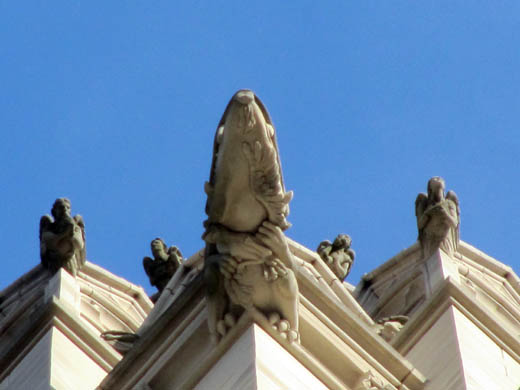
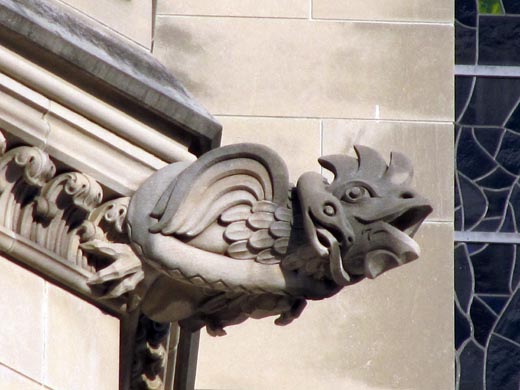
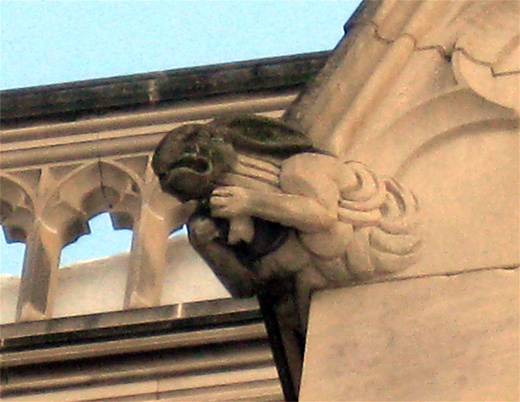
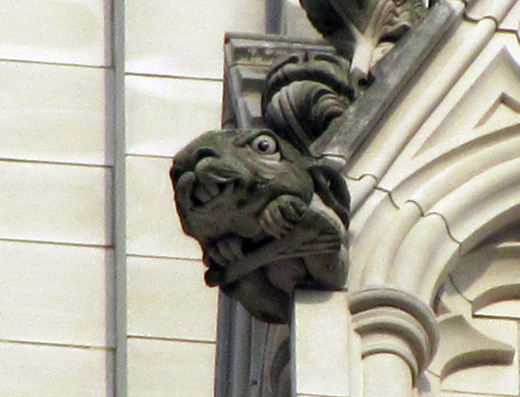
This week, we had three beautiful days of unseasonable sunshine and warmth, prompting overeager bulbs to break the soil at the edges of my garden. Meanwhile, at the cathedral, a nightmare of feathers, wings, and horns perched above the Bishop’s Garden watches, waits, and warns.

FEBRUARY
(PSEUDOTHALAMION)

The golden groom dismounts; the war is done.
The persephonic matrons, long withdrawn,
Betray the bride, let fly their veils as one,
and race like reckless robins round the lawn.
The bulbs trod under boot cry out: oh run
oh praise him raise him high hymenaeon
So spring steals in, the beaming, spendthrift son
who flatters us, and slinks away by dawn.

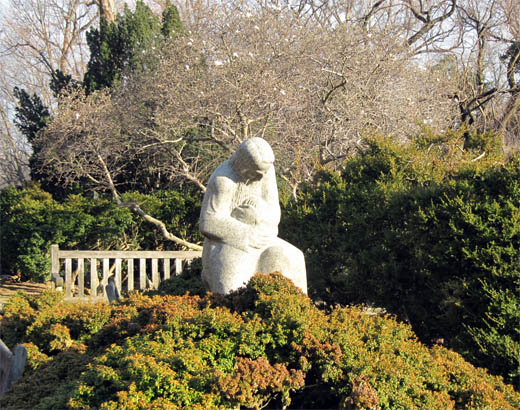
Heinz Warneke, “The Prodigal Son,” dedicated in the Bishop’s Garden in 1961.

(For all the entries in this series, hit the “looking up” tab, or read the gargoyle FAQ.)

“Look up, look down, there’s a crazy world outside…”

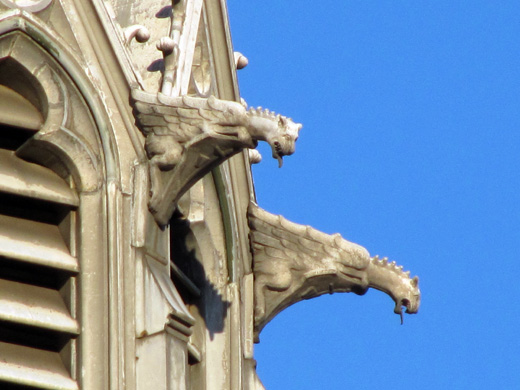
You can walk past buildings for years and never see the faces glaring down at you—until one day, you stop and look up.

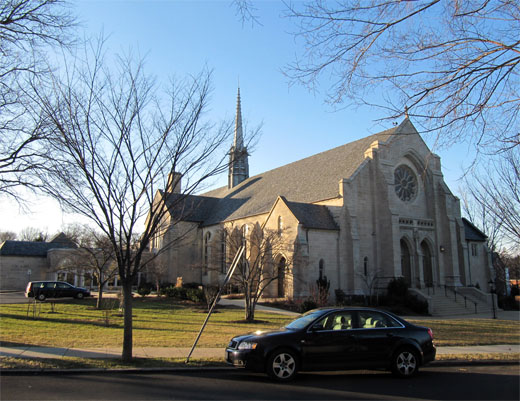
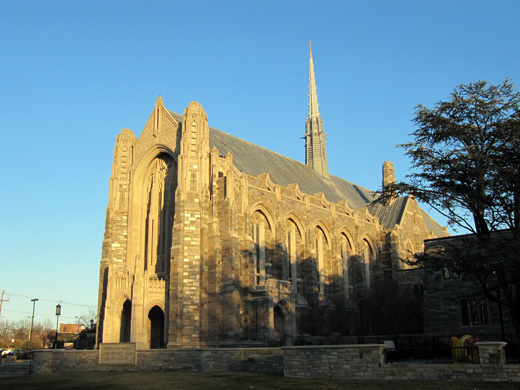
St. Paul’s Lutheran Church (here in D.C., near the corner of Connecticut Avenue and Ellicott Street NW) was begun in 1930 and finished in 1958.

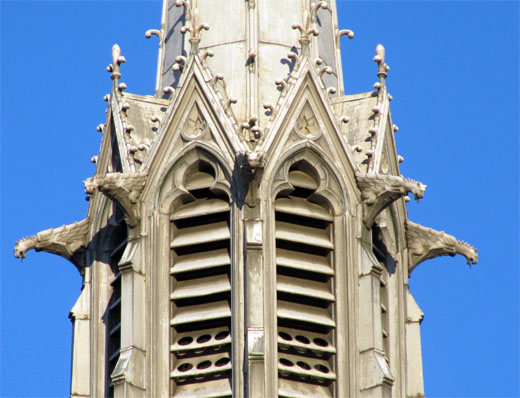
By then, its spire was unfashionably neo-medieval….

…ringed as it is with winged lions right out of illuminated manuscripts.

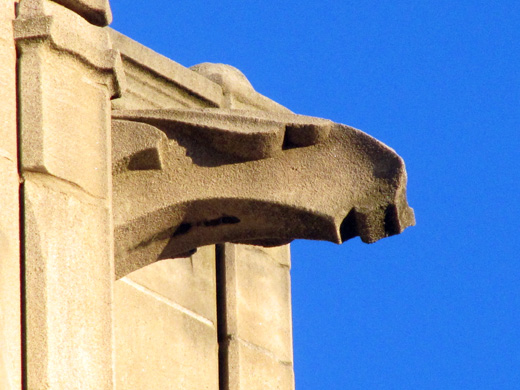
Two miles away, the folks at Metropolitan Memorial United Methodist Church (across the street from American University) began building their new church in 1932.

A prominent spire promises similar beasties…

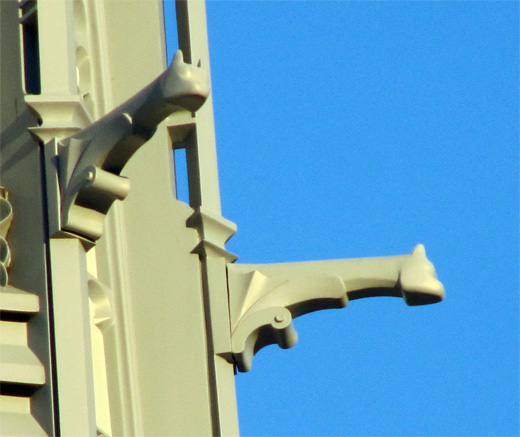
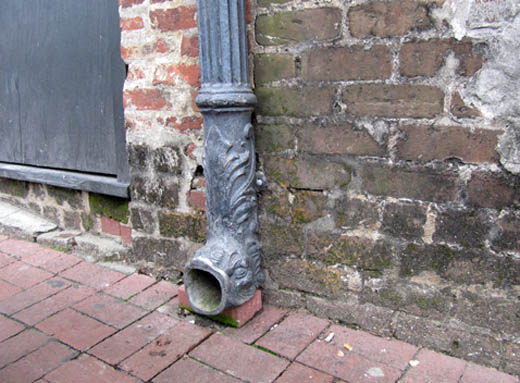
…but two waterspouts near the front of the church are barely zoomorphic…

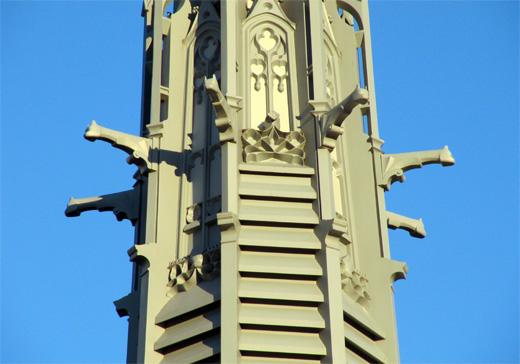
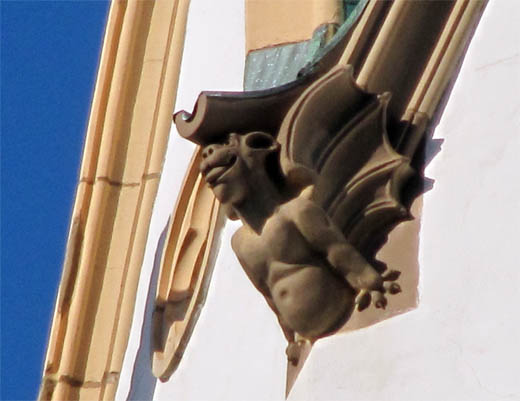
…while the spire itself sports not gargoyles, not grotesques…

….but faux-tesques!

“Mountain passes slipping into stones…”

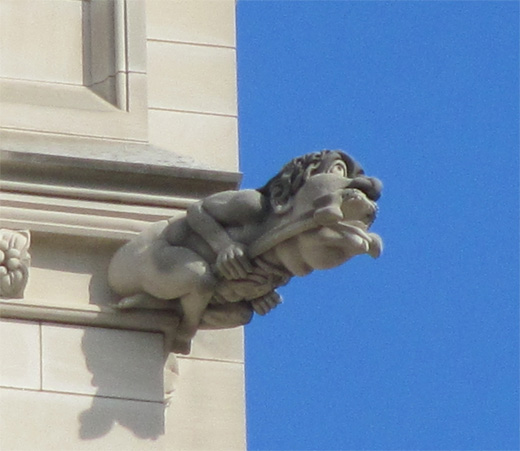
Facing away from the cavewoman pietà, this bone-wielding caveman tears open his own abdomen, but he’s less brutal than he seems. Candor sometimes demands that you de-form yourself a bit.

THREE SEASONS

Panting at twilight
the fox halts, and bends his neck:
“one white bone is yours.”
You shook me half awake look!
with cold, open, empty hands

* * *

Beneath your mirror,
light, scarf, gloves, clock, sonnet book,
a deer tibia—
you beam, and gaze into it

Lose her to God for a while

* * *

Four trees fell.
She swings
through fresh-mown sunshine, smiling
over fitful seeds
slight as a hummingbird skull
light as a hummingbird dream

(For all the entries in this series, hit the “looking up” tab, or read the gargoyle FAQ.)

“Throw the world off your shoulders tonight, Mr. Smith…”

Silly and serious, profane and sacred, the gargoyles at the National Cathedral have become tourist attractions all their own. You can buy a book about them, the cathedral offers special tours, and I hear some strange neighbor is even writing gargoyle-themed poems.

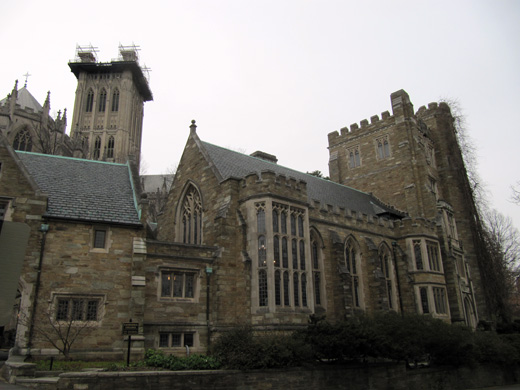
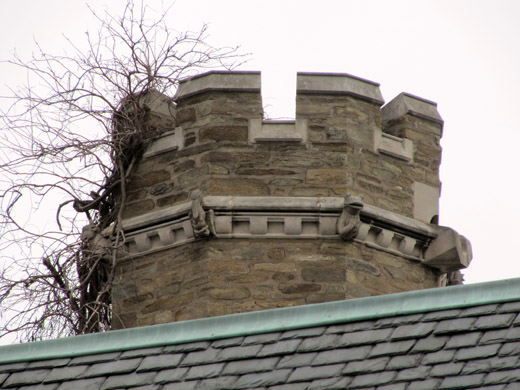
They’re not, however, the only gargoyles and grotesques in town, or even on the cathedral grounds. Turn northeast and stroll a few steps and you’ll bump into Cathedral College (formerly the College of Preachers), dedicated in 1928 just as American neo-Gothic church building was waning and collegiate Gothic was on the rise.

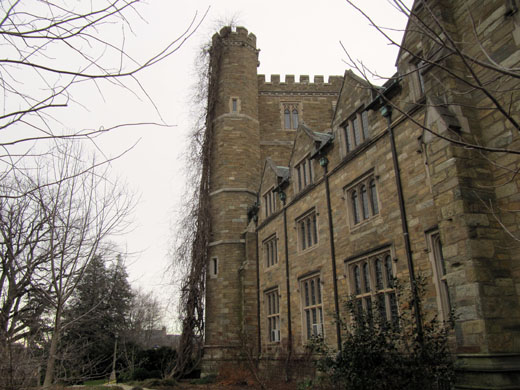
Mostly Anglophilic neo-Gothic with Tudor-ish outbuildings and annexes, Cathedral College closed for budgetary reasons in 2009, but gray winter is a fine time to peep through leafless vines and trees…

…to see the grotesques on the large corner tower.


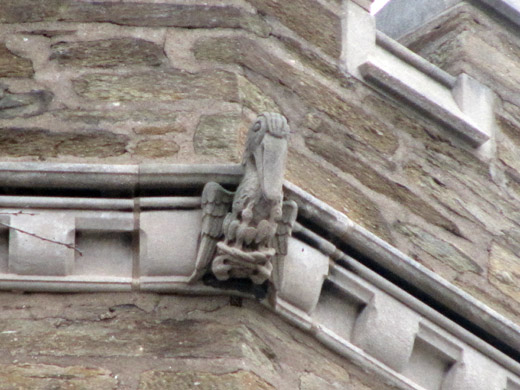
First up: a pelican feeding her young with the blood of her breast, a medieval Christian symbol of self-sacrifice that’s hardly unknown in the American South.

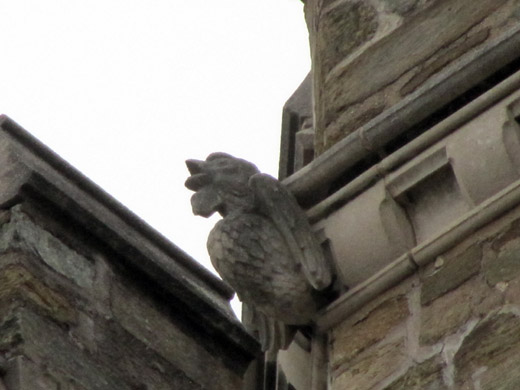
Harder to see: a rooster, medieval symbol of (among other things) vigilance.

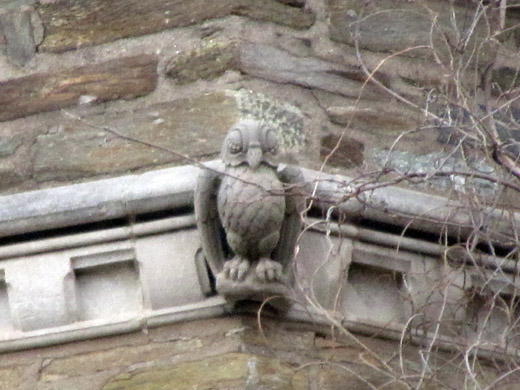
This owl’s shut eyes may suggest modesty, or sinners refusing to see and do the good, or, not inconceivably, Jews rejecting Christianity.

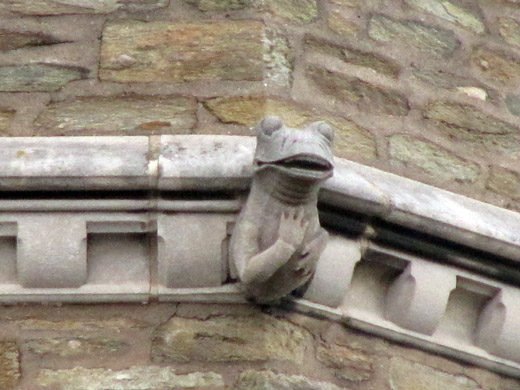
Everyone knows that in the Middle Ages, anthropomorphized frogs gesturing sincerely symbolized…um…

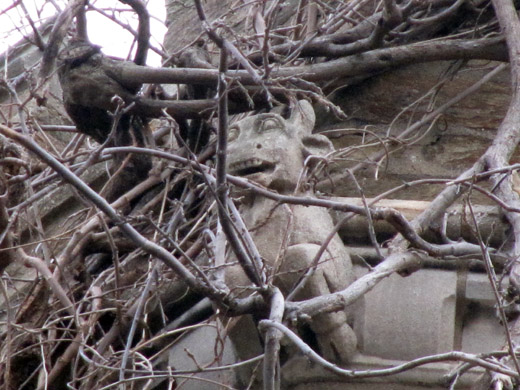
Exposed only in winter, this embrambled goat-devil is suitably eerie.

The College of Preachers was built by Frohman, Robb, and Little, one of several firms that made America look a little more medieval: Philip Frohman designed more than 50 American churches, and FR&L gave Trinity College Chapel in Hartford its neo-Gothic air. Frohman himself is best known for stepping in to re-design the National Cathedral in 1919. To a large extent, the building is “his”; he reportedly still climbed the scaffolding to oversee construction until his retirement in 1971. (Like many Episcopalian medievalists of his generation, Frohman was drawn to Catholicism; unlike most, he eventually converted.)

If Frohman, his partners, and their stonemasons intended the grotesques on Cathedral College to tell an obvious story, then I’m missing their meaning—beyond, perhaps, “please decorate the tower drainage system.”

“Ne can Ich eu namore telle. / Her nis namore of þis spelle”—but I’m open to generous and creative interpretations, even wild ones, of this medieval-ish menagerie that countless Washingtonians stomp past every day without ever stopping to see.

“I can hear people singing, it must be Christmastime…”

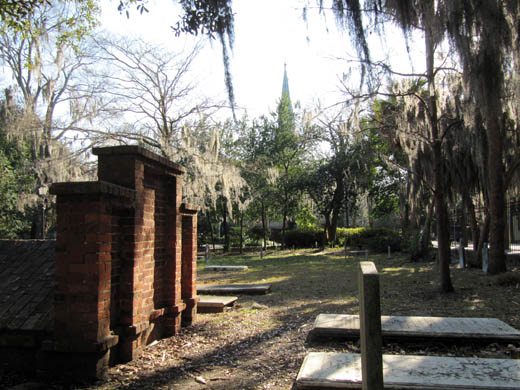
Medievalism is intertwined with the history of the American South. In cities like Richmond and New Orleans, where magazines helped popularize Sir Walter Scott novels and promote chivalric virtues, Gothic revival architecture felt right—but Savannah, where I’m spending Christmas, went its own wonderful way. Here, in a city with countless monuments but surprisingly few statues, you’re more likely to find Georgian, Italian, Federal, and Colonial styles, intermingled but insistently American beneath layers of picturesque moss.

So when you’re the new guy in Savannah, exploring the city’s public squares on foot on Christmas Eve, the search for medievalism seems downright futile…

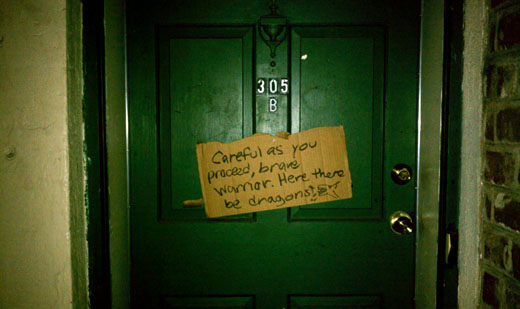
…but after all these years, I know when to heed the signs. They’re rarely as obvious as this one on Liberty Street.

And so we trudge from moss-bedecked square to moss-bedecked square, wondering as we wander…


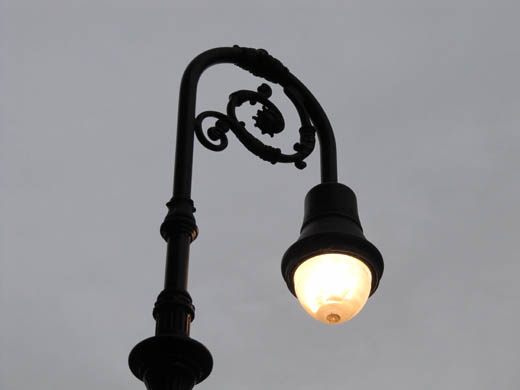
Is a lamppost resembling a bishop’s crozier the most medievalism the streets of Savannah can offer?

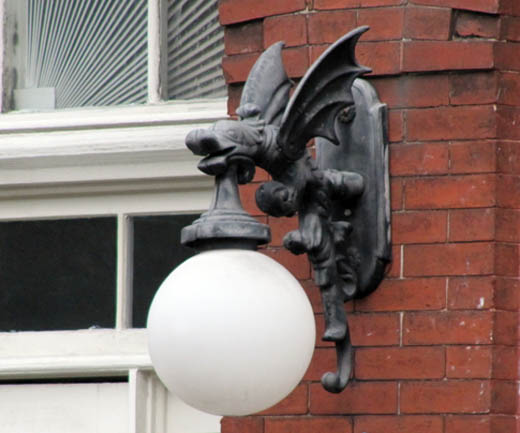
“No,” says a monstrous sconce on Bay Street. “Look lower, fool!”

Any Jesuit will tell you this totally counts as a gargoyle…

…as does this Seussian goof on the Cathedral of St. John the Baptist, though his architect spared him the spitting.

But what’s that in nearby Troup Square?

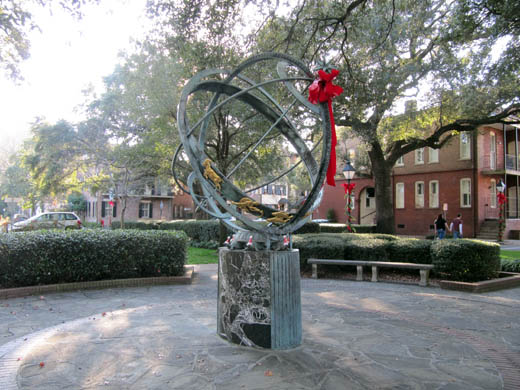
A neoclassical armillary sphere!? Isn’t there anyone in Savannah who knows what medievalism is all about?

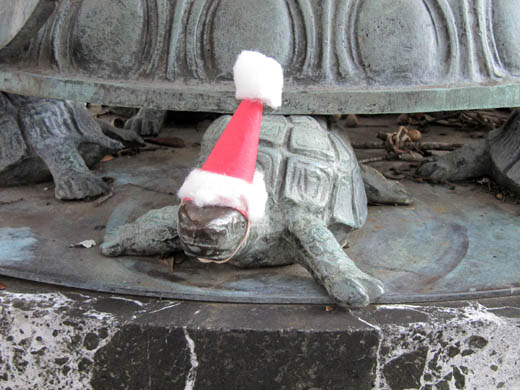
“Sure, Charlie Brown,” says one of six bronze turtles in tiny Santa caps, “I can tell you what medievalism is all about.”

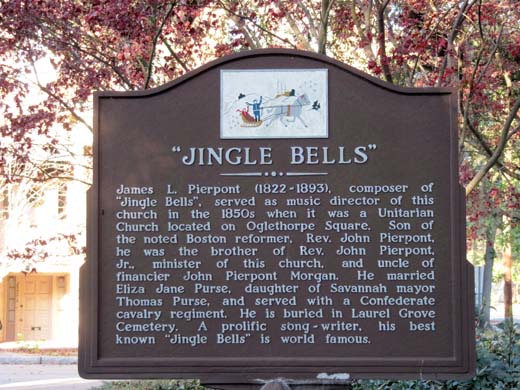
Yep, along this square is the Unitarian church where J.P. Morgan’s uncle served as minister when he published “Jingle Bells.” (Until today, it had never occurred to me that anyone had actually written “Jingle Bells,” or that controversy would attend upon its provenance.)

Amusingly, in the 1850s, Pierpont’s church wasn’t in this square, but a few blocks away. During a low point for Savannah Unitarians, the building was bought by African-American Episcopalians, who industriously rolled it away and set it down here.

So yes, it’s a cosmic treat to stumble around Savannah on Christmas Eve and find a neoclassical Christmas turtle that points you to the relocated church whose minister composed “Jingle Bells”—but what’s medieval-ish about an overplayed ode to the secular sleighing culture of 19th-century New England?

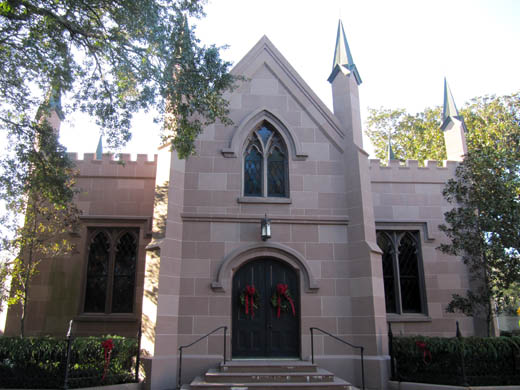
Aha! The composer’s church itself—castellated, Americanized neo-Gothic! Its discovery is hardly a miracle, but the sight of it is fitting end to a charming quest—and a fine way to wish “Quid Plura?” readers a merry (and hopeful, and gargoyle-rich) Christmas.

“…and eyes full of tinsel and fire.”

[I first posted this last year on December 21. It’s the second most popular poem in the series, and I offer it again in the spirit of the season.]

SOLSTICE SONG

Come and grace our gleeful number;
Come and shake off snows unknown.
Bells will ring while wood-woes slumber;
Bells will ring for you alone.

Rave with uncles reeked in holly;
Reel with aunts who saw you born.
Whirl away your grear-tide folly;
Hearth-life dwindles ere the morn.

Haul the ash-bin ’round the byre;
Feel the pinelight breathe your name.
From the tongue of colder fire
Cracks and calls a hotter flame.

Run and chase your sweet-lipped singer;
Run and race your hope anon.
Bells will ring where’er ye linger;
Bells will ring when you are gone.

(For all the entries in this series, hit the “looking up” tab, or read the gargoyle FAQ.)

“Funny how my memory skips while looking over manuscripts…”

With unlikely conviction, my garden has thrived well into November. Last week I dug up a little white-orange carrot still stubbornly finding its form. It smelled wonderful: fragrant, persistent, alive, a deep-rooted argument against autumn gloom. It stirred up two rabbits, long out of season.

THANKSGIVING

i.

“Senses are quickened by subtile forebodings.”
So sops the chorist by shadow-cold doors.
Blackening leafmeal bletts into mulch,
The cinders spelt from summer pyres
Blaze low before us, blow themselves out.
The wormeled looms, woven blindly,
Fate unpatterning, feast on the ash.
From these I spair my spirit shrinking:
In winter’s wane and withring dark
No thing endures. I thank no one.

ii.

Ah. Songs missung spiel but seasonal doom.
Finding their form, fetal hornroots
Clot the bodden; now clawing one free
We breathe, haling brawn and carrick,
Sweaty scrafings, the sweetest persistence,
No lesser life from leafmeal spurned,
And we know: Something censes in gardens
In alway above eyesores and brume-song
That nurtures a savor not known here before.
Craving to taste, we partake, and give thanks.

(For all the entries in this series, hit the “looking up” tab, or read the gargoyle FAQ.)

“Some people dance cheek to cheek…”

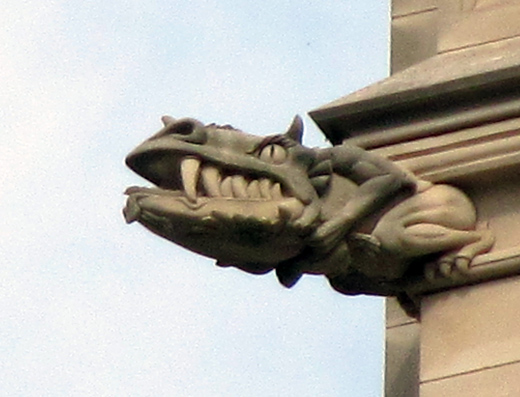
Although I’ve found this beast atop the northwest tower difficult to photograph, I’ve long wondered why he—she? it?—holds such a savage grip on a mere bird. Then I realized: From a monster’s point of view, they’re dancing.

INTERMEZZO
(after Edgar Degas, “Four Dancers,” c.1899, National Gallery of Art)

In the wings, a measured rest.
Four as one in florid fits

Flitter in. The wald submits.
Autumns rise upon the scene:

In a rush of salmoned green
Tender tressings flip, exchanged,

Battened fast, or rearranged.
Trellising her arm, the first

Honors artifice reversed:
“Wasted branches bow, and then

Painted planklings bough again.”
Half as daft, the second sets

Flambent straps, but scarce forgets
Quips that crab her brittle heart:

“Oui, technique—mais où est l’art?”  
Sembling innocence, the third,

Primping, pincing, undeterred,
Shoulders not a knot of shame

Lest regret, or light acclaim
Drag her down, or bow her stance.

Note the last; no lasting glance
Lingers there for us to see.

Music lifts her. Fanions flee—
Blithe she twirls, and none observe

Lesser lines we scarce deserve
(You and I) to leer and know.

Laud her flourish. Let her go
Pattern grace, while we pretend

Faux Novembers never end.
Autumn twilight sets too soon;

Fumbling, we belie the tune
(You and I) that times the turns

Every gilded dancer learns.
Let their line, from fourth to first,

Misperceive why we rehearsed,
Wrought the light from blighted rhyme,

Warped the chord in common time,
Daubed the gloss, as their debut

Burnished our façade anew.
Late, they loiter back, to find

Nothing I disclose in kind.
Fold your program; feign we see

Faith in faint simplicity,
False in sight, divine in show,

Pas de deux de deux, they go,
Pirandelles of perfect stone

Turn together, dance alone.
(For all the entries in this series, hit the “looking up” tab, or read the gargoyle FAQ.)

“…come crashing in, into my little world.”

The standard line on this fellow is that he’s “refusing to listen to the word of God,” but since he lives on the highest point of a town that thrives on nonsense and noise, I imagine something else has got him all worked up.

TANTUM DIC VERBO

For peace, be still—and let me chase
One paltry prayer unforesworn:
Is grace alone in silence born,
Or else is silence born in grace?

Your craws, your pealings, plaints, and croaks
Resolve my riddle not; you claim
I hearken not? Then whet your blame
On yeas and yawps, whose wasting chokes,

Excruciates, my aching ear,
Be still—the prate of grating chords
Reproves me not, your feint rewards
Me not—and yet I hear, and hear,

And hear, though to the gargling round
My riddles read as coarse complaints:
“Avenge, O Lord, thy slaughter’d saints,”
They canter, lest my quest confound

The noise that lauds their long regret.
I plead you, peace—and beg your fray
Be still, and in your silence pray
For grace, to bear my silence yet.


(For all the entries in this series, hit the “looking up” tab, or read the gargoyle FAQ.)
“I had to run away high, so I wouldn’t come home low…”

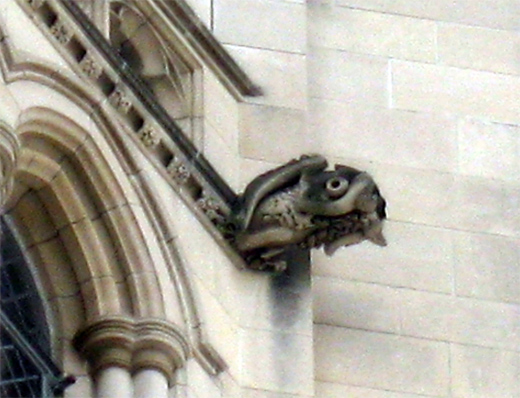
As a kid, I believed in the Jersey Devil. As an adult, I was surprised to spot him at the cathedral, but maybe I shouldn’t be. In our minds, most of us are rarely far from home.

GARDEN STATE LOVE SONG

Repent your flailing forkèd tail and brush
The wingbit crumbs, rewandring why you fled.
The must of menus nemdays made you flush
The tinct of Taylor ham, and wonder bred
A boldened kobold, who for lusher state
Regressed abroad to bask in devlish blight.
But now the mayfield double-garden-gate
That welked you wide, is barr’d. Thus ends your flight.
So must you bitter pandaemony sip,
And dine on lines of dower Greek alone?
“There is no road for you, there is no ship—”
Baloney. Lonely imps may yet atone
In vented verse: Old cauls, like murdrous birds,
Arise, as g’s fawl off the ends of words.


(For all the entries in this series, hit the “looking up” tab, or read the gargoyle FAQ.)