“Gekommen um zu bleiben, wir gehen nicht mehr weg…”

“It’s a clear case,” Alcuin once wrote to Charlemagne about winter portents, “because all the children know they’re sliding down into the valley; they’re all slipping on the same snow.” As baffling as I’ve always found that cryptic and much-debated statement, I do know this: “Quid Plura?” increased its readership in 2009, even though updates were sporadic and the content increasingly eccentric.

So whether you’re a new reader or an old one, I thank you for checking in—and for continuing to make this little site worth writing.

Without further ado, here’s the year in “Quid Plura?,” 2009 edition.

The year began with a surprising discovery: a medieval poem translated by both Langston Hughes and T.S. Eliot. (I could scarcely believe it myself.)

Most popular post of the year, without question: an appreciation of the Pogues.

“QP?” readers were also charmed by Anna Julia Cooper, the most inspiring medievalist you’ve never heard of.

Less popular, but still fun: praise for Christopher Logue’s pseudo-translation of Homer.

Of interest only to me, perhaps: connecting the banking crisis in Iceland to the medieval founders of Reykjavik.

Amid much fanfare, I invented a new soft drink: galangal ale.

Meanwhile, my open letter to the Sci-Fi Channel went unanswered.

Did Charlemagne say “to have another language is to possess a second soul”? Probably not, and I’m not sure the quip is even true.

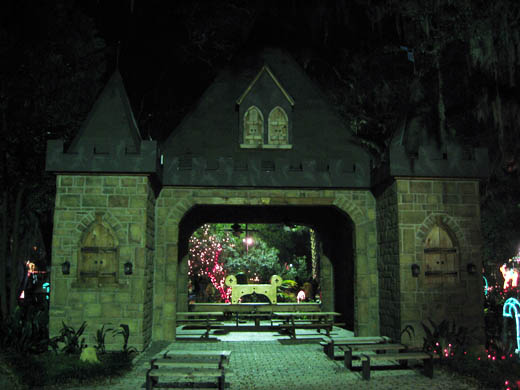
Medievalism turned up in wonderful places: Polish medievalism in Central Park, Welsh medievalism on the National Mall, and Louisiana medievalism both unfiltered and filtered through Longfellow and represented by a riot of statues. Later, King Arthur reigned in suburban Virginia and hobbits were in grave danger in Ocean City, Maryland.

Oh, and we saw medievalism on General Hospital. (Seriously!)

Two Romanesque arches converged on a Maryland highway, and that, at least for bus passengers, has made all the difference.

Fortunately, the mass convergence for Obama’s inauguration didn’t turn out like Rome’s first Jubilee Year.

If you need an expert on Viking weapons and combat, then have I got a guy for you.

Much purchased, little read: Tolkien’s Legend of Sigurd and Gudrun and its Wagnerian connection.

Everyone praised The Brief Wondrous Life of Oscar Wao as a Dominican-American story, but it’s more than that: it’s also a New Jersey novel.

When you commit to reviewing all non-Prydain books by Lloyd Alexander, you get to read charming rarities like Janine is French.

When you’re preparing to teach Modern Science Fiction and Fantasy, old books scurry back into your life. You have to settle on teachable novels and stories and see Internet history in dog-eared pulps.

If you’re attuned to oddities, you’ll also find a long-dead science fiction writer forgotten by her alma mater.

What should you do if you spot a gargoyle on a neighbor’s roof? Why, you write a poem about the creature, of course. The same holds true if you meet a wild boar or eavesdrop on an octopus reassessing her love for a lobster.

Thanks for your eyeballs in 2009! Here’s to a prolific 2010.

“And the motorway’s stretching right out to us all…”

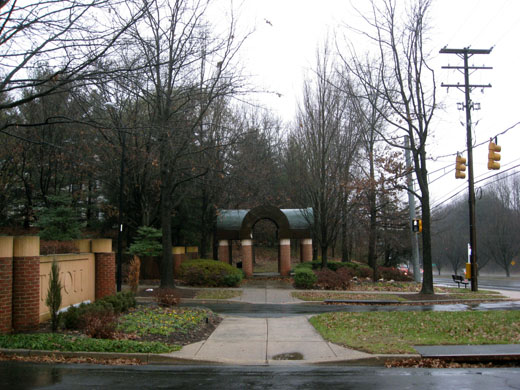
So you’re cruising through suburban Maryland on a rainy Sunday afternoon. Daylight is fading, just as a semester spent focused on fantasy and science fiction is drawing to a close, and you idly wonder what you can do to steer your blog back to its original focus on medieval literature and unexpected manifestations of medievalism in everyday life. You round a bend, intent on little more than reaching the Korean supermarket before it closes, and—

Behind those trees…can that really be a textbook example of Romanesque vaulting?

And can it really be standing on the corner of Medieval Avenue and Renaissance Lane?

Okay, that last detail is wishful thinking. But check out this intriguingly unnecessary structure at the entrance to an otherwise unremarkable townhouse development on Randolph Road.

What’s that, you say? A mere arch? Well, look closer.

Yep, two barrel vaults intersecting, like in the textbook drawing—and just like in many Roman buildings and countless medieval and Renaissance churches (thus achieving the effect which Vasari famously dubbed “criss-cross applesauce”). The major difference here is that the architectural features, including those blank capitals, have been recast in the idiom of a circa-1988 shopping mall.

But lift your eyes above the lintel…

…and you’ll see how the intersecting vaults divide the interior into four bays to create…

…a good, old-fashioned groined vault. (You in the back, stop giggling.)

I don’t know why an architect decided to evoke the history of his profession here, with this whimper of traditional whimsy, in front of a subdivision that bears no other mark of architectural distinction.

However, this Romanesque doodad does serve a practical purpose. When it’s raining, you can seek shelter…

…and wait in grand style for the bus.

UPDATE:

Dave at Studenda Mira points out that this bus stop also suggests a tetrapylon, a four-way triumphal arch placed at street junctions in the Roman Empire. Here’s a well-preserved example from Antioch, and here’s another in Jordan.

“…twisting in the water, you’re just like a dream…”

Just above the wild boar on the south nave of Washington National Cathedral are several smaller gargoyles and grotesques. Without binoculars or a zoomable camera, you might easily stroll by without ever noticing them, but it’s worth stopping in front of the garden and looking up. The most interesting critters aren’t about to clamber down to you, however much some of them may in fact desire to do so.

AN OCTOPUS REAPPRAISES HER LOBSTER

I hear the hot breath of the lobster I love;
The trees wilt below us; there’s nothing above.
You snore and I shudder, for sleepless I know
The oath of adventure we swore long ago:

“Between us, our limbs number eighteen in all;
Let’s creep from this tank and slip over the wall
And forever be free! Let’s aspire to perch
On a spire of our own on the loftiest church.”

You clawed at my tentacle, tender and green,
Like the first awkward kiss of a king and his queen.
You scuttled, I swam; through the garden we went.
Where grass gripped the stones, we began our ascent.

A lobster lives long, as no octopus can,
But a lobster has in him but one perfect plan.
I longed for longevity; no girl expects
To ask of her lobster, “So what happens next?”

You curl up contentedly, dreaming of me;
I cling to my cornice and scarcely feel free.
“I won’t let you down,” you once vowed, and I sighed.
I love that you’re honest; I wish you had lied.

(For all the entries in this series, hit the “looking up” tag.)

“In time, we’ll be dancing in the streets all night…”

Like Charlemagne in the mind of a 19th-century French nationalist, this blog should, in the weeks ahead, come roaring back to life as the tired soul behind it strikes a happier balance between the things he wants to do and the things he needs to do. In the meantime, enjoy these links re-plucked from the great, fecund florilegium of the Web.

The Cimmerian hears echoes of Robert E. Howard in last week’s discovery of Persian bones.

Why do the spiders in The Hobbit hate being called “attercop”? Jason Fisher explains.

Open Letters Monthly reviews a new translation of Orlando Furioso.

Lex Fajardo visits comic shops in Scandinavia.

Come on, you know you’ve wondered about ancient Roman toilets.

Wulfstan speaks! Hear Anglo-Saxon sermons across a thousand years.

Neil Verma defends historical fiction and ponders the relationship of video games to reading.

Jake Seliger ponders an op-ed about teaching, Borges on literature, and the silly debate among writers about word processors.

Where are the wild things? Janet Potter reads the book based on the movie based on the book.

Bibliographing reads the 19th-century kunstmärchen of Ludwig Tieck.

Writer Beware asks: Do authors need “virtual assistants?” (The answer: no.)

“Trumpets, towers, tenements, wide oceans full of tears…”

And so the exhausted medievalist flees to Ocean City, Maryland, intent on finding time to become reacquainted with The Hobbit for next Wednesday’s class. (He first read the book here—bought it on the boardwalk—more than 25 years ago.) But after golfing among Vikings and honoring the deathless gods of the dragon temple, what seaside novelty can entertain the Tolkien-minded teacher?

Weary, he rests at the edge of the wintry surf.

What’s that? You say you’ve found something lightly amusing and relevant to my lesson plan? Lead on, O friend of friends!

I say, what rises beyond this eldritch wood? Such a wonder can hardly be the work of man.

Zoom in, O magical steed!

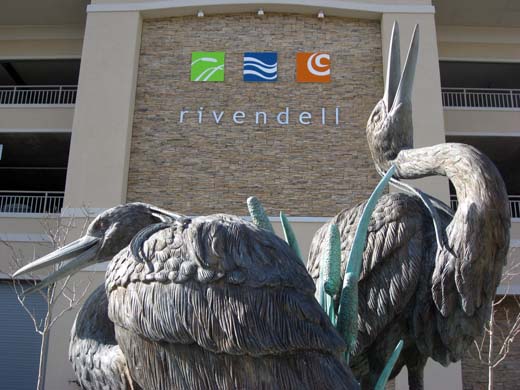
Aye, nothing says “magic elf sanctuary” like storks. But surely, O lavender-maned tour guide, the name of this place is mere coincidence?

I see. So why, O hooféd Vergil ‘mongst the bayside shades, would a hobbit need a parking space?

It’s like a driveway to the Shire! Those round-top doors make me want to go there, and back again!

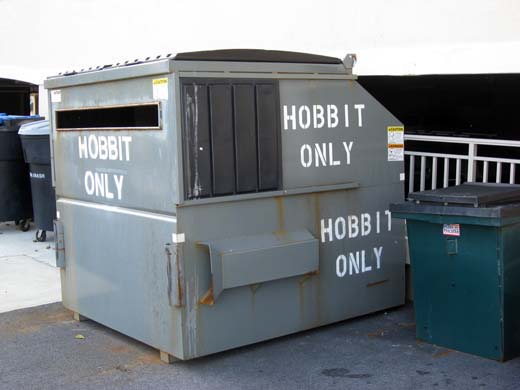
But wait—what’s that funny smell around back?

Run, fat hobbitses! It’s a cookbook! It’s a cookbook!

“What a good girl, what a smart girl, what a pretty girl…”

Wide-eyed freshmen straining to seem a little older, straight-on rain hitting sideways bikes—when I hike to American University to use the library, I’m struck by how autumns on campuses all feel the same, how the mood falls and rises according to rhythms that no one can sense only two blocks away. Science fiction writer James Tiptree, Jr., AU class of 1959, certainly felt it; in November 1957, after nine months at American, Tiptree wrote to a friend:

The first semester is like an arctic trip; in the warm weather you sign up for the long plunge into the dark tunnel of winter, and you sail North with the weeks; the trek across the campus growing colder, the inside of the night bus hotter; darkness coming earlier, and finally closing in to the tough struggle of the exams, an inhuman time—and suddenly the lights and confusion, the camp of Christmas . . . And then the voyage home out of the darkness, back up the tunnel to the great blaze of Spring ahead….

“James Tiptree” was, of course, Alice Sheldon, who returned to college at 41 after serving in the Army and working for the CIA. According to Julie Phillips, author of James Tiptree, Jr.: The Double Life of Alice B. Sheldon, AU’s campus oddballs found Sheldon awfully compelling. In a letter to her mentor, Sheldon half-jokingly rued her status as a weirdness magnet: “It’s plain, now no more than ever, will I meet the normal sunshine people of this world.”

Flash forward a few years to find Alice Sheldon, graduate student, working toward a Ph.D in experimental psychology at GWU and teaching classes in statistics and psych at her alma mater. In a letter to a friend, she recalled making the mistake of estimating her hourly earnings, thus inspiring her own formulation of the adjunct’s lament:

Stupid kids come up and say I’ve been here three years and you’re the first faculty member that ever TALKED to me—and bang goes three hours. Or bright kids, and you find they went to some progressive so-called school and can’t read or write an English sentence, and want to. And piss goes ten hours. And they aren’t getting the material so you revamp your whole series. And you give real exams, essay exams, and READ them. Yeah. $.75 with your fucking Ph.D.

When I’m on the AU campus, I can’t imagine Sheldon there. For one thing, there’s no trace of either her real name or her pseudonym on the AU Web site; the school doesn’t claim her as one of its own. Maybe the circumstances of her death, a murder-suicide pact with her bedridden husband, made her alma mater disown her—or maybe they simply forgot. If any of Sheldon’s worshipful oddballs from the class of ’59 pause to recall her at Friday’s reunion, will any of them know she was also an acclaimed science-fiction author? That an award is named for her alter ego? Will anyone remember her at all?

In Sheldon’s sardonic 1973 story “The Women Men Don’t See,” a government librarian from D.C. tries to explain to her male traveling companion that women’s rights are insecure, so clever women must scramble to survive. “We live by ones and twos,” Ruth Parsons says, “in the chinks of your world machine.” When the clueless Don Fenton likens her comments to the manifesto of a guerrilla movement, Ruth counters with a more pathetic metaphor: “Think of us as opossums, Don. Did you know there are opossums living all over? Even in New York City?”

And Washington too. In a city that’s hopelessly, willfully normal, where even the artists are sleeping by ten, the Sheldon-Tiptrees pass unseen, less like opossums than aliens—not the dome-faced, squid-fingered monsters that float through Sheldon’s story, but lonely, troubled, rain-drenched blurs.

“It’s uncanny,” Sheldon wrote, “they come to me—the one just out of shock therapy, the one in love with an older woman, the one who drove a taxi for five years and only goes out at night, with big dark eyes.” Fifty years later, they seek out each other in library niches or clear across dimly lit classrooms, the oddballs, aliens, and opossums, astounded when somebody sees them.


“I study nuclear science, I love my classes…”

It would have been idyllic: basking in the glare of the Adriatic, nudging sleepy turtles in the olive grove, ignoring the pre-recorded pleas of the muezzin that tumble down the mountain…but when a friend invited me to write Becoming Charlemagne at his Montenegrin beach house, I turned him down, just as I had to say “no” to generous offers that might have put me in a cottage in Ireland or poolside in Florida. Traveling with easily-misplaced articles and books felt like a great way to miss a deadline, and I vividly imagined Balkan crime lords challenging me to win back my crate of medieval scholarship in a drinking contest ungoverned by nominal adherence to the rule of law.

My irrational fear of becoming a cautionary tale in The Economist notwithstanding, I’ve kept an eye on the e-book market for a device that does everything I need it to do. A few weeks ago, I was stunned to see a TV commercial for the latest Sony Reader, an obvious attempt to scrape away some market share from the Amazon Kindle. But how big, really, is that market? Amazon hasn’t said how many Kindles are out there. I’ve spotted two Kindles in the wild, and plenty of pundits, media people, and bloggers do go on about them, but the device is hardly ubiquitous. So how un-ubiquitous is the Kindle?

Here are some ratios derived from my latest Becoming Charlemagne royalty statement. I have no idea how typical these numbers are, but here’s where e-book sales stand in the life of one modest, midlist pop-history book that’s been in print for three years:

  • Ratio of Kindle copies sold to print copies (hardcover and paperback) sold: 1 : 302 
  • Ratio of e-books in all formats sold to print copies (hardcover and paperback) sold: 1 : 47
  • Ratio of Kindle copies sold to other e-book formats sold: 1 : 5.45
  • Ratio of Kindle copies sold to Microsoft Reader e-books sold: 1 : 3

Interestingly, Kindle sales are lumped under “MOBIPOCKET” on a HarperCollins royalty statement because the Kindle uses that e-book format (and Amazon owns the company), but 16% of the Mobipocket sales for BC occurred before the release of the Kindle in late 2007—so there’s no telling if all the sales I’m ascribing to Kindle even went to Kindle users.

So there it is: e-books account for only 2% of this one book’s total sales, which includes hardcover, paperback, and various e-book formats—and Kindle sales account for no more than 0.3% of total sales.

Perhaps, compared to sales in other genres, these numbers are weirdly low. For all I know, people who read little medieval-themed pop-history books by unknown authors are atypically hostile to e-books or simply aren’t early adapters in general. Maybe people who buy mysteries, science-fiction novels, or political screeds are far more open to new technology?

Whatever the case, while I’d like to be enthusiastic about e-books, I can’t help remembering what Charlemagne said in 793 when his flunkies promised him a canal between the Danube and the Rhine: “When you say it’s going to happen ‘now,’ well, when exactly do you mean?”

“Got your number from a friend of mine who lives in your hometown…”

Life was funny, growing up around characters but not inside a story. I’m not complaining; it was simply true that stories happened in New York or in California, on the shores of Earthsea or the plains of Krull, but never in central New Jersey. We didn’t have major radio or TV stations, so the news showed us Brooklyn and the movies showed us suburban Chicago, and I think we knew the wider world better than our own. Later, expat filmmakers flirted with caricature or danced around the edges of the odd, and sometimes a novelist knew the state well, but most wrote New Jerseys that didn’t ring true.

I mean, I didn’t find it strange that we rode sleds into traffic, that my friends stole software from Finland, that our principal hijacked a bus so fourth-graders could see Ronald Reagan, that escaped mental patients slept on our lawn, that we buried our dead in coffins stuffed with beer cans, that the girl next door walked a rabbit on a leash, that my uncle kept sheep in his suburban backyard (and wrapped the old ewe’s legs in duct tape to keep her from falling over)—but I knew these lives weren’t fit for proper fiction.

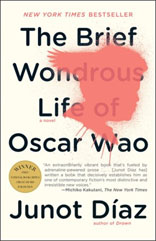
Then along came The Brief Wondrous Life of Oscar Wao, the story of a Dominican-American misfit who’s too obsessed with science fiction and fantasy to realize he’s living in a magical-realist novel. Readers love the geeky obsessions of Oscar de León, and Junot Díaz’s take on Dominican history is vital to his story, but I was drawn to the book by something else: Díaz went to Rutgers and Kean, and Oscar Wao is very Central Jersey.

At first I thought he’d whiffed it. Díaz names New Brunswick streets but barely shows or describes them. He mentions Amboy Cinemas, but the adventure of seeing movies there is a tale he doesn’t tell. He knows the late-’80s “nerd circuit” at Woodbridge Center (comic shop, gaming shop, Waldenbooks), but he won’t stop to linger and make the place real.

Then a landmark looms from the pages:

What he did was this: drank a third bottle of Cisco and then walked unsteadily down to the New Brunswick train station. With its crumbling facade and a long curve of track that shoots high over the Raritan. Even in the middle of the night, doesn’t take much to get into the station or to walk out onto the tracks, which is exactly what he did. Stumbled out toward the river, toward Route 18. New Brunswick falling away beneath him until he was seventy-seven feet in the air. Seventy-seven feet precisely. From what he would later recall, he stood on that bridge for a good long time. Watching the streaking lights of the traffic below. Reviewing his miserable life. Wishing he’d been born in a different body. Regretting all the books he would never write. Maybe trying to get himself to reconsider. And then the 4:12 express to Washington blew in the distance. By then he was barely able to stand. Closed his eyes (or maybe he didn’t) and when he opened them there was something straight out of Ursula Le Guin standing by his side…

I’ve been to the top of that train bridge—not for the same reason as Oscar, but compelled, as he was, by something other than reason. How did no one notice a teenage, microscopic me scaling a scrubby slope along a highway? For years I was sure I was all on my own—but then I learned that in the 1930s, the cops caught my grandfather trying to cut an hour off his commute by using that same viaduct as his personal footbridge. That was a very Junot Díaz discovery: places run in families.

It’s not a bad bridge to have climbed at least once. Glance down, and you will get dizzy; a train flies past and blows you to the edge, and you wince through a hideous gust. But when calm settles in and the tracks are all clear, there are weird sights to see up there, stories to spot, if you just know the right way to look.

(Photo © Gerald Oliveto. Used with permission.)

“No time for nothing, no Patek Philippe…”

Busy week! Busy weekend! So here’s an assortment of quite spiffy links.

Unlocked Wordhoard readers are answering a question: What classes do you take if you want to be a medievalist?

It’s the 2,000th anniversary of the Battle of Teutoberg Forest, so Hermann the German is everywhere—but Studenda Mira didn’t expect to find him in Reformation propaganda.

For all Teutoberg-related scuttlebutt, Adrian Murdoch is your go-to guy. (Put his book Rome’s Greatest Defeat on your wishlist.)

Without YouTube, our descendants might never see people working on Linotype machines.

Today, after 72 years, “Guiding Light” is going off the air.

The good folks at The Cimmerian point us to Reclaiming the Blade, a documentary about swords; it’s narrated by Lord of the Rings cast members.

Do aspiring authors need to “know someone”? Victoria Strauss debunks that myth.

Jake Seliger reviews Last Night at the Lobster.

Will McLean finds something wonderful: build-’em-yourself paper automata!

Steve Donohue reviews a new Prince Valiant compilation. (He also reviewed a long-due book about unjustly forgotten illustrator J.C. Leyendecker.)

Ah, the consistency of pop music: Compare the folk song “Lovely Joan” with “Touch and Go” by Emerson, Lake, and Powell.

I grew up a short bike ride from Highland Park, New Jersey. Now blogger Steven Hart has given the town its own online newspaper: The Highland Park Monitor.

Speaking of the great Garden State, it’s the ten-year anniversary of Hurricane Floyd. Revisit the mess in photos, won’t you?

“Oh man, look at those cavemen go…”

Where books get stacked rarely makes a statement, but at Wonder Book, the shelves above and around the bathroom door are stuffed and piled with pulps: Astounding, Galaxy, and countless others, most of them from the 1950s, some of them hiding their half-shredded kin from the ’30s and ’40s. The expensive stuff is aisles away, bagged and secure behind glass, so these are the five-dollar specials, what remains after anthologists spent half a century picking their carcasses clean.

Like many people, I’ve read the best stories culled from these magazines, and I’m familiar with the history of the pulps and their off-kilter editors. When I popped up to Wonder Book, I’d planned only to find some props for Wednesday’s class so my students could see the garish covers, thumb through yellowed pages, and understand how tangible the genre used to be.

But a funny thing happened after I got home: I actually read these magazines and saw how much of the history of science fiction happened between the fiction—in reviews, editorials, letters, and ads. Vivid and downright beguiling, the pulp scene was as alive and interactive as anything on the Internet today.

Here’s L. Sprague de Camp on The Martian Chronicles. This review ran in the February 1951 issue of Astounding Science Fiction, but de Camp sounds for all the world like a smart, impious book-blogger:

Bradbury is an able young writer who will be better yet when he escapes from the influence of Hemingway and Saroyan—or their imitators. From Hemingway he takes the habit of stringing together many short simple sentences and the Providential or impersonal viewpoint, all characters described purely in terms of external action. All right for Hemingway’s Neanderthaloid characters with no minds to explore, but of limited use in a fiction of ideas.

From Saroyan—or perhaps Steinbeck?—he takes a syrupy sentimentality. He writes “mood” stories, of the sort called “human,” populated by “little people” named Mom and Dad and Elma and Grandma. They come from American small towns and build others just like them on Mars. They’re the kind we all know and call “nice—but dull.”

The Web, inscrutable and vast, generates experts who can lecture us, sometimes legitimately, on almost any subject. So behold our monkey ancestors whooping it up around the monolith in Astounding Science Fiction, October 1952:

This is in reply to the query you received concerning how Gödel determined the truth of his “undecidable propositions,” as they are called, in view of the fact that they were unprovable. The question is a good one and is certainly deserving of a reply. When I wrote the article on metamathematics I was much tempted to include a discussion of this very point, but considerations of space limitations ruled otherwise. I shall attempt here to give a partial answer…

Farther afield, hearken to the familiar call of the autodidact in a florid—but to me, totally charming—letter from the April 1946 issue of Famous Fantastic Mysteries:

If you’ll take those limpid orbs off the waste paper basket a moment, I should like to add my voice to the squawks, howls and cauterwauling that beset you.

I was really pleased to find “Phra The Phoenician” so readable. It was a trifle wordy and a bit history-bookish, but beautifully woven together. I’ll bet you a used doughnut that Arnold could quote Shakespeare in reams!

The other story “Heaven Only Knows” was either a filler or an afterthought. “Heaven Only Knows” how it came to be written . . .

[…]

But I did enjoy the mag. as usual. And here’s one fan, Ed., who doesn’t try to hide the covers from the gentry. If people will be allergic to red and yellow, that’s their tough luck. Me, I’m an individualist.

And then we have the June 1952 issue of Other Worlds. In “An Open Letter to Paul Fairman,” editor Raymond A. Palmer bickers with the editor of IF magazine over Palmer’s publication (years earlier, in Amazing Stories magazine) of stories by Richard Shaver, who claimed to have been abducted by an evil subterranean civilization during his stint as a hobo. “Are we plagued by a monstrous detrimental overlordship possessed of titanic science to which we cannot but succumb?” muses Palmer in a five-page, Usenet-class pissing match involving circulation figures, business ethics, and fictional depictions of sex. (Einstein and Jesse James get name-checked, too.)

In an equally rambling five-page editorial, Palmer masks excuses with whimsy and third-person mythologizing:

As a matter of fact, all our friends have been expecting us to do “things.” Never mind what—they expect something “extra” from Ray Palmer. Something maybe nuttier than ever done before; something novel; something which smashes a taboo; something that will cause near homicide…But it almost seemed like one of the characters out of a former “novelty,” the dero, have been trying to prevent him from getting into high gear. Pretty rotten trick, to paralyze a guy so he can’t make his readers happy! Well, one thing after another, and all sorts of troubles—printer trouble, money trouble, health trouble, accident trouble, and so on. Palmer thinks slow. He sits in a coal bin and cogitates. And he comes out looking as if he’d been sitting in a coal bin! But eventually he comes out with an idea. Trouble is, we moved to the country and we burn wood now. No coal bin. No ideas. Carbon is the basis of life; therefore carbon is the basis of ideas—no carbon, no ideas.

Until we found out how to make charcoal!

Elsewhere, Palmer ponders the moral implications of universal military training. (“What has that got to do with science fiction?” he demands. “Nothing! Not a darn thing. Except it’s going to happen in the future. And since when can’t a science fiction editor, writer, or reader even breathe a political word?”)

And here, in the middle of that Other Worlds editorial, is Palmer’s statement on the relationship between editor, writer, and reader:

We’re knocking the walls out! No longer is OW put out in an office in Evanston, the second floor of our company ranchero, a printing plant in Sandusky. It is put out in an arena; an arena bigger than Soldier Field, bigger than Wisconsin, or Illinois, or Ohio. It’s put out right into your own amphitheatre! Every one of you readers is right in the convention hall where you can carry or smash any motion the editor makes. What this means is very simple; we’re going to give you readers a lot bigger voice in OW. We’re coming down out of the editor’s seat and getting right in the middle of things. This editorial, and the Letters section, will become a two-way television set…

The chatty, opinionated prose that ranges from informal to crazed; quirky and passionate readers engaged not only with the editor and writers but also with each other; sober debate broken by hectoring and grand rhetorical flourishes; marginal tweeting about back-issue availability; banner ads for products malevolent and benign—all of these things served as a scaffolding for the Internet to raise a larger and more efficient version of that proto-geek community.

But in 50 years, people will still flip through musty copies of Astounding and understand the pleasure that readers once got from them, while my old Commodore disks will be ciphers to anyone who doesn’t tinker with antiques, and the BBS culture I grew up with will survive only in archived fragments, and even those, like our blogs, can be killed with a click.

The geeky past has a future; I wonder if our geeky present does? We inherited from the pulps a supremely participatory subculture of writing, reading, bickering, joking, scolding, lecturing, and learning, but the world may not remember how all of this felt; you can’t shelve intangibles next to the loo.