“…and August’s rare delight may be April’s fool.”

Medieval romances aren’t sacred texts, but translators often treat them with a reverence that overshadows their sheer entertainment value—so thank goodness for Adam Golaski, who’s grappling with Sir Gawain and the Green Knight in an effort to make the poem his own. Playing Tom Lehrer to Cotton Nero A.x’s “Clementine,” Golaski began posting pieces of Green to the Open Letters Monthly web site in 2008, and OLM recently published the entire first fitt.

Here’s the opening stanza of Green:

Since ceased th’siege + assault upon Troye,

bones brok’nd brittled t’bronz’nd ashes,

that soldier who trod treason o’er th’plots’v

his enemies was tried f’r treachery tho

agile Ennias, of th’truest on Earth, of high kind,

haunted by shade Dido, was worth th’wonder

wealth’v all th’west isles——

From rich milk’v wolf-mother Romulus

rose Rome’nd’n its captured riches Romulus was

swath’d. W/ arrogance he built his name

upon a hill + took Palatine t’Romulus t’Rome——

Tirius traveled t’Tuscany he built beginnings,

Langaberde’n Lombardy left us houses,

+ far o’er th’French floods Felix Brutus

on many full banks built Bretayn + sits

w/ one

where war’nd wreck’nd wonder

by surprise has went therein,

+ oft both bliss’nd blunder

fool hope shifted t’sin.

And here’s a bit of the Green Knight’s appearance at Camelot:

Arthur’nd Arthur’s court
look’d long’nd in wonder, + wondered what kind’v man be-held them,
wondered what this magical spectacle must mean,
f’r’a knight’nd’is horse to’ve accrued such’a hue that is

green

green as th’grass’nd growing greener it seemed
green glow’n’nd bright’nd brighter than enameled gold.

Translating medieval poems, whether long works or short, is a cage-match between meaning, meter, and form. Tricky passages drive the disheartened translator to other people’s versions, all of which have their own iffy relationships with the original. Preserving the sound of favorite lines clashes with the need to sacrifice fine medieval details—someone else’s favorite lines—for storytelling, while the manuscript context of the poem gets all the respect of a Carolingian hunchback.

That’s why Green is a hoot. Having developed his own idiom, Adam Golaski doesn’t try to spackle over its seams. He makes deliberately insensible decisions, jamming words together for the sake of sound and using typographic gimmicks to bemuse anyone who tries to read this thing aloud. Every conundrum a translator faces becomes, in Green, a source of amusement; some lines he barely translates at all. Golaksi gleefully defenestrates the needs of teachers, scholars, and students, but his Green makes a point that won’t be lost on medievalists: the original poem is really, wonderfully weird.

(Related “Quid Plura?” posts: a defense of the Gawain-based film Sword of the Valiant and a look at Christopher Logue’s rewriting of the Iliad.)

“Feathered, look, they’re covered in a bright elation…”

Too few Washingtonians have hobbies; for many people here, cultivating a career is apparently amusement enough. Fortunately, I sometimes encounter locals—like this fellow on the west front of the cathedral—who enjoy a pastime I’d never really thought much about, and I like when they explain its appeal in terms I can understand.

A SIMPLE DESULTORY PROSOPOPOEIA
(or, HOW I WAS RICHARD WAGNER’D INTO TRADITION)

“I do not think that they will sing to me”:
Impulsive mermaids drown in shallow words.
Await no witless warbling by the sea;
Rather, seek the songs of simple birds.
From perch and peak they twitter truths profound:
A woodbird stirs the Volsung in his blood;
A parliament of eagles circles ’round;
A curlew chills the farer on the flood.
The cuckoo croaks that sumer is icumen;
“Keep well thy tongue!” confesses Chaucer’s crow;
The nightingale her owl will merr’ly summon;
Despite their flyte, one insight they bestow:
Be still, but heed the rustle of a wing;
A legendary pigeon waits to sing.


(For all the entries in this series, hit the “looking up” tag.)

“So many shots fired, so many daggers thrown…”

Seven years ago, I stepped into a musty workshop in the Balkans and faced the glares of a thousand ancient Serbs. They leaned against walls and rested sideways in racks; a few were upside down. All around, drawn from every corner of the late Yugoslavia, the silent icons were burned, torn, drenched, or devoured by mold. They had been sent to this office for safe keeping—and to await the conservation and restoration that the Serbs may never have the funds or personnel to finish. An eerie sense of patience pervaded the place; in the Balkans, a thousand-year art project is the least reason for despair.

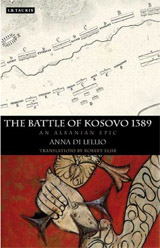
So as someone whose only friends in the Balkans hail from Serbia and Montenegro, I approached the publication of The Battle of Kosovo 1389: An Albanian Epic with caution. For a decade, I’ve taught the Serbian epic cycle about the Battle of Kosovo as a case study in medievalism that fosters the worst sort of nationalism and as one of the best examples of Balkan epic poetry, but I’d never heard of the Albanian take on the Serbs’ sacred story. Published only a year after Kosovo declared its independence, this book was bound to be sensitive; some condemned it as “science fiction” and sent its editor hate mail.

I suspect the angriest critics didn’t actually read the book, which turns out to be a relatively mild collection of eight poems about episodes tangential to the Battle of Kosovo. All but one of the poems were recorded between 1923 and 1955, each is presented in a facing-page translation by Robert Elsie, and the entire volume is introduced by Anna Di Lellio with a placid and decidedly un-Balkan ambivalence.

Most of the Albanian Kosovo variants tell the same basic story: The pious Sultan Murat has a prophetic dream. His seers interpret it, his mother weighs in, and soon the sultan sets off to conquer Kosovo. Like Moses, he prays to God to part the seas, and then he invades the Balkans. When a hungry soldier breaks the fast, the war goes badly, but after the sultan dismisses his less committed troops, his fortunes improve—until he is assassinated by Milosh Kopiliq, an Albanian Christian who picks up his own noggin and strolls away after the sultan’s men behead him.

Readers who know the Serbian poems about the Battle of Kosovo will be startled to see Miloš Obilić, a saint of the Serbian Orthodox Church, presented as an Albanian assassin, a variation that explains why Amazon reviewers have given the book one star if they’re pro-Serb and five stars if they’re pro-Albanian. In the Serbian texts, Miloš is a captain in the army of Serbian Prince Lazar. At the last supper before the ill-fated battle, Lazar unsettles him with a terrible prophecy:

Hail, Cousin! friend of mine and traitor!
First of all my friend—but finally my betrayer.
Tomorrow you’ll betray me on the field of Kosovo,
Escaping to the Turkish Sultan, Murad!
So to your health, dear Milosh, drink it up,
And keep the golden goblet to remember Lazarus.

Miloš does cross over to the Turkish side, but only to assassinate the sultan. Lazar is captured and beheaded. The Serbs are defeated, but their martyrdom wins them the “heavenly Serbia” promised by God—and a longing to reclaim Kosovo that haunted their descendants well into the 21st century.

The transformation of Miloš Obilić, Serb saint and patriot, into Milosh Kopiliq, Albanian Christian, may seem strange coming from the mostly-Muslim Albanians of Kosovo, but Di Lellio explains that a multifaceted Miloš represents an old debate: The Albanians claim ancient descent from the Illyrians, while the Serbs assert that they wandered into the Balkans more recently. Oddly, the existence of Milosh Kopiliq is, Di Lellio says, less a statement of division than a claim to brotherhood. Through Milosh, the Albanians are insisting that their ancestors fought and died alongside Serbs—and that Albanians have deep roots in Christian Europe.

Fortunately, despite a misleading subtitle that promises a far more inflammatory book, The Battle of Kosovo 1389: An Albanian Epic is not a propaganda pamphlet. In her 48-page introduction, Di Lellio carefully shows that the Albanians come by their assassin honestly, with a wealth of place-names near the village of Kopiliq attesting to centuries of belief in Milosh’s local roots. Still, Di Lellio leaps to no conclusions; she contrasts Albanian oral history with an overview of the development of Miloš Obilić in Serbian historiography, and she looks beyond the Balkans at a Catalan tradition that makes Milosh Hungarian. She also raises the possibility of etymological confusion based on the word kopil, which means “trickster” or “bastard.” The Albanian Milosh certainly is that: He gets close to Sultan Murat under false pretenses, he cracks jokes after being beheaded, and (in one 1955 variant) he uses magic to makes the eyeballs of two gawking maidens leap from their sockets.

Few scholars who lay a hand on Balkan folklore are objective. Di Lellio worked in Kosovo for the United Nations, and in 2006 she edited The Case for Kosova: Passage to Independence. This collection of texts was also published with the cooperation of the Centre for Albanian Studies, a reputable organization that nonetheless must have an opinion or two about the uses of history and legend. That said, The Battle of Kosovo 1389: An Albanian Epic was clearly published in good faith. Contrary to the claims of their critics, Di Lellio and translator Robert Elsie aren’t inventing the Milosh Kopiliq tradition; rather, the variants in this book were all recorded and published decades earlier by ethnographers and folklorists. (Students of medieval English literature will see a familiar name at the end of a 1937 variant: Albert Lord, whose theories about oral-formulaic poetry were picked up by Anglo-Saxonists.) Only one tale in this volume, a 32-line poem recorded in 1998, feels both too recent and too fond of its own historical awareness as it shows the decapitated Milosh Kopiliq striding into legend:

Mountain birds do chirp and wonder
Who is climbing up that hillside?
Headless now proceeds that body,
White with snow now turns the mountain.

Although these poets use Milosh to argue that Albanians are innately European, Di Lellio writes with detectable unease about official textbooks that treat the shadowy Milosh as an historical figure; refraining from overt judgments, she documents how Albanians have come to see themselves. “It is in this context,” she writes, “that I place the stories about Kopiliq, as I try to rescue them from turning into a new prison for collective memory.” With care, she catalogs “a unique production and diffusion of historical memory” since the end of the Balkan wars shaped by “war veterans, former political prisoners, journalists, teachers, politicians, and historians, engaged in owning and rewriting the past,” and no consensus emerges:

Interviews with a range of individuals, from intellectuals to political activists or ordinary people, confirm that Millosh Kopiliq occupies a contested place in Albanian historical consciousness. For some, the issue is a non-starter, a concern that remains confined to naïve nationalist circles. For many others, an Albanian Kopiliq is an undisputed fact: he was always “one of us,” just not always publicly.

If the unsettled yet minor role of Milosh Kopiliq in the Albanian national story makes him an ineffective foot soldier for propaganda, then the stories in this slim volume are also unlikely to eclipse the fame of the Serbian Kosovo epic. Even in its most witty variants, the legend of Milosh Kopiliq isn’t very engaging; the fact that an Albanian Kopiliq exists is itself far more interesting than the actual details of his brief, formulaic adventures.

Compared to the Kopiliq variants, the Serbian poems about the Battle of Kosovo are a far richer read. Their historicity is debatable, and they hold an unsavory place in the nationalist arsenal, but they’re also imbued with a sense of tragedy and loss that overshadows the tale of a single tricky assassin. I’ll continue to teach the Serbian epic in class, but I’ll also mention the Albanian poems for the way they highlight the Balkans’ baffling cultural churn. I’ll also be glad that a Serbian publisher has expressed interest in a translation of this book. Perhaps waiting for former countrymen to find amusement in each other’s cherished legends doesn’t need to become another of the region’s many thousand-year projects.

“Twisting like a flame in a slow dance, baby…”

Although no less a folklorist than Kermit the Frog wondered why there were so many songs about rainbows, someone once pointed out to me that there aren’t many songs about rainbows, really. Off the top of my head, I know only one or two others; few people can name many more. Such is also the case with volcanoes in medieval Icelandic literature: Given the relative size of the corpus, you expect to find far more of them than you actually do.

Norse myths smolder with the threat of fiery doom. According to historian Oren Falk, the great Sigurd Nordal perceived enough lava-flecked glimmers in the prophetic poem “Völuspá” to see in its portrayal of Ragnarok “a distinctively Icelandic apocalypse.” Falk also finds mountain-bound giants in the 12th-century poem “Hallmundarkviða” who watch as “glaciers blaze . . . coal-black crags burst; the curse of wood [that is, fire] unleashes storms; a marvellous mud begins to flow from the ground.” So where there’s lava there’s volcanoes, right?

Nope—these distant poetic wisps vanish when scholars get too close. Falk spots only four anecdotes in Landnámabók, the Icelandic Book of Settlements, that hint at medieval Icelanders’ perception of volcanic activity. He scours the late medieval Bishops’ Sagas and finds only two mentions of volcanic eruptions, while “[t]he entire corpus of Family Sagas, thirteen thick volumes’-worth in the standard modern editions, seems to know nothing of lava and ash plumes.”

Even if Icelanders didn’t work many volcanoes into their poems and sagas, the medieval world nonetheless responds with a low, subterranean rumble every time a flustered news anchor tries to say “Eyjafjallajökull.” Its name may look weird, and its proper pronunciation baffles the non-Icelandic ear, but as a simmering reminder of the relationships between Germanic languages, this billowing Aschenwolke of a word is very nearly English.

The first element of “Eyjafjallajökull” is familiar to English speakers as the suffix -ey. You see it in place-names like Orkney and Jersey, and it’s the related Old English ieg that gives us the first syllable of its modern descendant, “island.” (Eyja was the Old Icelandic genitive plural.)

The second element, fjalla, has mostly disappeared from English, but the OED points out that you can see it in northwestern England at Bowfell and Scawfell—the names of hills.

Jökull, the Icelandic word for “glacier,” is the diminutive of jaki, “broken piece of ice,” and had a cognate in Old English, gicel. When Anglo-Saxon scribes needed a homegrown equivalent for Latin stiria, they translated it as ises gicel. The original word became ikyl or ikel in Middle English, and you can still see it frozen in time at the end a modern noun that fuses all of these pieces: “icicle.”

Jóhann Sigurjónsson, one of the first Icelandic poets to write blank verse, foresaw an apocalypse both personal and cosmic in which jóreykur lífsins þyrlast til himna, “the steeds of life swirl their smoke to the skies.” The plume of the “island-mountains glacier” will eventually dissipate, but even if we can’t now see the volcanoes, we can at least watch the ash settle into craggy, unexpected places, and patiently look for the relevant words.

“It’s based on a novel by a man named Lear…”

Mirabile visu: Modern technology comes to “Quid Plura”!
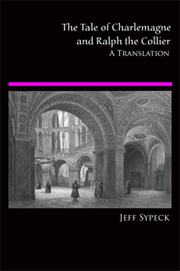
You can now use a spiffy pulldown menu to buy a paperback copy of The Tale of Charlemagne and Ralph the Collier (here or on the original post) with either your credit card or your Paypal account.

It’s so easy, a Lombard could do it.

Just specify your location, hit “Buy Now,” and order a copy of what Charlemagne surely would have called “an engaging translation of the only chivalric romance where I totally get slapped in the face,” had the Frankish king spoken colloquial modern English and not been above providing marginally humiliating book endorsements.

Select a shipping option:
Book + shipping within U.S. $12.50 Book + shipping to Canada or Mexico $14.50 Book + shipping outside North America $16.50


This translation, which mingles folklore, chivalry, and burlesque humor in a riot of alliteration and rhyme, should appeal to fans of medieval literature, readers who get a kick out of formal narrative poetry, and those of you who come here for the gargoyles. By buying a copy of this literary oddity, you’ll be helping keep “Quid Plura?” afloat while also letting me know there’s a readership for future translations of lesser-known medieval tales.

For more information about The Tale of Charlemagne and Ralph the Collier (including a PDF preview), check out the original post from January. To order a Kindle copy, proceed post-haste to Amazon. And thanks, as always, for your eyeballs, which make this whole medievalist undertaking entirely worthwhile.

“I thought it was confetti in our hair…”

Like all clouds, the cherry blossoms bring their own sort of storm. Their petals swirl on the sidewalks, they mingle in your hair, they fall among the tulips that spring like rested children from their beds. Smacked with the sweat and smells of premature summer, Washingtonians don’t notice, behind the blossoms and buds, the hardy, faithful lavender, the modest source of a half-forgotten nursery rhyme:

Lavender’s blue, dilly dilly, lavender’s green,
When I am king, dilly dilly, you shall be queen.
Who told you so, dilly dilly, who told you so?
‘Twas my own heart, dilly dilly, that told me so.

Maybe you know this song. Burl Ives popularized it in 1948, and Sammy Turner and Gene Vincent covered it, too. The Jackson Five gave it a Motown spin, Lloyd Robinson made it Jamaican, and in 1985 Marillion reimagined it as the love song a drunk, regretful poet dearly wished he had written. Many lovely amateur versions hark back to Ives, but “Lavender Blue” predates the modern hit parade. On hot spring days, the song might almost be medieval.

The oldest recorded version of “Lavender Blue” is “Diddle Diddle, or, The Kind Country Lovers,” a ballad that dates to the 17th century:

Lavender’s green, diddle diddle, lavender’s blue
You must love me, diddle diddle, ’cause I love you.
I heard one say, diddle diddle, since I came hither,
That you and I, diddle diddle, must wed together.

You can see for yourself that it does goes on, with eight additional verses that focus far more on sly young rustics all a-diddle than on the whole lavender business. Still, it’s charming, and maybe revealing, that later versions so fondly return to the line about lavender, even when singers smile and pass it off as a bit of nonsense, since it may point to the deeper roots of the song itself.

According to the OED, “lavender” as a word to describe a color—specifically, the color of the plant—goes back only to 1882, and “lavender” as a verb meaning “to perfume with lavender” pops up in 1820. In English, the plant name Lavandula dates to 1265, plucked from medieval Latin as a corrupt form of a diminutive rooted in a Latin term connoting things to be washed, and hinting (in ways the OED declares “obscure”) at associations with perfumed baths and freshly washed linen. Thus do the modern English words “launder” and “laundry” tumble forth.

More definitively, the 14th century gave us lauendere, the Middle English term for a washerwoman, as in this nugget from the Harley Lyrics:

prude wes my plowe fere
lecherie my lauendere

And here’s Chaucer, from the F-text of the prologue to The Legend of Good Women:

Envie ys lavendere of the court alway,
For she ne parteth, neither nyght ne day

So did “Lavender Blue” grow out of a medieval ode to a washerwoman amused by the prospect of a royal life with her rustic “king”? Is it a later tribute, knowing or half-knowing, to the roots of the word itself? No academic paper is forthcoming; these questions are simply the fancy of a sunstruck medievalist who suspects that an inscrutable mention of lavender in a ballad about “kind country lovers” wasn’t always meaningless.

One further usage from around 1300 gives us a dash or two more: a reference to the seizure of the chattels of fugitive “Johannis le lavendere”  to remind us that there were washermen as well. Appropriately, modern versions of “Lavender Blue” give the “queen” a chance to pipe up on equal terms:

I love to dance, dilly dilly, I love to sing;
When I am queen, dilly dilly, You’ll be my king.
Who told me so, dilly dilly, Who told me so?
I told myself, dilly dilly, I told me so.

So are the young man and woman laboring side by side, crooning on the banks of some gnat-clouded river or stealing kisses over the washbasin, loving their lives even though there’s nary a courtier or castle in sight? It’s spring, for Heaven’s sake; go outside, and imagine whatever you wish. And if and when you stop to smell the flowers, spare a sniff for the lavender, and don’t be shy; dig deep for a story, whether you’re inspired by scents—or by quasi-medieval nonsense.

“Tiny purple fishes run laughing through your fingers…”

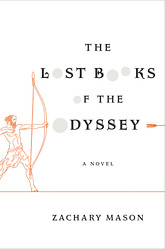
As much as C.F. Cavafy would nag me to focus on the voyage rather than the destination, some straits are best sailed through quickly. Behold this Wall Street Journal article about The Lost Books of The Odyssey:

The author of a new novel that re-imagines Homer’s “Odyssey” isn’t a classicist or a literary scholar. Zachary Mason, 35, currently works as a computer scientist specializing in artificial intelligence at a small start-up in Silicon Valley.

Let’s sit on the sand and ponder this trireme full of waterlogged assumptions. Do most readers who browse the Web or still pick up a newspaper believe that only classicists and lit scholars use ancient epics as creative springboards? That Homer belongs to professors? Even though one of Homer’s best-reviewed “re-imaginers” can’t read a word of Greek?

Or are we to be surprised that a computer scientist wants to re-tell The Odyssey? Everyone knows that people who ponder artificial intelligence for a living are incurious louts who never read outside their field. All that boring technical stuff is useless on the windy plain of Literature, where the spears of touchy shatter on the burnished shields of feely.

But I’ll not read the reporter’s mind. Maybe I’m misunderstanding the assumptions she presumes we share.

The unlikely authorship is one of several unusual details…

Or maybe I’m not. Next paragraph.

Mr. Mason has never set foot in a writing workshop…

Many novelists never do. People who read are not surprised by this.

The book’s “unlikely authorship” having been established, the article dazzles us with details:

The story of how “The Lost Books” came together is an odyssey in its own right. Mr. Mason, who says he has long been inspired by Odysseus’s story, but has no formal training in the classics…

Mason wrote for six years; got no response from literary agents; was published by a small press; then gained wider notice after winning an award. No doubt the process was frustrating, but there are far less direct routes to literary fame. I’m pleased by Mason’s success, but not even a weatherman flailing for a segue would call it an “odyssey.”

And in case you forgot, there it is again: “no formal training in the classics.” Yes, non-classicists seeking inspiration in The Odyssey is unthinkable.

I don’t know why newspapers and magazines talk down to their readers like this, but even a cyclops wouldn’t so badly misperceive the gulf between a book-savvy readership and the rusty tropes a reporter is expected to marshal when writing about authors. The world is wider than our own experiences, and it offers as many routes to publication as there are books, or interpretations of Cream songs. Like Mason’s novel, an author profile should re-tell a story with a fond, familiar theme: good writers come from everywhere.

“…and every one of them words rang true, and glowed like burning coal…”

[UPDATE: As of December 2012, information on purchasing The Tale of Charlemagne and Ralph the Collier as either a paperback or an e-book can be found here.]

In 2007, I posted my translation of the 15th-century romance “The Taill of Rauf Coilyear,” a 972-line Middle Scots poem about the kerfuffle that ensues when Charlemagne, separated from his entourage by a snowstorm, seeks refuge in the home of a proud and irascible collier (a sort of medieval Tommy Saxondale). Combining folklore motifs with burlesque humor and elements of chansons and chivalric romances, “Rauf Coilyear” is a lively but rarely-read tale of courtesy, hospitality, and knighthood. To my knowledge, it’s also the only medieval romance in which Charlemagne totally gets slapped in the face.

Because enough people found the earlier version both readable and entertaining, I’m pleased to make The Tale of Charlemagne and Ralph the Collier available as a snazzy 56-page paperback. The translation—which imitates the form of the original in 75 thirteen-line rhyming, alliterative stanzas—is freshly polished and lightly annotated, and the bibliography is current. I’m offering this little book as a literary curiosity, an experiment in self-publishing, and a way to help defray the costs of maintaining this blog.

To preview this book, you can see a low-res PDF of sample pages or view larger images of the front and back cover.

No one else has ever translated “Rauf Coilyear” into rhyming, alliterative, modern English verse, and I doubt anyone else will be nutty enough to try—so whether you’re a longtime reader of this blog, a student of medieval literature, or a collector of truly obscure manifestations of Charlemagniana, I hope you’ll find this translation a satisfying read. Despite what Mamillius claimed, sometimes a sad tale isn’t best for winter after all.

“Got your number from a friend of mine who lives in your hometown…”

Life was funny, growing up around characters but not inside a story. I’m not complaining; it was simply true that stories happened in New York or in California, on the shores of Earthsea or the plains of Krull, but never in central New Jersey. We didn’t have major radio or TV stations, so the news showed us Brooklyn and the movies showed us suburban Chicago, and I think we knew the wider world better than our own. Later, expat filmmakers flirted with caricature or danced around the edges of the odd, and sometimes a novelist knew the state well, but most wrote New Jerseys that didn’t ring true.

I mean, I didn’t find it strange that we rode sleds into traffic, that my friends stole software from Finland, that our principal hijacked a bus so fourth-graders could see Ronald Reagan, that escaped mental patients slept on our lawn, that we buried our dead in coffins stuffed with beer cans, that the girl next door walked a rabbit on a leash, that my uncle kept sheep in his suburban backyard (and wrapped the old ewe’s legs in duct tape to keep her from falling over)—but I knew these lives weren’t fit for proper fiction.

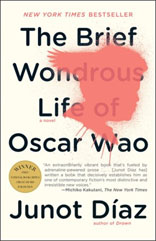
Then along came The Brief Wondrous Life of Oscar Wao, the story of a Dominican-American misfit who’s too obsessed with science fiction and fantasy to realize he’s living in a magical-realist novel. Readers love the geeky obsessions of Oscar de León, and Junot Díaz’s take on Dominican history is vital to his story, but I was drawn to the book by something else: Díaz went to Rutgers and Kean, and Oscar Wao is very Central Jersey.

At first I thought he’d whiffed it. Díaz names New Brunswick streets but barely shows or describes them. He mentions Amboy Cinemas, but the adventure of seeing movies there is a tale he doesn’t tell. He knows the late-’80s “nerd circuit” at Woodbridge Center (comic shop, gaming shop, Waldenbooks), but he won’t stop to linger and make the place real.

Then a landmark looms from the pages:

What he did was this: drank a third bottle of Cisco and then walked unsteadily down to the New Brunswick train station. With its crumbling facade and a long curve of track that shoots high over the Raritan. Even in the middle of the night, doesn’t take much to get into the station or to walk out onto the tracks, which is exactly what he did. Stumbled out toward the river, toward Route 18. New Brunswick falling away beneath him until he was seventy-seven feet in the air. Seventy-seven feet precisely. From what he would later recall, he stood on that bridge for a good long time. Watching the streaking lights of the traffic below. Reviewing his miserable life. Wishing he’d been born in a different body. Regretting all the books he would never write. Maybe trying to get himself to reconsider. And then the 4:12 express to Washington blew in the distance. By then he was barely able to stand. Closed his eyes (or maybe he didn’t) and when he opened them there was something straight out of Ursula Le Guin standing by his side…

I’ve been to the top of that train bridge—not for the same reason as Oscar, but compelled, as he was, by something other than reason. How did no one notice a teenage, microscopic me scaling a scrubby slope along a highway? For years I was sure I was all on my own—but then I learned that in the 1930s, the cops caught my grandfather trying to cut an hour off his commute by using that same viaduct as his personal footbridge. That was a very Junot Díaz discovery: places run in families.

It’s not a bad bridge to have climbed at least once. Glance down, and you will get dizzy; a train flies past and blows you to the edge, and you wince through a hideous gust. But when calm settles in and the tracks are all clear, there are weird sights to see up there, stories to spot, if you just know the right way to look.

(Photo © Gerald Oliveto. Used with permission.)

“Oh man, look at those cavemen go…”

Where books get stacked rarely makes a statement, but at Wonder Book, the shelves above and around the bathroom door are stuffed and piled with pulps: Astounding, Galaxy, and countless others, most of them from the 1950s, some of them hiding their half-shredded kin from the ’30s and ’40s. The expensive stuff is aisles away, bagged and secure behind glass, so these are the five-dollar specials, what remains after anthologists spent half a century picking their carcasses clean.

Like many people, I’ve read the best stories culled from these magazines, and I’m familiar with the history of the pulps and their off-kilter editors. When I popped up to Wonder Book, I’d planned only to find some props for Wednesday’s class so my students could see the garish covers, thumb through yellowed pages, and understand how tangible the genre used to be.

But a funny thing happened after I got home: I actually read these magazines and saw how much of the history of science fiction happened between the fiction—in reviews, editorials, letters, and ads. Vivid and downright beguiling, the pulp scene was as alive and interactive as anything on the Internet today.

Here’s L. Sprague de Camp on The Martian Chronicles. This review ran in the February 1951 issue of Astounding Science Fiction, but de Camp sounds for all the world like a smart, impious book-blogger:

Bradbury is an able young writer who will be better yet when he escapes from the influence of Hemingway and Saroyan—or their imitators. From Hemingway he takes the habit of stringing together many short simple sentences and the Providential or impersonal viewpoint, all characters described purely in terms of external action. All right for Hemingway’s Neanderthaloid characters with no minds to explore, but of limited use in a fiction of ideas.

From Saroyan—or perhaps Steinbeck?—he takes a syrupy sentimentality. He writes “mood” stories, of the sort called “human,” populated by “little people” named Mom and Dad and Elma and Grandma. They come from American small towns and build others just like them on Mars. They’re the kind we all know and call “nice—but dull.”

The Web, inscrutable and vast, generates experts who can lecture us, sometimes legitimately, on almost any subject. So behold our monkey ancestors whooping it up around the monolith in Astounding Science Fiction, October 1952:

This is in reply to the query you received concerning how Gödel determined the truth of his “undecidable propositions,” as they are called, in view of the fact that they were unprovable. The question is a good one and is certainly deserving of a reply. When I wrote the article on metamathematics I was much tempted to include a discussion of this very point, but considerations of space limitations ruled otherwise. I shall attempt here to give a partial answer…

Farther afield, hearken to the familiar call of the autodidact in a florid—but to me, totally charming—letter from the April 1946 issue of Famous Fantastic Mysteries:

If you’ll take those limpid orbs off the waste paper basket a moment, I should like to add my voice to the squawks, howls and cauterwauling that beset you.

I was really pleased to find “Phra The Phoenician” so readable. It was a trifle wordy and a bit history-bookish, but beautifully woven together. I’ll bet you a used doughnut that Arnold could quote Shakespeare in reams!

The other story “Heaven Only Knows” was either a filler or an afterthought. “Heaven Only Knows” how it came to be written . . .

[…]

But I did enjoy the mag. as usual. And here’s one fan, Ed., who doesn’t try to hide the covers from the gentry. If people will be allergic to red and yellow, that’s their tough luck. Me, I’m an individualist.

And then we have the June 1952 issue of Other Worlds. In “An Open Letter to Paul Fairman,” editor Raymond A. Palmer bickers with the editor of IF magazine over Palmer’s publication (years earlier, in Amazing Stories magazine) of stories by Richard Shaver, who claimed to have been abducted by an evil subterranean civilization during his stint as a hobo. “Are we plagued by a monstrous detrimental overlordship possessed of titanic science to which we cannot but succumb?” muses Palmer in a five-page, Usenet-class pissing match involving circulation figures, business ethics, and fictional depictions of sex. (Einstein and Jesse James get name-checked, too.)

In an equally rambling five-page editorial, Palmer masks excuses with whimsy and third-person mythologizing:

As a matter of fact, all our friends have been expecting us to do “things.” Never mind what—they expect something “extra” from Ray Palmer. Something maybe nuttier than ever done before; something novel; something which smashes a taboo; something that will cause near homicide…But it almost seemed like one of the characters out of a former “novelty,” the dero, have been trying to prevent him from getting into high gear. Pretty rotten trick, to paralyze a guy so he can’t make his readers happy! Well, one thing after another, and all sorts of troubles—printer trouble, money trouble, health trouble, accident trouble, and so on. Palmer thinks slow. He sits in a coal bin and cogitates. And he comes out looking as if he’d been sitting in a coal bin! But eventually he comes out with an idea. Trouble is, we moved to the country and we burn wood now. No coal bin. No ideas. Carbon is the basis of life; therefore carbon is the basis of ideas—no carbon, no ideas.

Until we found out how to make charcoal!

Elsewhere, Palmer ponders the moral implications of universal military training. (“What has that got to do with science fiction?” he demands. “Nothing! Not a darn thing. Except it’s going to happen in the future. And since when can’t a science fiction editor, writer, or reader even breathe a political word?”)

And here, in the middle of that Other Worlds editorial, is Palmer’s statement on the relationship between editor, writer, and reader:

We’re knocking the walls out! No longer is OW put out in an office in Evanston, the second floor of our company ranchero, a printing plant in Sandusky. It is put out in an arena; an arena bigger than Soldier Field, bigger than Wisconsin, or Illinois, or Ohio. It’s put out right into your own amphitheatre! Every one of you readers is right in the convention hall where you can carry or smash any motion the editor makes. What this means is very simple; we’re going to give you readers a lot bigger voice in OW. We’re coming down out of the editor’s seat and getting right in the middle of things. This editorial, and the Letters section, will become a two-way television set…

The chatty, opinionated prose that ranges from informal to crazed; quirky and passionate readers engaged not only with the editor and writers but also with each other; sober debate broken by hectoring and grand rhetorical flourishes; marginal tweeting about back-issue availability; banner ads for products malevolent and benign—all of these things served as a scaffolding for the Internet to raise a larger and more efficient version of that proto-geek community.

But in 50 years, people will still flip through musty copies of Astounding and understand the pleasure that readers once got from them, while my old Commodore disks will be ciphers to anyone who doesn’t tinker with antiques, and the BBS culture I grew up with will survive only in archived fragments, and even those, like our blogs, can be killed with a click.

The geeky past has a future; I wonder if our geeky present does? We inherited from the pulps a supremely participatory subculture of writing, reading, bickering, joking, scolding, lecturing, and learning, but the world may not remember how all of this felt; you can’t shelve intangibles next to the loo.